

For the first time, the Chilean justice system recognized two lesbian mothers.
The struggle of two lesbian mothers behind the historic ruling in Chile: for the first time a lesbian-mother family was recognized.

Share

By Airam Fernández, from Santiago, Chile
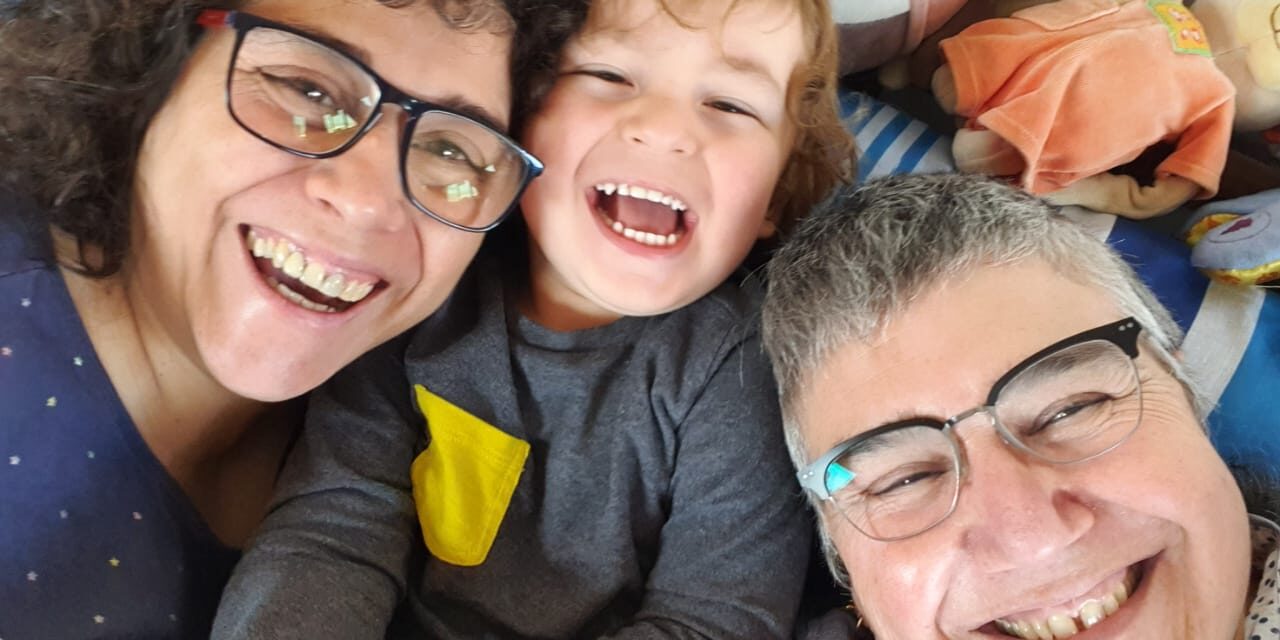
Photo: Courtesy of the Ramón Di Giamarino family
Emma de Ramón and Gigliola Di Giammarino are at a loss for words to express their overwhelming emotion. On Monday, June 8, 2020, their names were etched in the history of Chilean justice, as they became the first lesbian-parent family to win a long legal battle so that Attilio, their 2-year-and-9-month-old son, could bear both of their surnames .
Emma tells Presentes that when Attilio was born and they presented him at the Civil Registry, the agency refused to register her as his mother on the birth certificate. The reason given was that they could only register one mother and one father. Attilio was registered only as Gigliola's son, since she was the one who underwent the assisted fertilization procedure.
READ MORE: Same-sex adoption: the debate has begun in the Chilean Senate
"They were discriminating against him because of his mother's sexual orientation."
“Attilio is my son just as much as he is Gigi’s,” Emma tells Presentes the day after learning of the historic ruling. “That’s why we decided to fight, because we couldn’t accept that our son didn’t have the same rights that other children do. We never imagined we would have to do it this way, but we were always very clear that we had to fight for our motherhood,” she adds.
After the Civil Registry rejected their petition, they filed an appeal for protection against the agency. It was rejected by the Court of Appeals and then by the Supreme Court. It was then that Juan Enrique Pi, former executive president of the Iguales Foundation and one of the lawyers in the case, suggested they go to family court with a specific legal strategy. “We framed it as discrimination against the child. We wanted to demonstrate that he was being discriminated against because of his family relationships, due to his mothers' sexual orientation, and that his parental rights were not being recognized simply because he was born into this family ,” the lawyer told Presentes.
Protect all forms of family
“ The duty of the Chilean State is to provide protection, without discrimination, to all existing forms of family , and to strive to integrate them into national life. To this end, it is essential that the civil status of a child born and raised in a family headed by same-sex couples who have expressed a desire to procreate, coincides with their legal parentage and is reflected in their identification documents,” reads the landmark ruling issued by Macarena Rebolledo, presiding judge of the Second Family Court of Santiago.
The long road to motherhood
Emma is a historian and Gigliola is a political scientist. They have been together for more than eight years and in 2015 they entered into a Civil Union Agreement, the only legal recourse available to same-sex couples because Chile does not have marriage equality.
They decided long ago to embark on the journey of motherhood together. They tried once, but were unsuccessful. They postponed their second attempt for professional and family reasons. Emma took on a professional challenge: directing the National Archives of Chile. Then, her mother became ill, and she dedicated herself to caring for her. “When my mother died, we said: it’s now or never. We decided to give it a second and final try. And we were very lucky; here we have our Attilio,” she says via WhatsApp call.
The pandemic and lockdown didn't stop the family from celebrating this ruling, which is historic for them and for the country . They got together via Zoom that evening. “When we found out, we immediately called our family members. We couldn't believe it. That night we saw each other on Zoom, and we called others on the phone, as if we were all together. It was a very emotional moment,” Emma recalls.
READ MORE: A lesbian couple fights for co-maternity recognition in Argentina
“The ruling gives us peace of mind.”
They are excited, but also relieved: they can finally rest from so much emotional strain. “Even though we were very helped and supported throughout the whole process, it was harder than we imagined. Honestly, we never got our hopes up. We thought they were going to say no,” Emma admits.
Having the legal tools to face what's to come is also a source of reassurance for them: “Besides recognizing our son's rights, the ruling gives us an enormous sense of peace of mind as mothers, regarding certain more practical and routine matters.” Shortly before Attilio was born, they shared a concern: how they would deal with the healthcare system if, in some instance, she had to be alone with him, unable to “prove” any kind of relationship.
They have to wait a little longer. In theory, the court should only take a few days to notify the Civil Registry so they can make the necessary changes. The agency could raise some kind of administrative objection. “We know that, but it’s very unlikely to happen,” says Emma, confident that very soon her son will have both his mothers’ names on his birth certificate.
On the other hand: lesbian marriage rejected
Emma also hopes her case will serve as an example to demonstrate how far Chile still has to go in advancing LGBTQ+ rights. The ruling recognizing her family comes three days after the Constitutional Court rejected the request of two lesbians who married in Spain and wanted to legalize their marriage in Chile : “Hopefully, our story will serve to continue urging Congress to quickly pass the Law on Parentage, the comprehensive reform of the adoption system, and Marriage Equality . These are debts that have been outstanding for many years. It is not fair that our rights are not fully recognized due to the blindness and shortsightedness of legislators .”
READ MORE: Costa Rica, first Central American country to approve same-sex marriage
All our content is freely accessible. To continue producing independent, inclusive, and rigorous journalism, we need your help. You can contribute here .
We are present
We are committed to journalism that delves into the territories and conducts thorough investigations, combined with new technologies and narrative formats. We want the protagonists, their stories, and their struggles to be present.
SUPPORT US

FOLLOW US
Related notes

We are present
This and other stories are not usually on the media agenda. Together we can bring them to light.