

Thinking about journalism in the heat of our dissident struggles
We often see that the hegemonic media stage an idea of the world giving importance to the privileged class.

Share

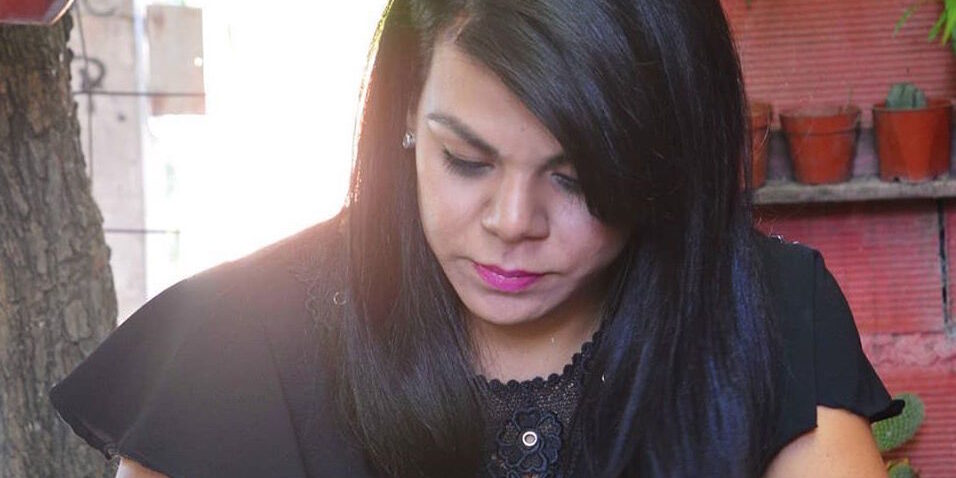
By Keili González*
We often see that hegemonic media present a worldview that emphasizes the privileged class or gives relevance to subjects from a meritocratic perspective, who are, of course, white, heterosexual, and whose representations are subject to the medium for which they produce.
Asking why one is a journalist in a cisheteropatriarchal society, divided into social classes and presented as if we were all equal, is no small task. Even more so when one belongs to the segment that has borne the brunt of the situation and perceives that there are vast differences and antagonisms between what is done and what is said—a dialectical relationship.
[READ ALSO: Media harassment of a trans activist: “How painful this Nogoyá is” ]
The profession today is largely characterized by a lack of gender perspective and a failure to address the issues faced by LGBTQ+ individuals . This is compounded by the formation of large corporate groups and a frenetic pace of production. Thus, rigor in a context of abundant information, journalistic ephemerality, and working conditions define the workings of a system that thinks in terms of profit and loss, scoops, channel surfing, ratings, and clicks.
Is there a market for words?
“Our ruling classes have always tried to ensure that workers have no history, no doctrine, no heroes or martyrs. Every struggle must begin anew, separate from previous struggles. Collective experience is lost, lessons are forgotten. History thus appears as private property whose owners are the owners of everything,” Rodolfo Walsh stated in the context of the “Cordobazo” in 1969, for the CGT de los Argentinos newspaper.
We often see that mainstream media outlets present a particular worldview, emphasizing the privileged class or highlighting individuals from a meritocratic perspective. They are white, heterosexual, and their representations are dictated by the media outlet for which they produce. In contrast, there are those who challenge this and propose an alternative vision of reality, dismantling old structures, telling stories of other worlds, making other perspectives visible, and viewing society through a different lens. Journalism is political action and the exercise of power to transform society ethically and aesthetically.
[READ ALSO: Right to work: this is the transvestite-trans job quota in Argentina ]
Business groups, driven by their corporate spirit, seek to maximize profits and minimize losses. Among the latter, the work of journalists is seen as a cost, reflected in precarious employment that places this profession among the lowest-paid sectors. Business logic and state intervention through various mechanisms, such as advertising spending, define the scope of journalistic work and, in extreme cases, stifle freedom of expression.
New communication technologies and their respective advancements are forcing changes in how traditional media handle information. In addition to introducing various new tasks and narrative forms, they are also introducing new ways of reporting previously investigated facts, transforming journalists into multi-functional tools.
Journalism exposes the false equivalence
Rodolfo Walsh, in the provisional epilogue to the first edition of Operation Massacre, stated: “ Then as now, I believe that journalism is either free, or it is a farce, with no middle ground.” To be a journalist, first and foremost, is to be sensitive to the issues that arise, to have the capacity to question and investigate even the simplest things around us, to discover if something is hidden, to confirm the facts, or to uncover the truth, or at least a part of it. Being a journalist, then, is a profession for the brave and revolutionary when the words that are spoken are the ones that must be said, and this would not have been possible without their presence on the ground and without the responsible use of sources of information.
Journalism exposes the false equivalence between the event itself and what is written, and makes it clear that the perspective of the journalist is part of what is published. This is the case, for example, with those who narrate our lives and are deeply affected by the problems of a world designed for a select few, taking on the challenge of placing the experiences of transvestites and trans people on the public agenda, and abandoning any pretense of objectivity.
We must be aware that journalists have an enormous responsibility; inequality may not end simply by reporting the unspoken, but it will help the oppressed and the victims to take the reins and fight to build a different society.
*Keili González is a trans activist and journalist
All our content is freely accessible. To continue producing independent, inclusive, and rigorous journalism, we need your help. You can contribute here .
We are present
We are committed to journalism that delves into the territories and conducts thorough investigations, combined with new technologies and narrative formats. We want the protagonists, their stories, and their struggles to be present.
SUPPORT US

FOLLOW US
Related notes
We are present
This and other stories are not usually on the media agenda. Together we can bring them to light.