

Moira Millán: “Racism towards our girls and women results in hate crimes”
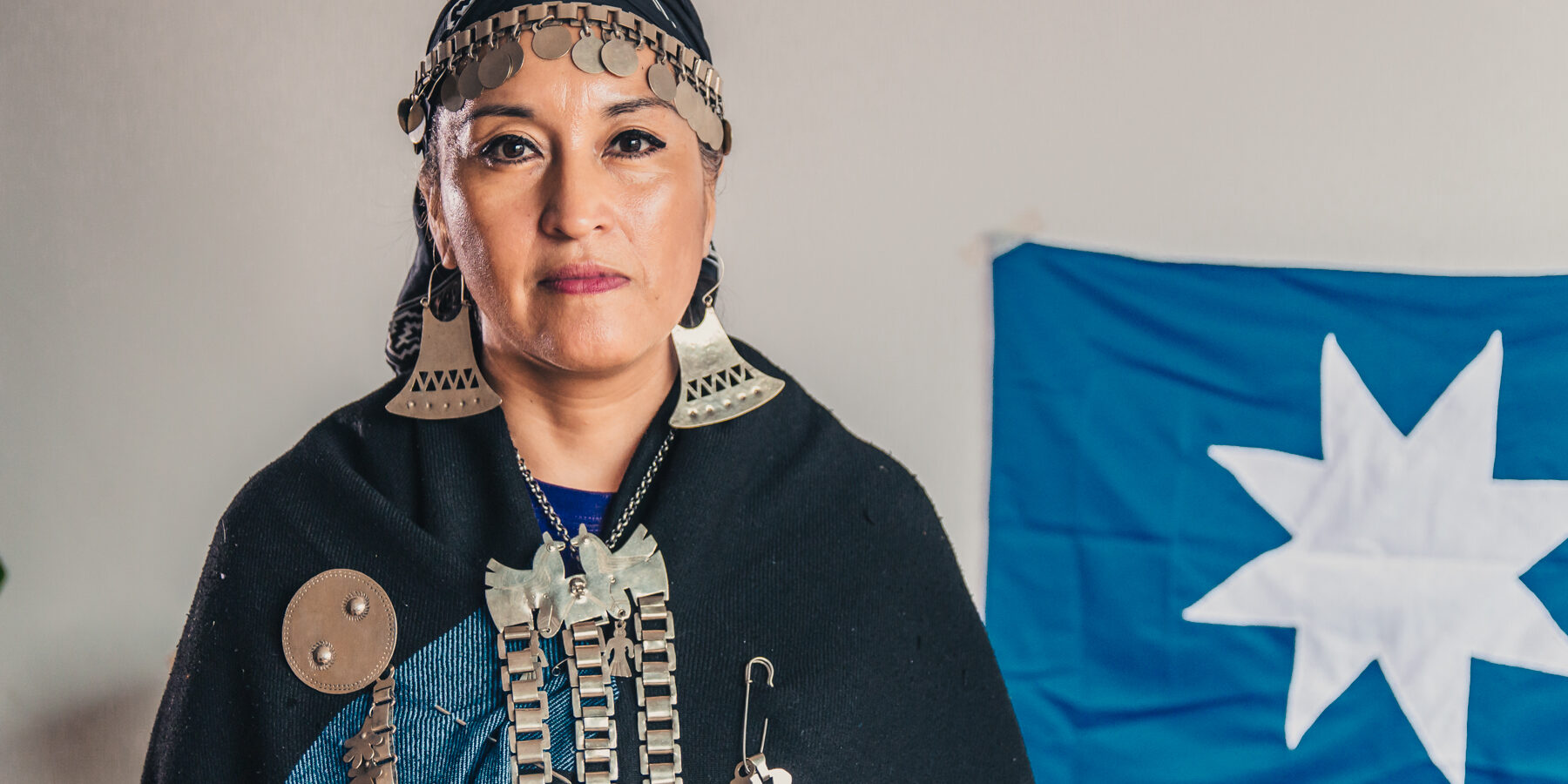
Interview with Moira Millán - Mapuche weychafe (warrior), member of the Indigenous Women's Movement for Good Living - who has been denouncing the police violence that she and her sisters suffered in the context of mandatory confinements.


Share

By Ana Fornaro
Photos: Maxi Sokolovski and Presentes
The brutal acts of police violence in Chaco against a family from the Qom community, which came to light yesterday through a viral video – where, in addition to the beatings, sexual violence was also reported – once again exposed the racism suffered by a population plagued by hunger and state repression.
Moira Millán, weychafe (warrior), writer, and member of the Indigenous Women's Movement for Good Living, denounced—among other human rights violations—the police violence she and her sisters suffered during mandatory lockdowns. Meanwhile, many Indigenous nations in the region declared themselves endangered by the coronavirus and face persecution for defending their land.
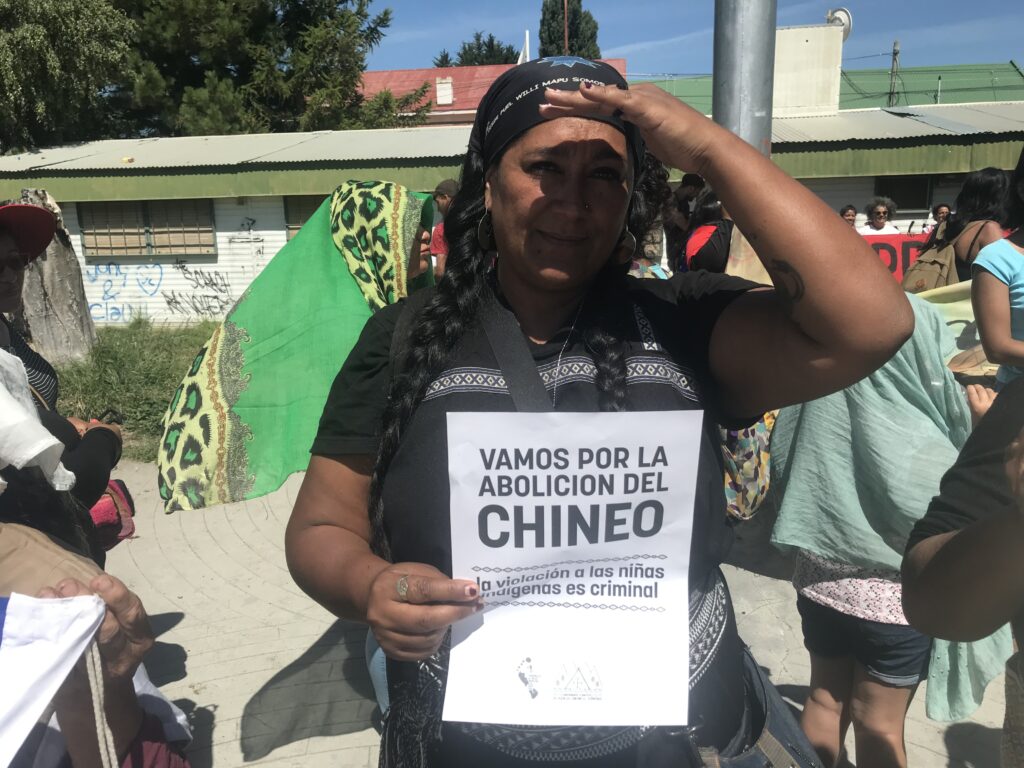
Before the national emergency was declared due to the pandemic, the Indigenous Women's Movement for Good Living was preparing to launch a campaign to abolish "chineo": the rape of Indigenous children in the north of the country by non-Indigenous men, a practice that has been normalized and unpunished for centuries. This campaign was interrupted, but the denunciations by Indigenous women about patriarchal violence and racism in their communities continue. We spoke with Moira Millán about these and other abuses, as well as about paths to emancipation.
Racist and Eurocentric Argentina
– Why is it so difficult to talk about racism in Argentina?
– Once, in Bariloche, I was with a Mapuche sister when we went into a store and the security guard followed her everywhere. Our faces create the perception in other people's minds of criminals, that we're thieves . I always remember Frantz Fanon's book, "Black Face, White Mask," where he recounted walking down the street and a white girl suddenly seeing him, getting scared, and gripping her mother's hand tightly because, in her mind, that man was dangerous. That's completely normal here. Here, an Indigenous man can be a criminal.
– We see it in cases of police violence.
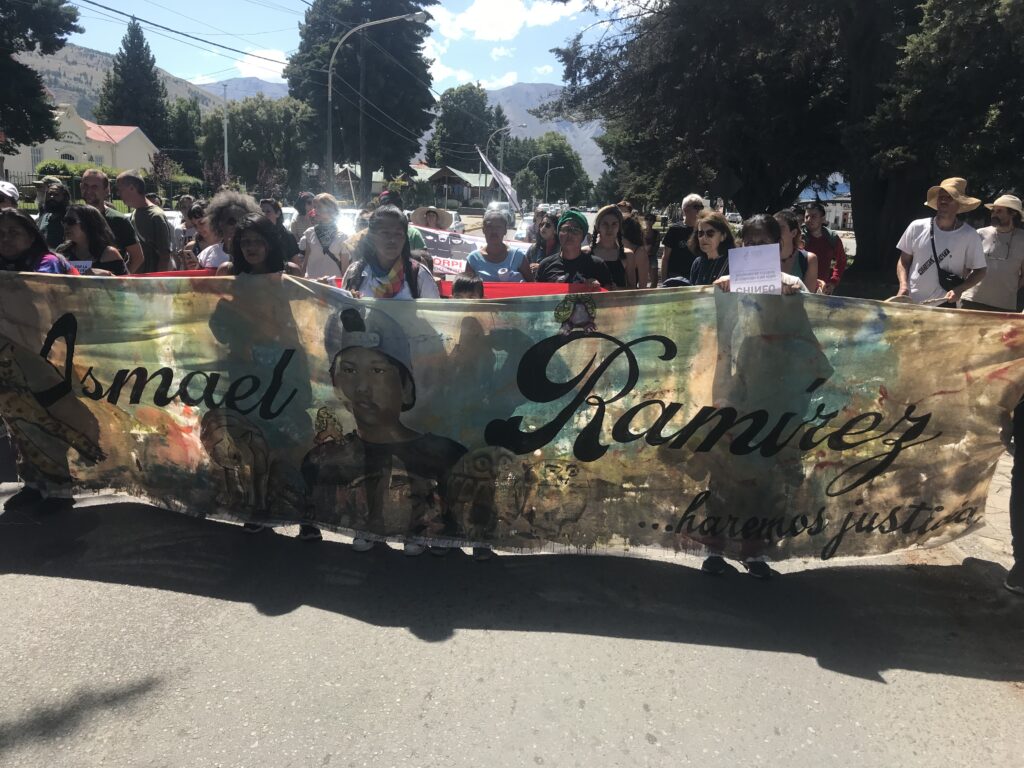
All Indigenous mothers are terrified that their children will leave and never return. Like what happened to Rafael Nahuel , like what happened to Ismael Ramírez, like what happens to so many girls. In almost every Indigenous home, there is someone who has died at the hands of the repressive forces . And the loneliness is tremendous, immense. That loneliness begins to crack when we find ourselves as sisters from all peoples. Our history is one and the same in this racist and Eurocentric Argentina. And we begin to join hands and say, “If they touch one of us, they touch us all.” Unfortunately, we are not having that level of impact or of uniting in a single struggle with non-Indigenous women. Furthermore, the media shapes public opinion and constructs it from the intentional stance of denialism as a political strategy. That fuels racism. And racism against our girls and women results in hate crimes, as we tell you when we denounce the kidnappings. The practice of "chineo" is not only an abhorrent sexual act: it constitutes hate crimes. Our girls are gang-raped with the complicity of the system. These cases are never reported or prosecuted.
-How do the chineos get to know each other?
We warn each other. Because when we're victims of a crime, we go to report it, and the police mock us to our faces. They won't take our report because they can't understand what we're reporting. In Argentina, the international treaty on linguistic rights isn't respected, and it should be implemented in all areas. If you speak Wichí, Guarani, or Qom, there should be expert translators, but there aren't. It's the State's obligation to provide them, both for Indigenous defendants and for the victims. So, these hate crimes have many facets: not only the violation of our children's bodies but also the cloak of impunity ; there's an entire state apparatus that allows it. And that state apparatus faces zero pressure from human rights organizations and feminist groups. We, the direct victims of child sexual abuse, are the ones bringing this issue to light.
– But these crimes don't appear in the media either.
Because there hasn't been a collective voice in Argentina to capture our pain, to make our desperate cry for justice audible . We have many reports of girls being raped on their way to school. Terrified of being raped again, they end up not wanting to go out. Then they can't study. They can't develop a normal life with guarantees and rights because they are living in terror. For example, we have the case of one girl who, in addition to being raped, was forced to drink beer laced with glass. Another had her breasts mutilated. There are girls whose heads are shaved—a powerful symbol. What we see is monstrous, but what hurts even more is the social indifference.
“Our girls are being raped and there are no marches.”
– Why talk about hate crimes?
– Because an aggravating circumstance could be added to the penal code, just as has been done with transphobia or the murders of LGBT people. Because we want to expose a truth that reveals the factors that shape this terrible scenario. These are hate crimes against little bodies, motivated by racism and with social complicity. Mothers suffer when they see their daughters raped and there are no marches. These are bodies that don't matter, lives devalued . We have to consider how this subjectivity is constructed symbolically, because the emotions of communities are manipulated, constructed. It's like when trans women are seen as a monstrosity, albeit a desirable one, and Indigenous women as an animalistic category. They think of us as beasts of burden.
“We are recovering the cosmic vision of how we organize ourselves in the world.”
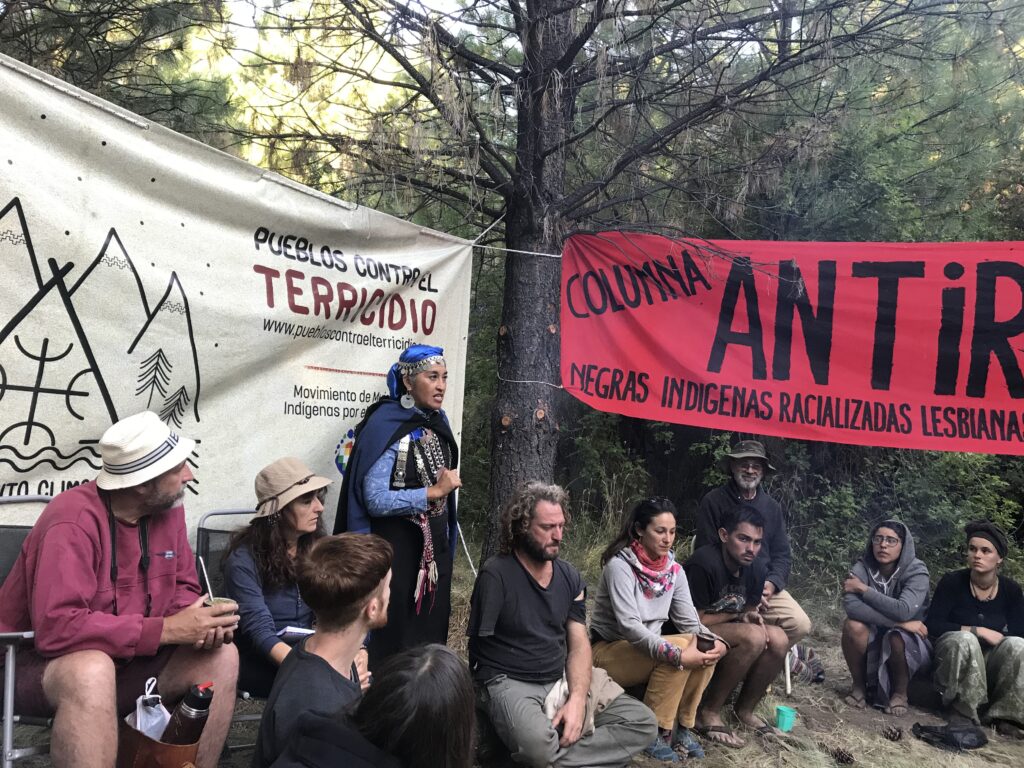
The Indigenous Women's Movement for Good Living was born in 2013 and in the years since has organized a massive march in Buenos Aires (2015); an Indigenous Women's Parliament (2019); a Peoples' Camp Against Terricide in the Mapuche community of Pillán Mahuiza (2020); and is preparing a campaign for the abolition of child sexual abuse, in addition to a new edition of the Parliament. It all began with a journey undertaken by Millán, a fighter for the rights of her people since she was 20, for her film "Pupila de Mujer, mirada de la Tierra" (made with Florencia Copley). After filming, she continued her journey alone, hitchhiking and reaching many sisters who had contacted her through social media after word spread. In this way, she continued to explore her territories, listening attentively.
“Climate change is taking its toll on the sisters' bodies.”
– What realities did you encounter in the territories?
– In a heartbreaking country: plagued by rape, femicide, and the dispossession of rights. These sisters are survivors because they live in communities where there is no water. To wash their clothes, they walk three kilometers round trip, like in Africa. Climate change weighs heavily on the lives and bodies of these sisters. Or in Salta, in Carboncito, in the Chaco mission area, the sisters get up at 3 or 4 in the morning to fill a bucket with water, because it trickles almost constantly. They spend the morning collecting water, then their children get up, and they have to start the day preparing food, helping their husbands, and cleaning the house. Their families sleep, but they don't. You go at midday and find them exhausted, barely speaking. And those who don't understand will say they are lazy, asking why they speak so little. These sisters suffer greatly.
– And what about those who live in cities?
of abuse. They're paid under the table. These women are not only victims of their employers, but they also live in neighborhoods where social violence is rampant, and they have alcoholic husbands who abuse them. Sometimes public transportation doesn't even go into those neighborhoods. They live on an invisible border: they get off the bus terrified, cross open fields, are raped, sometimes killed. Life in those cities is hell. In the Qom neighborhood of Rosario, they told me that the men in their community would meet and make decisions without listening to them. When I asked them how white women saw them, they said they saw them as employers, always controlling them, wanting to speak and think for them. When I asked them how white men saw them, they said they didn't even look at them. They reduced them to the status of animals.
– That racism is invisible.
– In Argentina, many things are happening. There is resistance. We say that there was a process of Argentinization carried out through genocide. They don't want to be the result of a bloody experiment; no one wants to see themselves that way. The decolonial perspective doesn't resonate with patriots. Decolonialism is discussed in relation to the European invasion of America. Sometimes it's used in relation to US imperialism, and that's about it. After the disappearance and murder of Santiago Maldonado in Welmapu (Mapuche territory), a segment of the Argentine population discovered that there was a land conflict in the south of the country, that this conflict was challenging the large landholdings created by big business owners, many of them foreign. And that generated solidarity from a significant sector, but not based on a full recognition of our people, but rather on identifying the enemy as the powerful, imperialist foreigner.
READ MORE: Being Indigenous and LGBT in Honduras: Gaspar Sánchez's Two Flags
-How is the Indigenous Women's Movement organized?
– We are not an organization of Indigenous women, but rather Indigenous women organized autonomously and without any kind of support. It is important to emphasize this. We are anti-party, anti-clerical, and anti-patriarchal. We make decisions in assembly. There is no leadership. We are self-managed and self-financed. We answer to the land. Mother Earth guides our agenda, our lives, and our right to a good life. We are reclaiming the cosmic vision of organizing ourselves in the world. This gives us great strength. And we are not afraid. We have begun to speak out with courage. And we confront not only the white power that oppresses us, but also our own men.
READ MORE: Journalism, Covid-19 and vulnerable groups: 5 recommendations
All our content is freely accessible. To continue producing independent, inclusive, and rigorous journalism, we need your help. You can contribute here .
We are present
We are committed to journalism that delves into the territories and conducts thorough investigations, combined with new technologies and narrative formats. We want the protagonists, their stories, and their struggles to be present.
SUPPORT US

FOLLOW US
Related notes
We are present
This and other stories are not usually on the media agenda. Together we can bring them to light.