

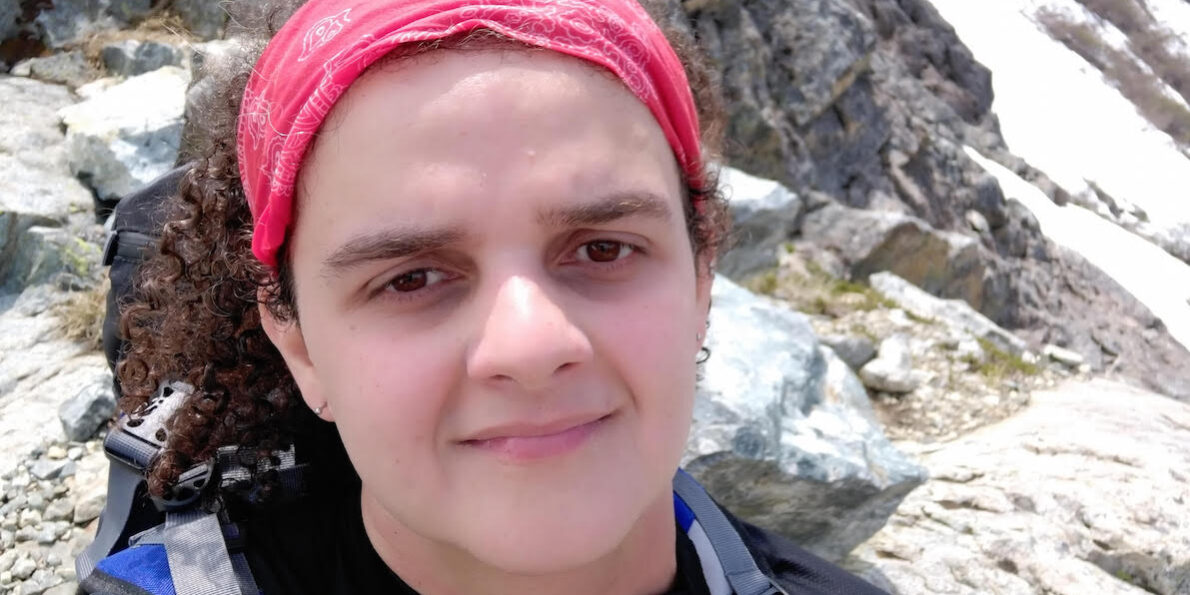
Fran Bubani, a trans woman in the world of hard sciences in Argentina
Fran Bubani graduated in Mechanical Engineering and is currently an Assistant Researcher at Conicet in the Bariloche Atomic Center.

Share

By Alejandra Zani
The first time Fran Bubani considered gender transitioning, she knew what she would face. A graduate of a field she describes as "sexist" and from an institution she perceives as "historically patriarchal," her opportunities to make her experience visible were almost nonexistent.
If trans people continue to be the blind spot of science, the data point that never appears in statistics showing gender inequalities, this tends to become even more pronounced in the hard sciences . Bubani belongs to this field; she graduated in Mechanical Engineering and is currently an Assistant Researcher at CONICET in the Bariloche Atomic Center and the first “visibly trans” woman at the Balseiro Institute in that city.
“Saying that I’m the first visible trans person means that there are surely more people who don’t identify with the gender assigned at birth, but who choose not to make it public because they don’t feel protected. I also don’t know anyone else who has made a social transition and changed their ID card here,” Fran tells Presentes.
Born in 1980 in Belo Horizonte, Brazil, Fran began her studies in Mechanical Engineering at the Federal University of Minas Gerais before she knew she would transition. “At that time, I was still living as a man. I was worried about job prospects and thought Engineering would be a good career to enter the job market. Mechanical Engineering is a male-dominated, male-dominated environment, which I would describe as a hostile one.”
Her first stop in Argentina was in 2008, when she began her PhD at the Balseiro Institute, where she started questioning her own gender identity. It took a few years before she was able to make the decision to transition. “My process began in 2015 and it was slow.”
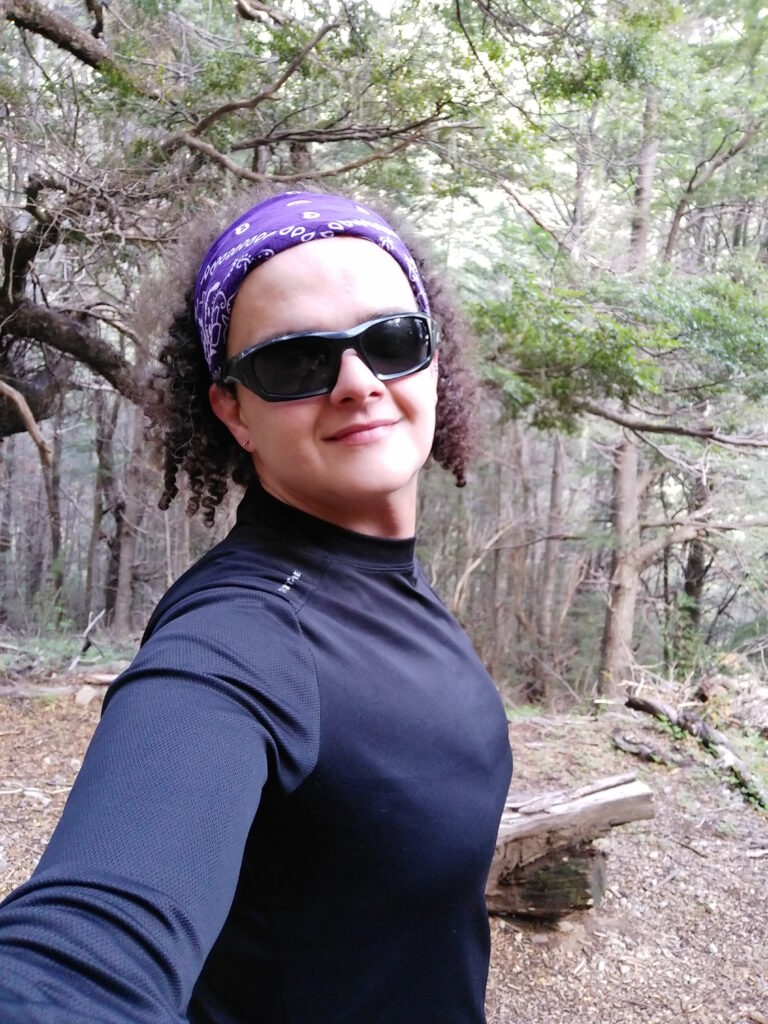
Finally, in 2016, after completing a postdoctoral fellowship in Brazil, she returned to Argentina to settle permanently with a position as an Assistant Researcher at CONICET. “I didn’t know if I was going to make a full transition or not. I started changing my body little by little, talking about it with some people, I contacted the Association of Transvestites, Transsexuals and Transgender People of Argentina (ATTTA), but at that time I tried not to bring what was happening in my private life into my workplace.”
Transition in the South, an open secret
“ In Bariloche, there isn't an LGBTQ+ center, there aren't any LGBTQ+ bars, and diversity is very hidden . What happens every now and then is a private party in a rented space, but it doesn't happen every month and it's not public,” Fran explains. That's why, when she decided to transition, she turned to the Sexual Diversity and Gender Identities Team of the Municipality of Bariloche for support. “They helped me throughout the entire process and were very present.”
She didn't feel comfortable at the Balseiro Institute. Every day she had to endure what she called "microaggressions." A shout of "Hey, kid" and some transphobic jokes did the trick: Fran kept her gender transition a secret until the very end. "I wanted to protect myself. The Balseiro is a traditionally male-dominated institution, and anything that involves diversity is still very much invisible, not exposed."
For this reason, she waited until the end of 2019 to be upfront with her boss and request leave for gender reassignment surgery. “There are countless problems here linked to the fundamental structure of patriarchy. The problems are gender discrimination, discrimination against diversity, and the fact that many people don't feel comfortable in their own workplace.”
The passage of the Gender Identity Law provided the essential legal framework for her to transition. “There are different social spheres where a person can undergo gender transition, and some are more favorable and inclusive than others. For those of us who live in traditionally closed and patriarchal environments, the legal protection afforded by the law is fundamental.”
“Some people are lost, but others are gained.”
After deciding to request leave for gender reassignment surgery, Fran moved to Buenos Aires, where she was supported by Alba Rueda, Undersecretary of Diversity Policies at the Ministry of Women, Gender and Diversity. “She was very present throughout my entire process and accompanied me when I was in Buenos Aires.”
Once back in the south, she had to face her workplace again. “My experience with gender transition is that it changes absolutely everything. It alters all the relationships you had, it changes your social circle, and people react differently than they did before the transition. You lose some people, yes, but you gain others, and those are the ones that are worthwhile.”
Shortly after her transition, Fran joined the Women, Students, and Workers Group at the Bariloche Atomic Center, a team dedicated to improving gender inequalities and differences within the Balseiro Institute. “There, I received unexpected support. I want to emphasize that. Beyond the Neanderthals and cavemen who distanced themselves from me after my transition, especially cisgender men, I also made new friends, mostly women, and received a great deal of support from my colleagues.”
Despite this, microaggressions sometimes persist, and some colleagues don't respect their designated pronouns. “At least they stopped making transphobic and homophobic jokes in my presence. This is progress, because it's something that was tacitly accepted at the institution, and it has to change. And regarding pronouns, there are those who are still getting used to it and get confused without meaning any harm, but there are also other times when they maliciously refer to me with masculine pronouns.” Regarding the transphobic comments, the Balseiro Institute took no disciplinary action.
Trans people, the blind spot of science
Recently, Fran co-directed a Physics thesis that was defended at the University of Buenos Aires (UBA) with the highest possible grade. This thesis had some unique aspects. “It's the thesis of Micaela Panizo, a cisgender woman who was isolated due to tuberculosis before the arrival of Covid-19, and at that time she suspended her studies. When she resumed them, she came to Bariloche, worked with me after my surgery, and supported my return to the Atomic Center after my gender transition. The thesis survived the isolation due to tuberculosis, the isolation due to Covid-19, and my gender transition.”
When Fran notified CONICET about her transition, she was surprised by the speed of their response. The institution “behaved spectacularly,” she emphasizes, and resolved her request to update her information immediately. “I sent this request as soon as I got my ID, and the next day my information was already updated on the website. I think CONICET is very well prepared, at least at an administrative level, to incorporate what is mandated by the gender equality law. On the other hand, at the National Atomic Energy Commission (CNEA), I'm still fighting to get them to change my email address.”

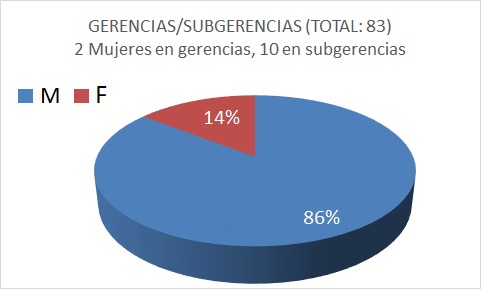
Even so, some data presented by CONICET in 2019 reveal inequalities in access to the highest research positions in Argentina. According to the graph shown above, the two lowest categories (Assistant and Associate) have a higher percentage of women, while the highest categories (Independent, Principal, and Senior) are predominantly male. Transgender people are not even included in their statistics.
At the CNEA in Bariloche, where Fran works, the gaps widen. “Gender inequality in the CONICET charts is evident at the highest hierarchical levels ,” the researcher explains. “At the CNEA, this disparity is even more pronounced. And that's not to mention that these charts only evaluate two fixed genders, men and women, and don't consider other identities.”

Fran Bubani is a Mechanical Engineer, holds a PhD in Engineering, and is an Assistant Researcher at CONICET in the Bariloche Atomic Center. She is currently the Head of Practical Work in Thermodynamics for Mechanical and Nuclear Engineering at the National University of Cuyo.
All our content is freely accessible. To continue producing independent, inclusive, and rigorous journalism, we need your help. You can contribute here .
We are present
We are committed to journalism that delves into the territories and conducts thorough investigations, combined with new technologies and narrative formats. We want the protagonists, their stories, and their struggles to be present.
SUPPORT US

FOLLOW US
Related notes
We are present
This and other stories are not usually on the media agenda. Together we can bring them to light.