

She opened the first shelter for trans women in Mexico and changed their lives in the midst of the pandemic
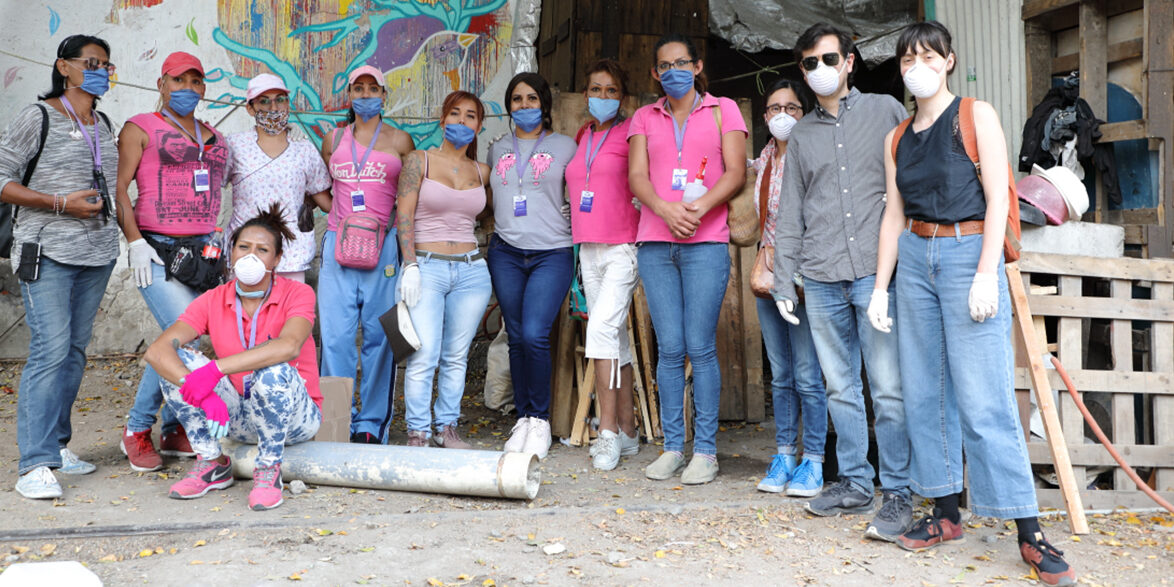
She has just inaugurated the Casilda Buenrostro Home, the first shelter for trans women in Mexico City and the entire country.

Share

By Andrea Jiménez
Photographs: Gisela Delgadillo – Seila Montes
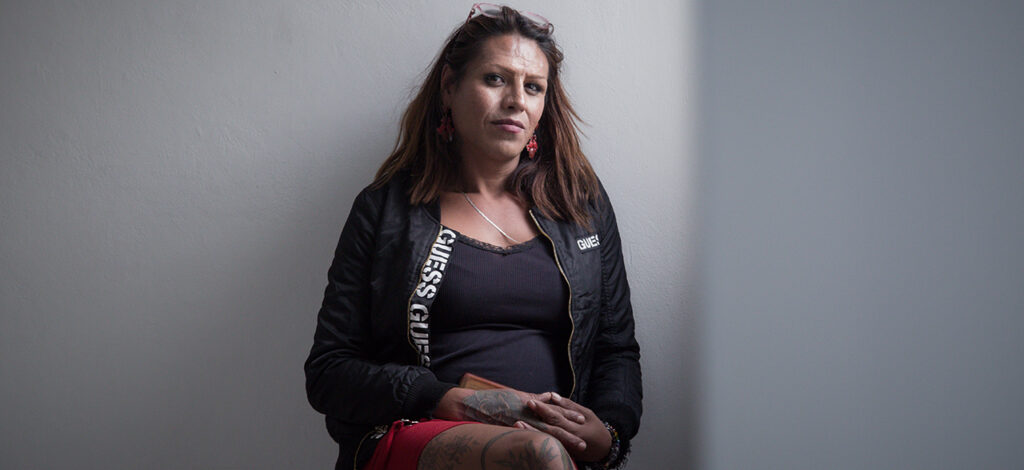
“Before all this coronavirus crap happened, if I made money I would go to a hotel, if not, I slept on the street,” says Tiffanys, one of the 13 girls who live at the Casilda Buenrostro Home, the first shelter for trans women in Mexico City and the entire country.
“I came to Mexico because there’s no work in Honduras. Trans women are killed,” says this migrant, who has received death threats from Mara Salvatrucha gang members. “I was involved with the younger brother of a gang member, and that gets you into trouble.” After five years living in Mexico, Tiffanys confesses that there’s one thing she fears now more than returning to her country: going back to the streets. “Kenya picked me up naked and even barefoot from the sidewalk and brought me here. If it weren’t for her, I’d be lying on the ground right now.”
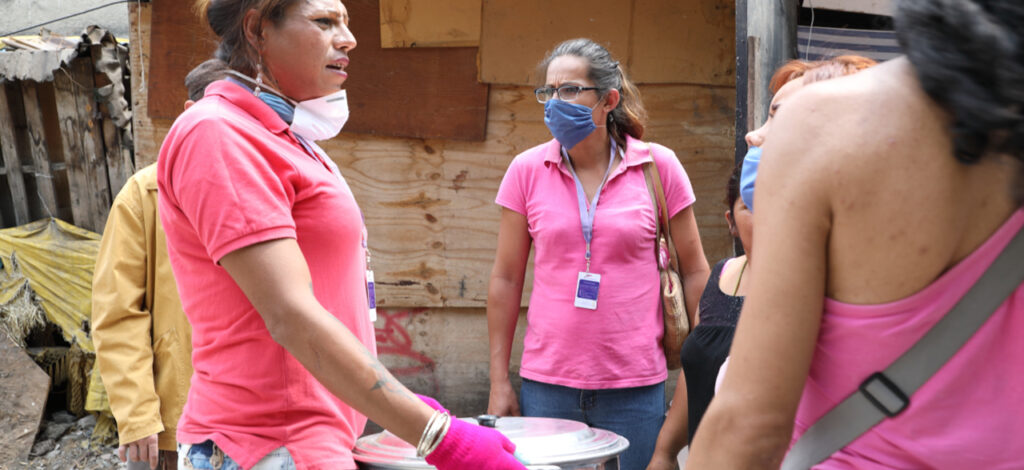
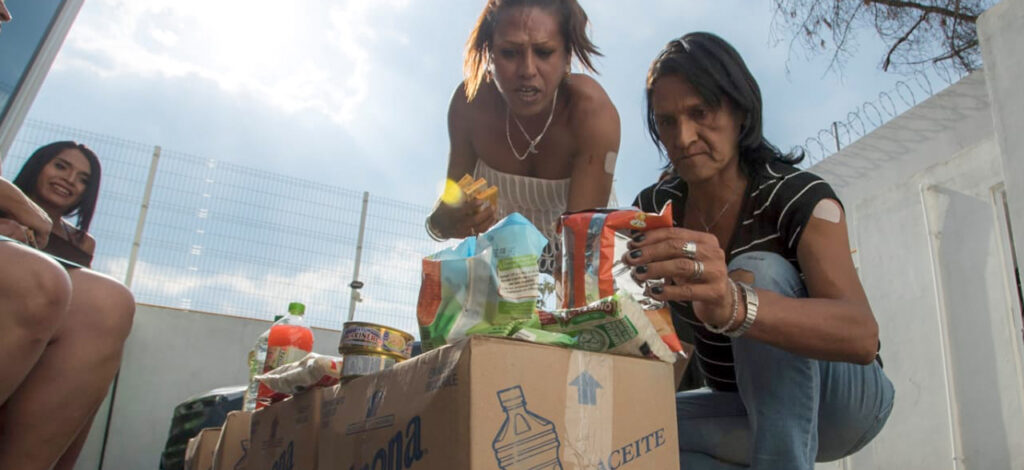
Kenya Cuevas, an activist for LGBTQ+ rights, is the founder and director of the shelter located in the La Casilda neighborhood, in the Gustavo A. Madero borough, in the north of the city. The center's opening was scheduled for April 2nd, but like so many other events disrupted by the COVID-19 health crisis, its inauguration was postponed. “That hasn't stopped us from opening our doors to the women who urgently need it. Various organizations, such as Doctors Without Borders (MSF) and the Mexican Commission for Refugee Assistance (COMAR), refer cases to us,” explains Cuevas, who in recent weeks has divided her time between organizing the shelter and organizing food drives for people experiencing homelessness. “ The health emergency has greatly complicated our work, and we've had to suspend events. But not the food distribution and the care we provide to people. We're not going to let them starve. Because they are starving, you know?”
[READ ALSO: Interview with Mexican trans activist Kenya Cytlaly Cuevas ]
Casilda, as the girls themselves call the shelter run by Cuevas, began operating in January without furniture or staff. The building was donated by the Mexico City Secretariat of Inclusion and Social Welfare (SIBISO), the result of an agreement between Casa de Muñecas Tiresias, the organization founded by Cuevas, and the Mexico City government, for the economic and labor reintegration of vulnerable people.
The shelter serves transgender women experiencing homelessness, drug use, HIV, and recent release from prison. Most are sex workers. “At first, we only had three women because we needed to properly develop our care model. Now there are more than 10 under our care,” Cuevas explains.
Almost all the residents are migrants from Central America: Honduras, Nicaragua, Guatemala. “We also have an Argentinian woman, and there’s even a woman who isn’t trans,” explains the director. “The center is geared toward the LGBTT community, because they are the ones who suffer the most discrimination, but we weren’t going to leave her on the street.” Cuevas met her at the distribution of debit cards that the Mexico City government handed out to support sex workers during the health emergency, an initiative in which she was involved.
[READ ALSO: Being LGBT and traveling in the Central American migrant caravan ]
Due to the crisis, one of the consequences of the Health Ministry's closure of non-essential activities was the closure of hotels, which left many people without a place to sleep. “While we reorganize our operational structure, we receive calls every day from all over the world referring more cases to us. But our administrative resources are nonexistent; there are only two of us. We receive government support for food, but we get almost everything from donations—furniture, cleaning supplies, clothing…,” says Cuevas.
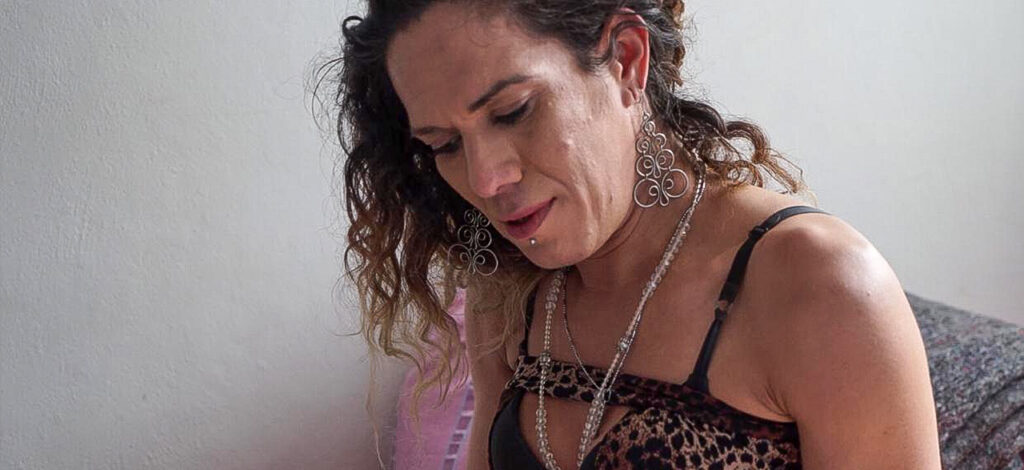
Dayling, a 33-year-old Honduran woman, entered the house three days before her birthday, on April 19th. “They celebrated me very nicely, with cake and they even made a video.” Dayling worked full-time as a chambermaid at the Exhipódromo boarding house in Peralvillo. From 9 a.m. to 7 p.m., she cleaned rooms. When one shift ended, the next began on the dark streets. “At the hotel, I earned 1,270 pesos a week, with which I paid for my room: 1,250. I earned the rest from sex work. How much? It depended on the clients who showed up; some nights I had seven or even eight, other nights two, one, or none.”
Dayling liked her job at the hotel. “It kept me away from drugs and alcohol, and kept me out of the dangers of the street.” When the Mexican government declared the start of Phase 2 of COVID-19, she lost both jobs at once. “ They told us to close the hotel and to grab whatever we could. I took a quick shower, put on some makeup, and grabbed just one change of clothes. I didn’t realize I’d left everything inside until I was outside.” They wouldn’t let her in to get her things, not even the little money she had saved, and crying, she went to a coworker who gave her Cuevas’s contact information.
[READ ALSO: LGBTI+ migrants in the caravans from Honduras to the United States ]
Addicted to crack cocaine for 18 years, Dayling has been clean for a month and a half. “An incredible achievement for me! I finally got into the mindset of wanting to change, to quit drugs. And I’m proud of it, but sometimes I have anxiety attacks, my mood swings, there are days when I can’t stand any of the other girls…” The drug addiction program is supervised by Katerine Márquez, Psychology and Health Coordinator at the shelter. “Many of the girls are addicted not only to drugs, but also to medications. They have experienced extreme situations of violence and abuse. We have several cases of trafficking victims. And it’s normal for users of psychoactive substances to experience anxiety and distress, nightmares, and sudden mood swings. We can’t pull them out of addiction abruptly, without any kind of therapy.” The methodology they follow, the psychologist explains, is to implement systematic desensitization by gradually reducing the dosage.
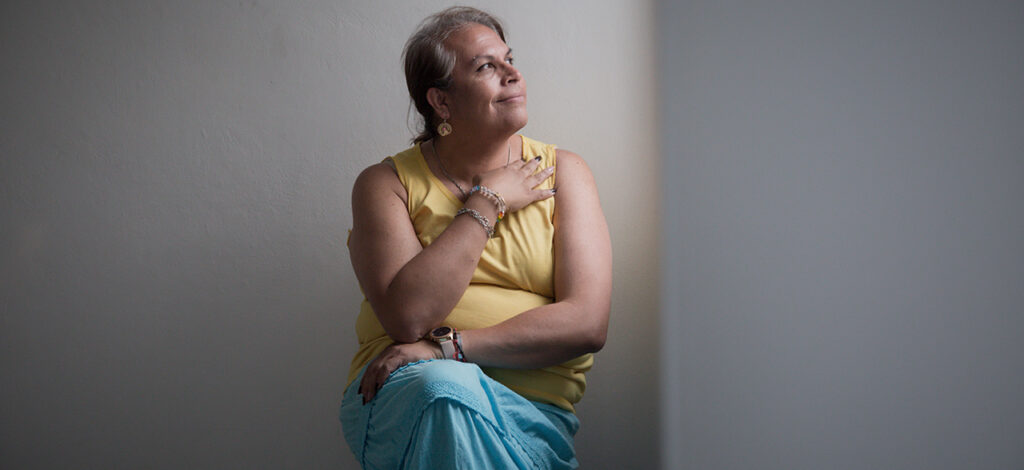
“That’s why the first thing we do when a case is referred to us is request an urgent file. It’s important to keep in mind that, in addition to addiction, these girls have to deal with other health problems. They are HIV-positive, and they have sexually transmitted infections (STIs), such as HIV and syphilis. They are a population that is very vulnerable to the crisis we are experiencing.”
MSF is one of the organizations that provides support with some treatments. “One of our residents has colon cancer. She receives her treatment and colostomy bags from this organization. We survive on donations, and each bag costs more than 400 pesos. If we didn't receive this help, what would become of her?”
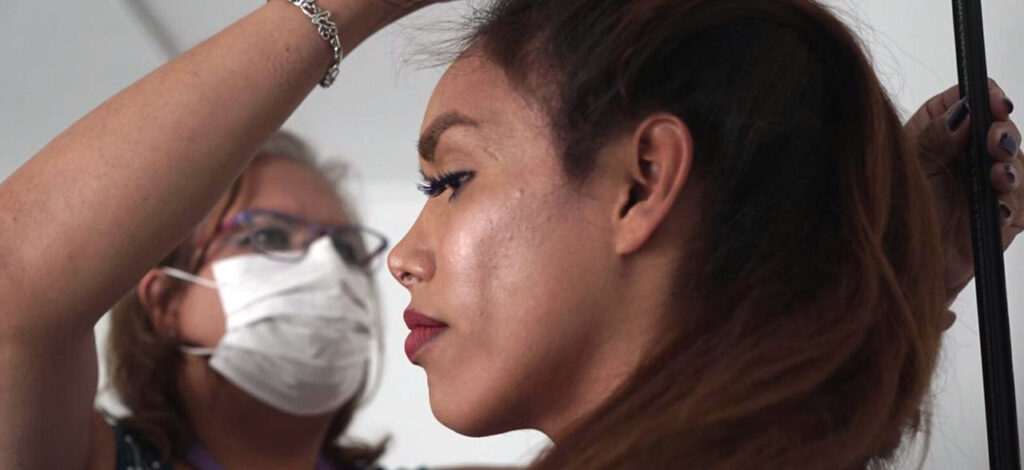
Márquez has just finalized an agreement for an outside doctor to visit them every Saturday. “The idea is that this service will also be extended to the residents of the hill, free of charge.” The suburbanization of the capital along the border with the State of Mexico has led to the emergence and expansion of working-class neighborhoods like Colonia Casilda, which climbs the Chiquihuite Hill. Neglected for years by the government, violence and crime are part of life for its inhabitants, residents who “have to make do” to survive in an unpopulated valley where public transportation is scarce.
The psychologist, who worked for nine years at the National Institute for Adult Education (INEA), has signed an agreement with this institution to further the girls' education. "Except for two of them, all the residents finished elementary school, so most are in middle school or studying to complete high school."
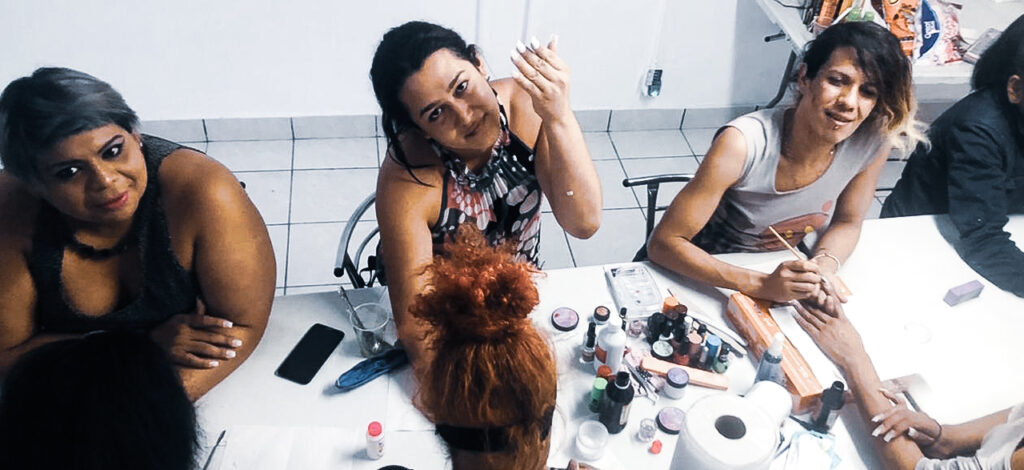
Without any financial support other than the donations Cuevas receives in her personal account, the director keeps the house running by improvising a system of discipline. “There are rules in this house, and if they aren't followed, there are consequences,” the activist states firmly. In addition to study sessions, the girls participate in three weekly workshops and organize themselves into working groups where they talk about their emotions and listen to one another. “And the results are noticeable; some arrived angry and disillusioned. In recent days, the atmosphere has improved considerably,” Cuevas affirms.
Tiffany confesses she's very excited about finishing high school and going to university. Kenya inspires her. “I've found hope for the future; I didn't have it on the streets. Since I was 12, I had no hope for anything. How can I ever thank her enough?” The director has told them that their reward is leaving the home with a diploma. “The first three months are designed for them to begin their studies and stabilize emotionally. Little by little, they take on responsibilities until they find a job through the Mexico City Labor Department. Studying excites them again,” says Cuevas, who understands them better than anyone. She too was homeless and spent 10 years in the Reclusorio Norte prison, located in the same borough as the shelter.
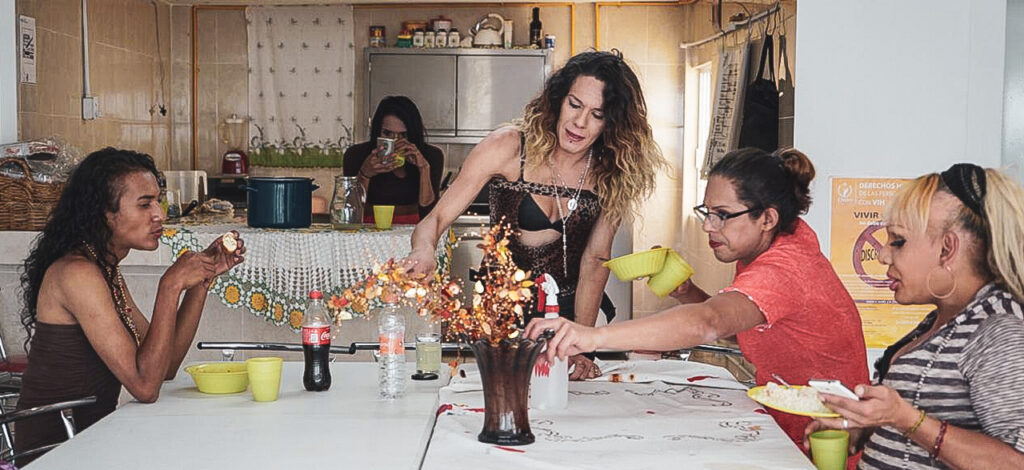
“The very first thing that impacts them is feeling the warmth of family again, the appreciation of others, the feeling that they care about you, about your well-being—it’s something very beautiful,” says the activist. The women in the house form a family and take care of each other. Just a few days ago, one of the girls, diagnosed with depression, attempted suicide. Two companions prevented her from taking her own life. “It was a real tragedy, but we carry a heavy burden,” explains Dayling, who began prostituting herself at 14, before transitioning. “Doing sex work means facing death every day. You don’t get paid, you get robbed… The street is a school; it destroys you. If you’re smart, you know how to take advantage of it. It destroyed me,” says the Honduran woman. And she declares: “I’m not leaving here as a prostitute again. Here, my perspective has changed. I’ve rediscovered how exciting and thrilling it is to go back to studying, to have the warmth of family, sisters, and a mother.”
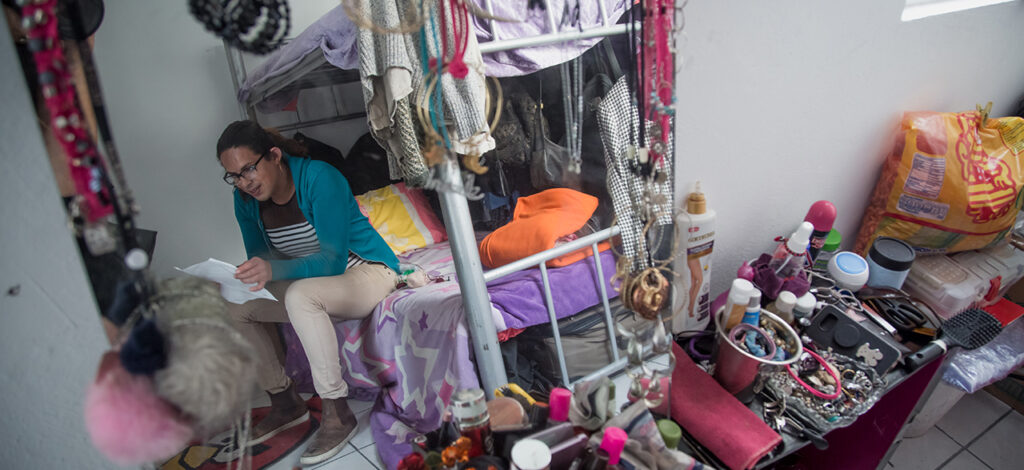
This house, a space free from violence and discrimination where people rebuild their lives, is a project Cuevas had been planning for many years, ever since her friend Paola Buenrostro was murdered on September 30, 2016. The shelter was named in her memory. “It’s truly important that this center is named after her, because it means that all my sweat and tears after Paola’s death were worth it. She was my best friend, and a wretch, who hasn’t paid for his crime, took her from me,” the activist says, flashing a huge, proud smile. “That a shelter for victims of indifference and violence bears the name of a sex worker, or as they vulgarly call her, 'a whore is from the corner,' is quite a lesson for institutions and society itself. Don’t you think?”
All our content is freely accessible. To continue producing inclusive and rigorous journalism, we need your help. You can contribute here .
We are present
We are committed to journalism that delves into the territories and conducts thorough investigations, combined with new technologies and narrative formats. We want the protagonists, their stories, and their struggles to be present.
SUPPORT US

FOLLOW US
Related notes
We are present
This and other stories are not usually on the media agenda. Together we can bring them to light.