

Covid-19 in Brazil: LGBT+ activism creates solidarity networks in the face of state absence
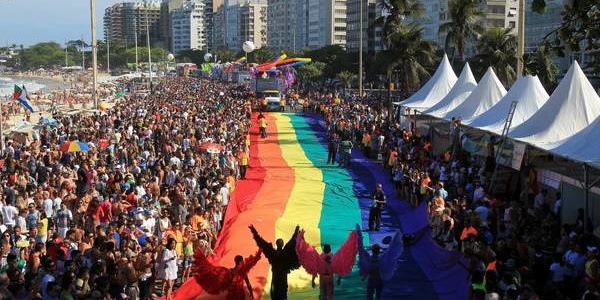
In Brazil, the daily lives of LGBTQIA+ people are marked by survival strategies.

Share

By Sellena Ramos; Joao Hugo and Marcos Tolentino*
Since the start of the coronavirus pandemic, Latin America and the Caribbean have seen more than 50,000 confirmed cases. Brazil is the hardest-hit country in the region, with over 20,000 confirmed cases and more than 1,000 deaths. Alongside news reports on the pandemic's spread, the Brazilian press is publishing initiatives and projects aimed at mitigating its social impact. For many Brazilians, this situation highlights issues of survival, resilience, and solidarity. The question of what will be built after this, and whether the crisis will prompt a re-evaluation of how we relate to one another, is a recurring theme in the media and on social networks.
The climate of uncertainty and anxiety is exacerbated by President Jair Bolsonaro's stance . In the last two months, Bolsonaro has stated that the coronavirus pandemic is a hysteria created by the press and that it is simply a flu like any other.
[READ ALSO: Brazil: “One hundred days of attacks on the rights of LGBT+ people” ]
If the Brazilian population in general feels unprotected in the face of a president who does not want to understand or acknowledge the seriousness of the situation, in the case of LGBTQIA+ people it is even more serious because we are in a period of setbacks in political rights and exposure to vulnerabilities.
LGBTQIA+ Panorama in Brazil
In Brazil, the daily lives of LGBTQIA+ people are marked by survival strategies. Regional, racial, class, age, and gender inequalities further exacerbate this situation. For some, these strategies need to be deliberately planned. For others, they are less noticeable, as they have the privilege of feeling like they belong to a society where cisheteronormativity dictates social relations.
When sexual orientation and gender identity deviate from hegemonic cisheteronormative patterns, and LGBTphobic crimes are structural , many LGBTQIA+ people are expelled from their homes, excluded from their social circles, and even murdered. According to the Second Report on Crimes Against LGBTQIA+ People in 2018, published by the Bahia Gay Group (GGB), 420 people were killed in Brazil in 2018. According to the Dossier on Murders and Violence Against Trans People in Brazil, published this year by the National Association of Transvestites and Transsexuals (ANTRA), Brazil fell from 58th to 68th place in the ranking of safe countries for LGBTQIA+ people.
[READ MORE: Lana from Holland: “Being trans in Brazil means living in danger every day” ]
It is important to remember that there is underreporting and a lack of government data, mainly due to the absence of a law that criminalizes LGBTphobia. In the Federal Legislature, bills addressing the specific demands of the LGBTQIA+ population are stalled by the presence of the so-called evangelical bloc. Consequently, it was the Supreme Federal Court (STF) that made decisions guaranteeing, for example, marriage equality. On June 13, 2019, the STF criminalized LGBTphobia in Brazil, and it became penalized under the Law Against Racism (7716/89), which now addresses discrimination based on prejudice of “race, color, ethnicity, religion, and national origin.” However, we know that a gap exists between the law and its implementation.
Thus, the coronavirus pandemic found us in a context of the absence of national public policies for LGBTQIA+ people. This situation has not yet been changed, taking into account our specific demands.
We need effective policies, such as measures that guarantee subsidies and shelter for LGBTQIA+ people expelled from their homes, who do not have access to the labor market and who find in prostitution the only financial way out.
On April 1, emergency aid for three months was announced for informal workers in Brazil.
Regarding healthcare, on March 17th the Ministry of Health issued a directive to specialized services instructing them to increase the availability of antiretroviral medications and Pre-Exposure Prophylaxis (PrEP) in pharmacies. This measure affects a large portion of our population. However, the social exclusion and marginalization we face in other areas extends to hospitals and clinics, where respect for sexual orientation and gender identity is not guaranteed.
Aid campaigns of activism
The role of the State is fundamental in subsidizing the needs of society. When it comes to the LGBTQIA+ population, support is lacking, and we must fight daily to compel the State to fulfill its responsibilities and provide resources. There are fundraising campaigns for financial resources, food, and personal hygiene items throughout the country, driven by sexual diversity activists. Some examples include the "Strengthen a Trans Person" campaign, promoted on social media by Erika Hilton, a state representative from the Activist Caucus; and fundraising campaigns carried out by the Poc Network in Belo Horizonte; by the Group for Life in Rio de Janeiro; by the Center for Reference and Defense of Diversity and by the São Paulo LGBT Parade Association; by the Trans Pra Frente Collective and by the Bahian Association of Transvestites, Transsexuals, and Transgender People in Action (Atração) in Salvador. Also in Bahia, the Drag Movement launched a campaign to collect non-perishable food and hygiene items to help drag artists who are currently unable to work during the quarantine.
[READ ALSO: #Brazil Threatened with death, the only gay congressman resigned and went into exile ]
In addition to collecting food and personal hygiene items, we noted that one of the forms of mobilization in Brazil's LGBTQIA+ movement has been the production of information. The National Association of Transsexuals and Transvestites (ANTRA), for example, produced two informational booklets. The first was aimed at transvestites and trans women sex workers.
The second booklet provides information on how to react in cases of domestic violence during social isolation, in order to address a possible increase in the risk of attacks against LGBTQIA+ people in these situations. As ANTRA points out, many LGBTQIA+ people are forced to live in toxic environments, with abusive family members, and without the possibility of contact with other members of the community.
On social media
The isolation of LGBTQIA+ people has also been combated through social media. The Brazilian Association of Lesbians, Gays, Bisexuals, Transvestites, Trans and Intersex People (ALGBT+), for example, developed a series of "LGBTI+ Dialogues" on Instagram, where specialists discuss topics related to the experiences of LGBTQIA+ people in the context of the pandemic.
Social media has also become a space for sharing issues related to the mental health of LGBTQIA+ people, which can be exacerbated by social isolation. In this regard, the LGBT+ Reference Center of Campinas (SP), the first to offer this type of support, has also utilized social media. Another initiative on social media is the dissemination of queer culture and art. On April 4th and 5th, the LGBT Online festival, “Marsha! Entra na Sala,” took place, featuring twenty hours of programming including shows, DJ sets, and discussions.
The shelters
Within this framework, shelters also play a role. Their development in recent years represents emerging actions in response to setbacks in assistance policies for the LGBTQIA+ population. In Brazil today, there are 15 shelters distributed throughout the country, operating alongside the state. There, in addition to having access to basic necessities—shelter, food, and personal hygiene items—residents have access to comprehensive health services and initiatives for cultural and social reintegration. In response to the pandemic, some shelters joined together and developed the Brazilian Network of LGBTQIA+ Shelters (REBRACA) with the aim of strategically addressing Brazil's health, political, and social crises. On March 31, REBRACA launched a collective fundraising campaign for basic food baskets and hygiene supplies.
Aurora House in Bahia
In addition to this collective effort, each shelter adapted its services to ensure comprehensive support during the quarantine. Casa Aurora emerged in May 2019 as a shelter for LGBTQIA+ people, located in the center of Salvador, Bahia state. The institution welcomes young adults between 28 and 29 years old who are in vulnerable situations and at social risk, abandoned or estranged from their families because of their sexual orientation and gender identity. Here, we guarantee them three meals a day, personal hygiene products, and services such as socio-educational activities, legal services, and a Social Clinic with therapeutic support and social, psychological, and psychiatric assistance. In its short history, the institution has already assisted nearly 400 LGBTQIA+ people.
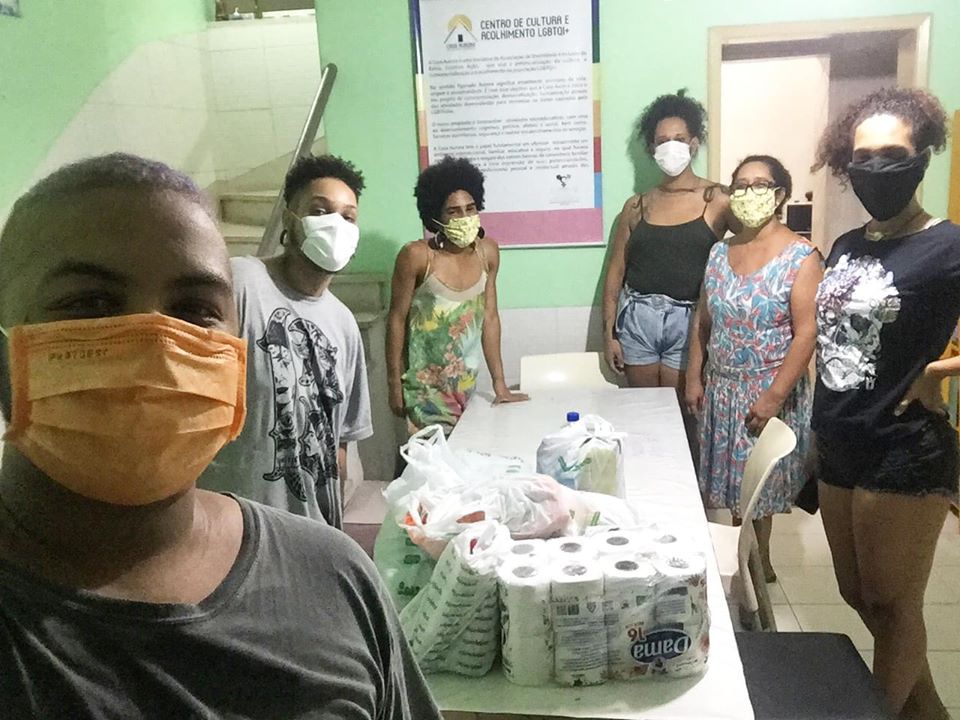
Casa Aurora is the only shelter specifically for LGBTQIA+ people in the state of Bahia. Coordinated by activists João Hugo and Sellena Ramos, we sustain ourselves through philanthropic and micro-donations, collecting food, personal hygiene items, and clothing.
Due to the underreporting of coronavirus cases, the difficulty of accessing testing in Brazil, and the lack of public policies for LGBT+ people, we cannot fully grasp the impact of the pandemic on the community. Therefore, the shelters and all the networks created during this past month by LGBTQ+ activists have strengthened our strategies and practices and our networking with other groups and institutions in our community.
*LGBT+ activists and members of the Aurora Shelter
Share
We are present
We are committed to journalism that delves into the territories and conducts thorough investigations, combined with new technologies and narrative formats. We want the protagonists, their stories, and their struggles to be present.
SUPPORT US

FOLLOW US
Related notes
We are present
This and other stories are not usually on the media agenda. Together we can bring them to light.