

The trans nurse facing the pandemic: "We need the job quota law"
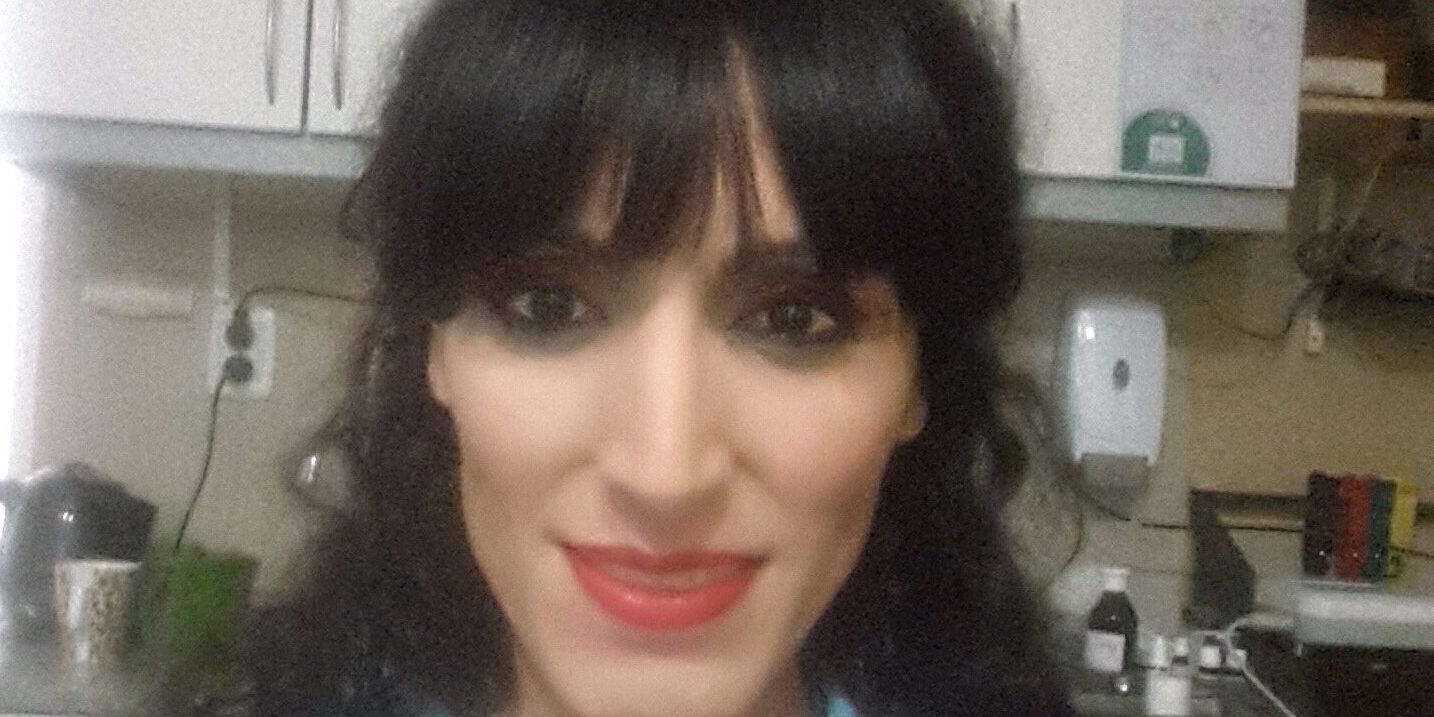
She is part of the healthcare staff at the Italian Hospital of Mendoza and from there she faced the COVID-19 pandemic.

Share

Julieta Antúnez Ríos is a member of the healthcare staff at the Italian Hospital in Mendoza, where she is on the front lines of the COVID-19 pandemic. She is deeply concerned about the plight of the trans and travesti community, who are facing eviction and hunger. “A bag of food for a photo op isn't enough. We need the Lohana Berkins Trans Employment Quota Law.”
“We are the generation of two pandemics,” Julieta Antúnez Ríos tells Presentes at the beginning of the interview. She recalls the days of H1N1 from the context of COVID, just a decade later. Today she works at the Italian Hospital in Mendoza and hasn't seen her parents, siblings, or nephews for a month.
“We have to navigate this pandemic with information, to overcome fears but also to minimize mistakes,” she advises. In the last month, in addition to working at the hospital, she recorded videos for social media about measures to prevent the coronavirus.
Thirteen years ago, she graduated as a nurse. She began her studies under her biological identity, but received her degree under her true identity. Julieta has worked at the Italian Hospital in Mendoza. There, after being elected as a union representative, she began receiving prosthetic breasts. “You had to put your body on the line; you couldn’t just talk about it.” Driven by trans activism, union activity, and a vocation for service, she dedicated ten years to the Emergency Room and has been working in Administration for three.
“It wasn’t easy: if women are judged by a double standard, we are judged by a triple one,” she tells Presentes. “Nurses are the link between the system and the patient. We walk the fine line between life and death. The work of nurses is invaluable and always less recognized than that of doctors.” That’s why the AMS (just before the pandemic) declared 2020 the Year of the Nurse.
Today, 14% of those infected with COVID-19 are healthcare workers. “Of course we’re afraid, but I agree with the measures the government has taken; the other 50% has to come from the public. Those who seem dangerous to me are the ones who underestimate the pandemic and think it’s all a big hoax.”
But one of Julieta's biggest concerns is the plight of the trans community in Mendoza. “The vulnerability of this community is terrible. And it can't be solved with a bag of food and a photo op. That seems insulting to me. They need to stop waving rainbow flags from behind a desk and start developing concrete public policies. We need the Lohana Berkins employment quota law.”
Without shelter or law
“For many of my colleagues, 85%, the only way to survive is through prostitution. And in this context, there are neither opportunities nor clients. Many share rooms or rent in boarding houses and pay by the day or by the week. If they don't have clients, they don't eat. They end up on the street.” Julieta delivers this diagnosis with pain. “And how can you talk about face masks to someone who's hungry?” She has been saying (and advocating for) that access to housing is directly related to trans and travesti employment for some time.
[READ ALSO: Transvestites and trans people in quarantine: evictions and housing emergency ]
“In 2015, we presented a bill through the Peronist Party, which was shelved. Two years later, it was reintroduced by the Workers' Left Front (FIT) and was shelved again.” In March of this year, together with the LGBTIQ+ League of the Provinces, they persisted, with the support of representatives from across the political spectrum.
[READ ALSO: Map of the transvestite-transgender employment quota in Argentina ]
The League is an organization whose collective actions are geared towards promoting the human rights of dissident groups living in the Central, Cuyo, Northeast, Northwest, and Patagonia regions. “It is a dissident, federal, national, popular, democratic, and feminist space. It is made up of 32 groups, with a presence in 16 provinces and 37 localities across Argentina.” According to its report, the emergence of this collective reveals alarming figures:

91% do not have formal employment. 82% attribute these difficulties to discrimination based on gender identity and/or expression. 45% engage in or have engaged in sex work and/or are or have been in situations of prostitution. This figure rises to 85% among trans women and transvestites. 64% of trans and transvestite people lack health insurance. 58% have suffered violence at the hands of the police. And the average life expectancy is 36 years.
The law that Julieta and her colleagues are promoting is named after Lohana Berkins, in honor of the trans activist who died in 2016, and is one of the national projects for a trans employment quota . Julieta clarifies: “We don't like to talk about a quota but rather a minimum. We believe that a quota implies a ceiling and, in a way, a concession. For inclusion to be real, we think it's better to establish a minimum so that the number of workers can continue to grow from there.”

That goal never rests. Nor does her constant analysis of pandemic data. She looks at numbers, reads reports, and observes nature's reaction. The air in Mendoza has purified by 60%, for example. Humans are harmful animals, she thinks. But after her shift at the hospital, she turns her camera back on to upload another video about fighting the virus and protecting everyone she can.
All our content is freely accessible. To continue producing inclusive and rigorous journalism, we need your help. You can contribute here .
]]>We are present
We are committed to journalism that delves into the territories and conducts thorough investigations, combined with new technologies and narrative formats. We want the protagonists, their stories, and their struggles to be present.
SUPPORT US

FOLLOW US
Related notes
We are present
This and other stories are not usually on the media agenda. Together we can bring them to light.