

Two webinars from Presentes on journalism and coronavirus
María Eugenia Ludueña and Ana Fornaro spoke about "Feminist communication as a response to the pandemic" and "Communication strategies in service of human rights."

Share

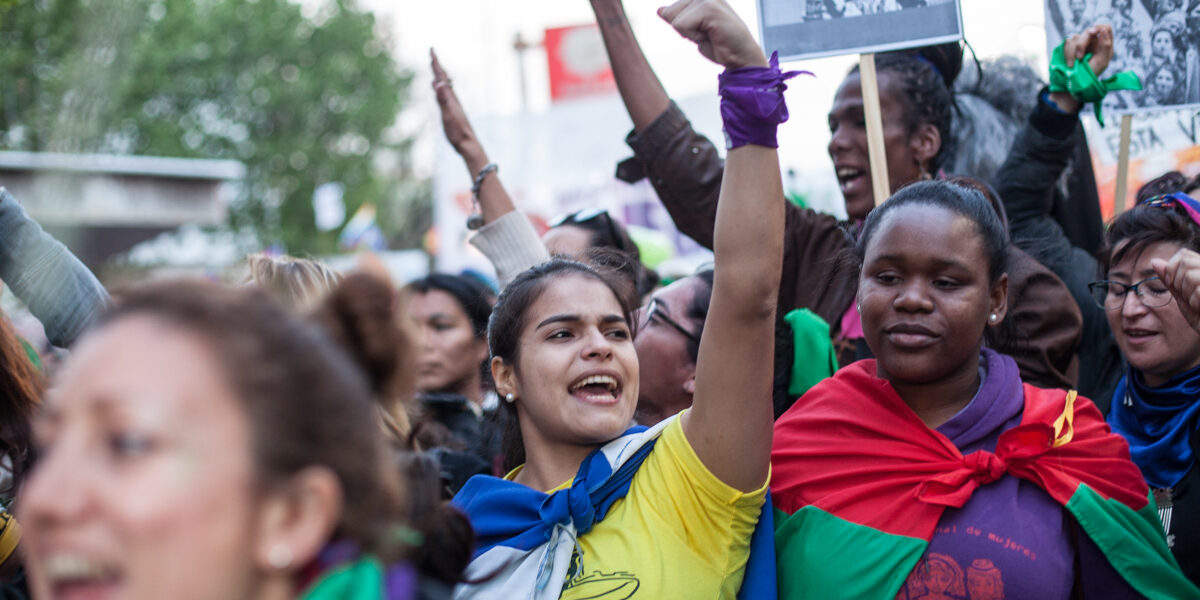
Photo: Luciana Leiras
As part of the "Disinformation and Covid-19" series organized by Wikimedia Argentina, Fundación Vía Libre, and Ártica Online, María Eugenia Ludueña and Ana Fornaro, directors of Agencia Presentes, presented two webinars. On April 17, they spoke about "Feminist Communication as a Response to the Pandemic," and on Monday, April 20, about "Communication Strategies in Service of Human Rights."
The first session addressed what feminist journalism entails, what we mean by "gender perspective," and how to create an anti-patriarchal media outlet. It involves, among other things, dismantling sexist narratives and making visible the gender-based violence that is often normalized. In the context of the pandemic, this violence against women and LGBT+ people in homes increased, and journalism must report on this, as well as the fact that domestic chores fell disproportionately on women.
[READ ALSO: Feminisms and journalism: 10 survival stories ]
On the other hand, it is the task of feminist journalism to also report on "dissident quarantines," those situations of social confinement that affect women and LGBT+ people who have neither families nor support networks and live hand to mouth. This was evident in the case of sex workers, domestic workers, many trans people without access to housing, and Indigenous women who are often harassed by security forces. In the second part of the workshop, a ten-point guide created by Agencia Presentes for this type of coverage was presented.
The webinar “Communication Strategies in Service of Human Rights” focused on the following key points: 1) Which human rights are being violated in the context of the pandemic? 2) Which population groups are most affected by these rights violations? 3) How is this being made visible through journalism, and what rights are also being violated when reporting on what is happening? Emphasis was also placed on the use of language and its capacity to generate meanings (for example, calling the virus an “invisible enemy”) that encourage symbolic and media violence and hate speech. Using examples from Agencia Presentes and other media outlets, the webinar demonstrated how it is possible to denounce these human rights violations. The second part addressed journalistic “good practices” and how the role of human rights journalism is evolving, often transforming into solutions journalism by coordinating solidarity campaigns. Agencia Presentes put together a special multimedia feature that includes a "how to help" section, where this data is compiled.
Share
We are present
We are committed to journalism that delves into the territories and conducts thorough investigations, combined with new technologies and narrative formats. We want the protagonists, their stories, and their struggles to be present.
SUPPORT US

FOLLOW US
Related notes


We are present
This and other stories are not usually on the media agenda. Together we can bring them to light.