

Honduras: Trans activist arrested while out looking for food: "This is not an isolated case"
"The arrest of Gabriela Redondo - now released - in San Pedro Sula is not an isolated case and adds to the dozens of complaints we have received where the Security Forces violate and infringe upon the rights of trans people."

Share

By Paula Rosales
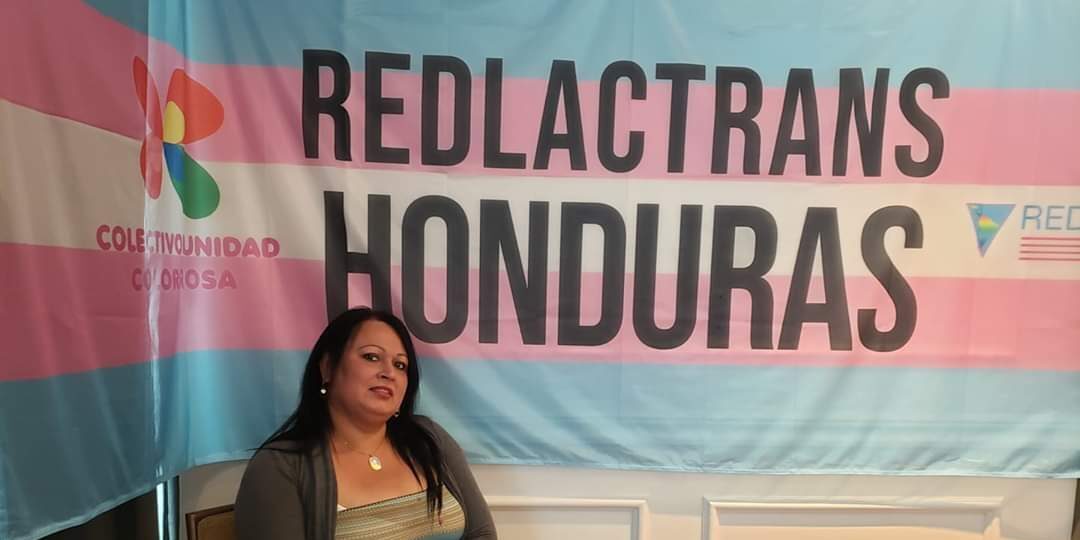
Human rights defender and director of the Pink Unity Collective in Honduras, Gabriela Redondo, was arrested on Saturday, April 11, by police in the Central American country when she went out to buy food a few meters from her home. The alleged charge was violating a curfew imposed by the government to try to curb further outbreaks of the coronavirus.
After being detained on the street for several hours, she was taken to the traffic police station. During her entire time in custody, she was denied legal assistance. Upon her release, Gabriela Redondo publicly denounced her arrest as unjustified and arbitrary . Organizations say this is not an isolated case and that they are receiving numerous reports of harassment against transgender people by law enforcement .

The trans activist spoke with Presentes and recounted that she left her home that day, located in the industrial city of San Pedro Sula (338 kilometers northwest of the capital), because she had no food and no money. She was walking a few meters from her house to where her sister had offered her food.
SEE MORE: Coronavirus Special
"Security forces violate the rights of trans people"
“I was leaving the alleyway near my house and the police were two blocks away making arrests. I thought they weren't going to stop me because I was just going around the corner from my house. And I told the policeman that I was just going to get some food. He told me to park, asked me if I had any permit to be on the street, they kept me there for several hours, without saying anything to me,” he told Presentes.
On March 23, the government of conservative Juan Orlando Hernández decreed a nationwide curfew in Honduras to contain the spread of the virus. The measure has been extended until April 19. Official figures estimate that more than 6,000 people have been arrested in Honduras for violating the curfew, and some 2,000 vehicles have been confiscated by authorities.
“The police officer seemed to want to provoke me so he could justify assaulting me. He told me I had taken a picture of him and that he was going to do everything he could to arrest me,” he recalled.
“The arrest of the activist in San Pedro Sula, Honduras, is not an isolated case and adds to the dozens of complaints we have received where security forces violate the rights of trans people who leave their homes in search of food or to assist others in vulnerable situations,” the Latin American and Caribbean Network of Trans People – RedLacTrans – stated in a press release. The activists are demanding that states incorporate a gender perspective into their pandemic response strategies.
Discriminated against by police officers because of her gender identity
Gabriela Redondo lamented that the police officers who arrested her also violated her right to be recognized according to her gender identity and expression. She was called by the name registered on her driver's license.
“They mocked Gabriela’s name, calling me by the name on my ID. The Association has trained police forces on the rights of the trans population in Honduras. They made me suffer so much pain, so much shame, so much humiliation, and so much discrimination just to make our lives miserable,” she emphasized.
The Honduran congress has been studying a draft law on gender identity since 2018, but to date it continues with little progress.
“We ask the State to support us with the gender identity law so that we do not suffer discrimination from people who, because they have a uniform and a weapon, believe they are superior to us and play with our dignity,” Gabriela said.
Fear of reprisals
After receiving threats for her work defending the human rights of the trans population in the Central American country, Gabriela is under protection. Following her arrest, she fears police attacks in retaliation for the public denunciations made by social organizations regarding her unjustified detention .
“The police escorted me home for my protection, but I feel like they know where I live and might later attack me or look for me in civilian clothes because they didn't achieve their goal of detaining me for 24 hours as stipulated. It's fear, fear that they know where I live, for my life and the lives of my family,” Gabriela reported.

Since the curfew and the closure of markets and businesses went into effect, protests have been taking place in the capital, Tegucigalpa, due to food shortages. President Hernández ordered the military into the streets to suppress the demonstrations. It is estimated that three people were injured during the dispersal.
Vulnerable trans population in the health crisis
The Trans Feminist Association-AFET denounced that the subsistence conditions of trans women in Honduras have reached unsustainable levels because many survive thanks to the sex work they do on the streets of San Pedro Sula and Tegucigalpa.
“The problems we face in this crisis are because many girls work daily to support themselves and now they can’t go out into the streets. They don’t have food, they can’t pay their rent. We want to help them, but we can’t go out into the streets to support them; that puts us at risk, like what happened to me yesterday, because the police always want to attack us,” Gabriela said.
“I ask the Honduran government to fulfill its promises so that people don't have to be on the streets begging or searching for their daily bread. They should give them the solidarity bags or the Honduras Solidaria bag, where they're supposedly providing a sack of food. We, as trans women, aren't included because supposedly it's only for families, and we don't have families ,” Gabriela pointed out.
As of April 12, Honduras reports 393 confirmed cases of coronavirus and 25 deaths.
In neighboring El Salvador, President Nayib Bukele has also been denounced by human rights organizations and the Supreme Court, which has ordered him to refrain from arresting people who have violated mandatory home quarantine. Some 1,716 people in El Salvador have been detained and sent to a quarantine center for 30 days.
]]>We are present
We are committed to journalism that delves into the territories and conducts thorough investigations, combined with new technologies and narrative formats. We want the protagonists, their stories, and their struggles to be present.
SUPPORT US

FOLLOW US
Related notes


We are present
This and other stories are not usually on the media agenda. Together we can bring them to light.