

How LGBT+ migrants are experiencing the pandemic on Mexico's northern border
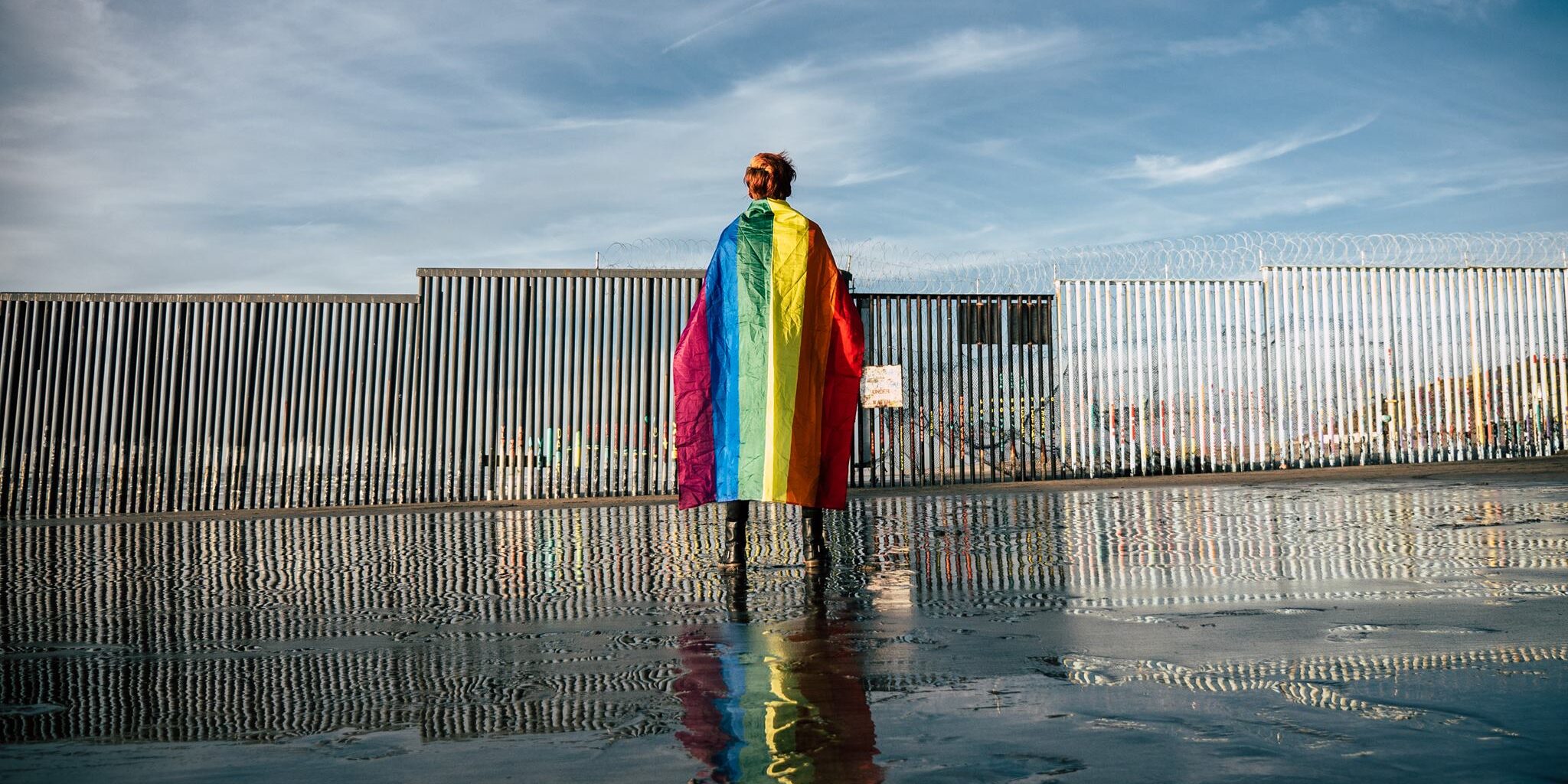
The LGBTQI+ migrant community in Mexico decided to take refuge in shelters and spend this time of pandemic together.

Share

By Silvia Soler and Milena Pafundi
Photo: Rainbow House
Right now in Tijuana, no one is trying to cross the border. The streets are empty. The LGBTQI+ migrant community in Mexico has decided to stay in shelters and remain united during this pandemic. Following Donald Trump's announcements that he will no longer provide economic aid to migrants—there will be no asylum policies—and the tightening of immigration policies by Mexican President Andrés Manuel López Obrador, who has refused to grant humanitarian visas to applicants at the southern border with Guatemala, the situation is becoming increasingly difficult for migrants in transit through Mexico.
LGBT+ migrants in Tijuana are trapped between the violence they were fleeing, the violence of organized crime, and the violence of immigration authorities. Now, they also face the added violence of being exposed to coronavirus while waiting for the US border to reopen.
Cristina Franco, a teacher and director of the Casa Arco Iris LGBTI shelter in Tijuana, told Presentes that quarantine is not mandatory in Mexico, and they are appealing to civic responsibility. Each state sets its own rules. In Tijuana, the State Guard patrols the streets wearing masks and gloves, asking people to return home if they don't have an urgent need to be out.
[READ ALSO: Being LGBT and traveling in the Central American migrant caravan ]
Currently, 18 people, mostly from Central America, are staying at Casa Arco Iris. There are also a smaller number of Jamaicans, one Cuban, and two Mexicans. Things aren't easy these days, as they can't organize anything to maintain a sense of community. All the workshops have been suspended, and hardly anyone goes out anymore. "They're calm because they've known each other for a long time; some have been here for seven or eight months. The most recent arrival came a month ago," says Cristina, adding that they might stay there for quite a while longer.
Those who managed to cross the border into the United States before the tightening of immigration policies are living with great concern during the Covid-19 pandemic.
[READ ALSO: This is how trans migrants dream and die on the US border ]
Yessi is trans and arrived in Tijuana in March 2019. After spending four months at the Casa Arco Iris shelter for LGBTI migrants, she was able to request asylum by turning herself in to U.S. immigration authorities. She spent 13 days in the infamous "iceboxes" (ICE detention center): "The mistreatment was terrible, and it's a very traumatic situation," Yessi Prsentes recounted. "Then I was detained in jail for two and a half months." Now she lives in California and is unemployed because all the places that could offer her work are closed: restaurants, hotels, cafes, etc. "Now I feel very traumatized because the situation here is terrible, and we can't go out on the street; we don't have access to doctors or psychologists. Those of us on hormone therapy don't know when we'll be able to access our hormone supply again. This is affecting LGBTI people very hard."
Without humanitarian visas
Almost everyone at Casa Arco Iris has their number and is waiting to be called. There are also people trying to get from Tapachula to Tijuana. “Some trans women have contacted us through the website, and it seems Immigration isn't issuing them humanitarian visas. They're stranded there in Tapachula. For now, we're not expecting anyone, nor are they leaving,” says Cristina.
“I want to request asylum because I’m fleeing a violent relationship. I was threatened, and I have proof. My ex-partner was a doctor and worked for the mafia. I was just about to apply for my number, but I can’t because everything is closed due to the pandemic,” says Iván, 34, from Guadalajara.
Protocols
There are 33 migrant shelters in Tijuana. They are all in communication and supporting each other during this time. Casa Arco Iris is one of the two shelters for LGBTQ+ migrants. All recommended hygiene protocols are being followed there: hand sanitizer at the entrance, handwashing upon entry, and doubled cleaning shifts.
“We’ve set up a quarantine room in case anyone develops the common flu. They would have to stay in the room if they get the flu. In that case, their family doctor is called. So far, we’ve had one case of the common flu and a prolonged cough. We don’t have any positive cases,” says Cristina.
How Rainbow House Works
Casa Arco Iris allocates part of its budget to food, and the rest comes from in-kind donations. Some of the migrants staying at the shelter work, although only two were able to keep their jobs during the pandemic. The rest, who worked in local cafes and restaurants, no longer go because the businesses closed and claim they can no longer afford to pay them.
“Those who have to cook have the task of cleaning the food, fruits and vegetables a little more thoroughly,” says Iván.
“We at the shelters are very careful to follow the protocols to the letter. We understand that we are very exposed; we can't afford to have more than 10 people gathered together. We take extreme precautions: any member of our team who shows any symptoms is given sick leave and told not to come in,” Cristina adds.
International organizations like UNHCR are keeping a close eye on things. They call them two or three times a week and have provided them with hygiene products, antibacterial gel, masks, and gloves.
Mexico in the face of the pandemic
Prevention policies in Mexico aim to strike a balance that protects health and the most vulnerable economies, as announced by Undersecretary of Health López-Gatell at the end of March.
The declaration of a state of emergency at the national level on March 31 does not include the obligation and control by the security forces of the citizens remaining in their homes.
The social distancing campaign, a package of measures that aims at the mass demobilization of people, is the main prevention campaign implemented by the government.
Mexico, a country with around 60% informal employment, cannot deny subsistence to millions of people who live hand to mouth. This is why the measures taken here have not been like those in other countries in the region, which have implemented mandatory "Stay at Home" orders. LGBT+ migrants along the US border face this same dilemma: between the possibility of economic survival and the even more precarious wait for asylum processing at the border.
This situation contributes to insecurity both in the face of the pandemic and in the face of organized crime that preys on migrants in what has been the most violent month - despite the pandemic - with a total of 2,585 murders recorded in March.
All our content is freely accessible. To continue producing inclusive journalism, we need your help. You can contribute here .
We are present
We are committed to journalism that delves into the territories and conducts thorough investigations, combined with new technologies and narrative formats. We want the protagonists, their stories, and their struggles to be present.
SUPPORT US

FOLLOW US
Related notes


We are present
This and other stories are not usually on the media agenda. Together we can bring them to light.