

Stories of dissident quarantines
Our reality hits hard with its particularities that are far from the romanticized notion of staying home with family.

Share

By Violeta Alegre
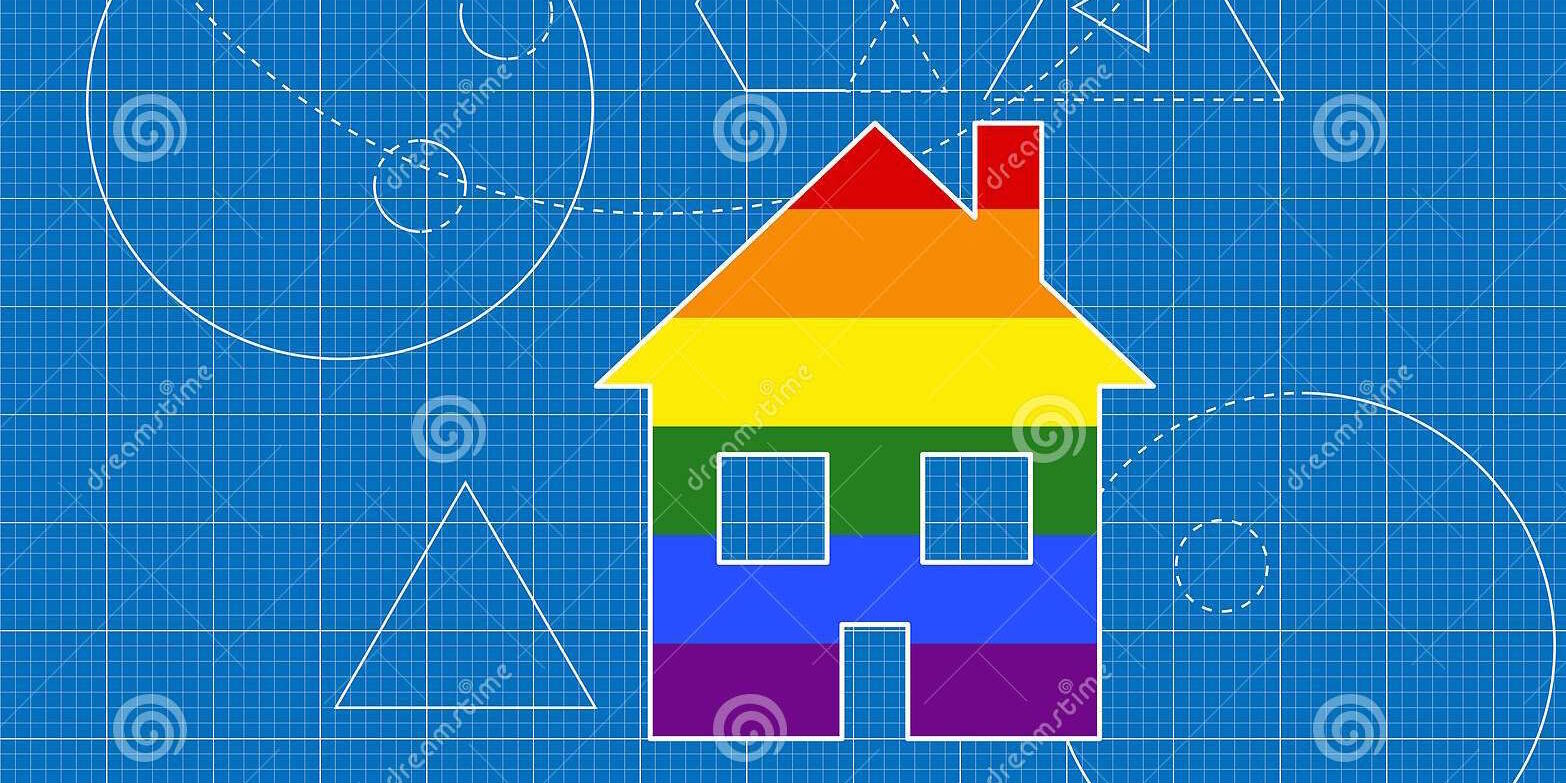
Illustration: dreamstime
During the mandatory quarantine, it seems like everything revolves around video calls and lockdown diaries, thanks to the technology available to those of us with access. But our reality hits hard, with its own particularities that are far removed from the romanticized notion of staying home with family. And this is key: What kind of families do trans women have? What kind of connections have trans people and other gender-diverse individuals been able to build? These past few days I've been talking to several of my comrades, and their stories paint a very different picture from what's often seen on social media.
[READ ALSO: Transvestites and trans people in quarantine: evictions and housing emergency ]
Yanina tells me she's desperate for Euge; her trans friend from San Miguel (Buenos Aires province) is without resources. She lives alone and has nothing to eat these days. So Yanina wants to get permission to go and bring her some food, even though her own health isn't good either. But she doesn't care, just as she doesn't mind taking some money from her pension to share with her friend. She says she's fed up, because even when she called a LGBTQ+ organization in the City of Buenos Aires, they told her they "don't reach that area of Greater Buenos Aires."
[READ ALSO: How quarantine is experienced at the Hotel Gondolín, home to 47 transvestites and trans people ]
Sofi is a sex worker and gave all her information to a paid sex cam site because she's terrified of meeting men in person. Despite the quarantine restrictions, her phone hasn't stopped ringing. At first, she thought it was just men wanting to exchange photos, but no. Many want to see her in person, even though it puts her at risk. Some of them claim to be the same heroes applauded every night at nine o'clock. They also claim to be members of the security forces. They tell Sofi, "I can come see you because I have a permit; I'm a police officer, a doctor, etc." She replies that she's absolutely terrified. But if things continue like this, she'll have no other choice. Double standards don't take a break during quarantine.
[READ ALSO: How Covid-19 affects LGBT+ people in the region: data and assistance ]
My family is a danger
What actions can we take for those whose home becomes a space of violence? I'm not only referring to women living with their abusers, but also to stories like Laura's, a 17-year-old trans girl who had to move back in with her parents, who abuse her with insults, beatings, and constant threats. Like hers, countless cases are coming to light of LGBT people for whom a friend's house becomes a place of escape and refuge from the daily violence of their families. These are veritable "house arrests" for those who have no other means of survival. Many children and adolescents pay the price of this violence.
[READ ALSO: Covid-19: Bachi Trans Mocha Celis created a network to help fellow trans women ]
Sabrina was forced out of her hometown of Salta by her family when she was 12, like so many other trans women across the country. Despite this, she remains the primary breadwinner for her family, sending money to her mother and siblings every month. Today, she's desperate because her hair salon is empty, and she can't even afford rent or food. She's also receiving eviction threats from the landlord. The government decreed that no one can be evicted for the remaining 120 days, but it seems that rule doesn't apply to predatory landlords who charge exorbitant rents to trans women simply for being trans.
You are the virus
The threat and dangers of “otherness” that trans people have always represented due to gender and sex issues can now be seen in almost everyone: people glare at each other with hatred when they cough, when they touch any part of their body, or when they don't respect the two-meter distance. And now everyone has become a threat in public spaces: potential perpetrators and victims of the invisible threat.
Of course, it will always worsen when the body-threat adds more conditions by intersecting other issues.
Even so, I doubt that learning will come. I hope so, but I doubt it. The quarantine is taking shape in necessary, but classist, measures, where it won't just be the virus that claims lives.
[READ ALSO: What happens to transvestites and trans people when it comes to love? ]
The support networks that have managed to entrench themselves are predominantly heteronormative and cisnormative, leaving many of us without nuclear families to support us in a state of emergency. Perhaps that wouldn't be the problem because, as Susy Shock says, "we no longer want to be this humanity." But then we must rethink how we envision other relationships, other economies, and other proposals that put dissent into practice by choice, not by consequence.
All our content is freely accessible. To continue producing inclusive journalism, we need your help. You can contribute here .
We are present
We are committed to journalism that delves into the territories and conducts thorough investigations, combined with new technologies and narrative formats. We want the protagonists, their stories, and their struggles to be present.
SUPPORT US

FOLLOW US
Related notes
We are present
This and other stories are not usually on the media agenda. Together we can bring them to light.