

COVID-19: For the first time, a Peruvian president includes transgender people
She did so within the framework of gender-restricted outings due to the coronavirus emergency.

Share

By Vero Ferrari
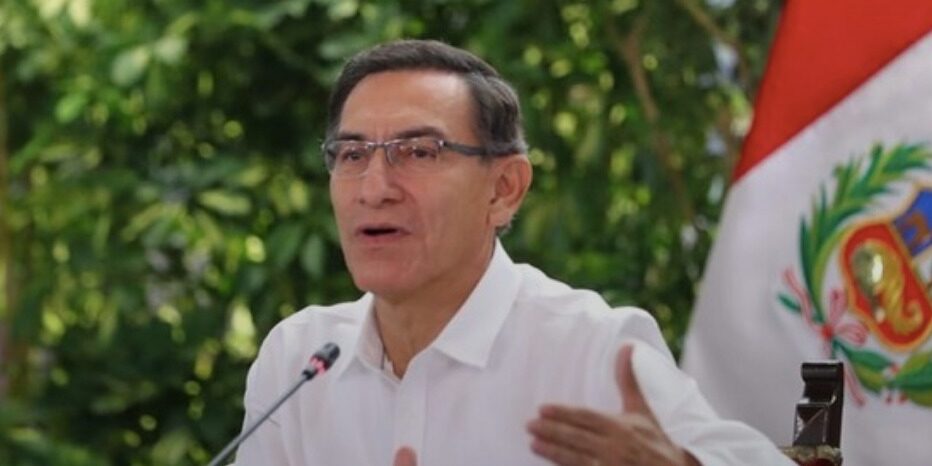
Peruvian President Martín Vizcarra announced that, in response to the coronavirus emergency, starting April 3, outings will be staggered by gender: men will be allowed out on Mondays, Wednesdays, and Fridays, and women on Tuesdays, Thursdays, and Saturdays.
In response to potential criticism of the measure that reinforces the gender binary, the president stated: “This government is inclusive, have no fear. When we speak of men and women, we are not simply considering one mentality or the other. We know that, within the broader concept of gender equality, there may be citizens who identify differently, who have different feelings. The Armed Forces and the National Police, who are responsible for enforcement, will receive clear instructions to ensure that this is not used as a pretext for any homophobic measures whatsoever. Our government is inclusive, and all the regulations we issue are designed with the entire citizenry in mind.”
[READ ALSO: How Covid-19 affects LGBT+ people in the region: data and assistance ]
[READ ALSO: Trans woman murdered in Lima and Serenazgo's inaction denounced ]
This is the first time a Peruvian president has mentioned, in any way, the Peruvian trans community, in the context of a health crisis that has made them even more vulnerable. Many of them, due to the lack of protection and guarantees from the State, are forced into sex work on the streets, renting rooms by the day and constantly facing poverty-related illnesses such as tuberculosis, pneumonia, and anemia (not to mention HIV), as well as police and security personnel who prevent them from working. Without their main source of income, they are surviving through community kitchens and donations, depending on the solidarity of people, social organizations, and some authorities, and are constantly at risk of eviction.
Reports of violence
During quarantine , reports have surfaced of transphobic violence against two trans women who were detained and forced to perform physical exercises alongside other detainees at police stations. The Ombudsman's Office stated that these physical measures are unconstitutional and constitute a serious violation of people's lives. This is especially concerning because the trans women are not only forced to perform these exercises, but are also filmed and exposed to public scrutiny, and made to repeat slogans that denigrate their own identity.
The Peruvian LGBTI and feminist community has demanded that the State protect the LGBTI population from possible cases of violence and police/military abuse if the Human Rights Manual applied to police functions is not respected and if prejudices and gender stereotypes are used.
[READ ALSO: What does this new Congress hold for the LGBTI community in Peru? ]
Activists are also demanding the immediate passage of the Gender Identity Law, which would protect transgender people from discrimination by providing them with an ID card that recognizes their gender identity, and a Law against Hate Crimes, which would punish crimes motivated by sexual orientation and gender identity/expression. They further demand that the National Identity Registry implement the Inter-American Court of Human Rights' advisory opinion and recognize the names of transgender people without requiring them to undergo a cumbersome legal process. Finally, they urge vigilance regarding any act that violates the rights of LGBTQ+ people, urging them to report it promptly and ensure that perpetrators are punished.
The historic moment Peru is experiencing, with a president finally addressing the trans community in the midst of a pandemic, should open the door to numerous opportunities to finally obtain all the measures necessary for LGBTQ+ people to live dignified lives, guaranteed by the State, with access to all their rights that have been denied until now. The State could finally fulfill its enormous debt to all vulnerable populations. May this virus serve to make us more humane.
All our content is freely accessible. To continue producing inclusive journalism, we need your help. You can contribute here .
We are present
We are committed to journalism that delves into the territories and conducts thorough investigations, combined with new technologies and narrative formats. We want the protagonists, their stories, and their struggles to be present.
SUPPORT US

FOLLOW US
Related notes


We are present
This and other stories are not usually on the media agenda. Together we can bring them to light.