

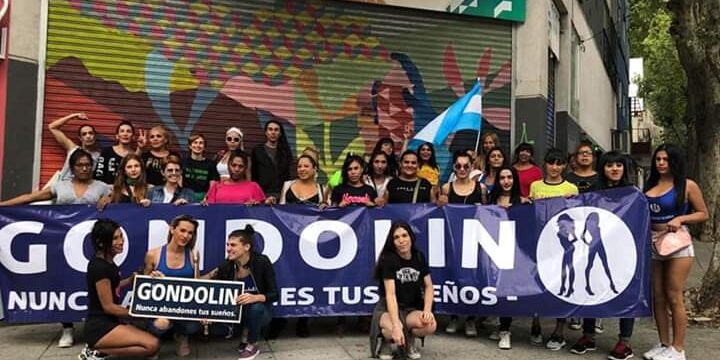
How is quarantine being experienced at the Hotel Gondolín, home to 47 transvestites and trans people?
The girls explain how they are protecting themselves from the threat of coronavirus, what they need to get through these days, and how they can be helped.

Share

By Alejandra Zani
Photo: Hotel Gondolin Archive
[NOTE UPDATED APRIL 27]
The mandatory quarantine found the trans and travesti community living in the Villa Crespo boarding house united and organized. In a conversation with Presentes, they explain how they are protecting themselves from the threat of the coronavirus, what they need to get through these days, and how they can be helped.
Marisa arrived at the Hotel Gondolín in 2006 after recovering from an eight-month stay at the Muñiz Hospital, where doctors thought she wouldn't survive. Today, she is 62 years old and has lived for fourteen years in the historic boarding house in Villa Crespo, along with 46 other trans and gender-diverse women. Many, many things have happened at the hotel, but never before a global pandemic.
“It’s the first time I’ve experienced anything like this, and I’ve lived through a lot of really bad things, stories of dictatorships, the military…,” Marisa tells Presentes. Mama Marisa. Grandma Marisa. It depends on who you ask. “Of course, the quarantine affected many of the women who are self-employed, independent workers, and now that they can’t go out, they’ve lost their income. They’re worried, they have no savings, they live day to day, you know? They don’t really know what to do, but they’re still following the rules. That’s just how it is.”
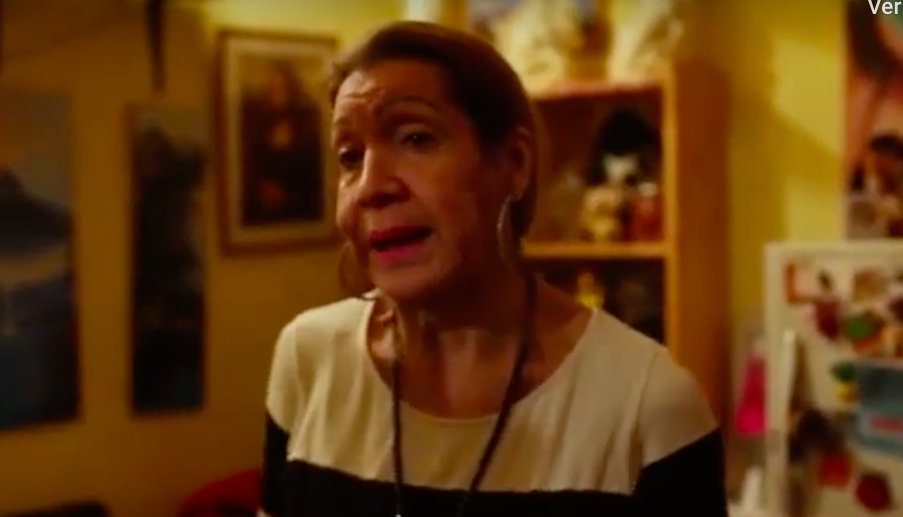
For Marisa, the quarantine began the Sunday before it was officially declared mandatory. “I have to be more careful than anyone because of my age, because I have chronic health problems, only one lung, and I’m HIV+.” While she talks, the TV can be heard on the phone, and a news report plays in the background: another death from COVID-19. It’s the only thing anyone is talking about these days.
“My fear stems from that; you hear so much about this virus, so I wash my hands constantly, with lots of soap, for almost a minute, with alcohol too, dear, and I clean my closet and my room with bleach and detergent.” Afterward, she goes to take a nap.
[READ ALSO: Hotel Gondolín: an alternative housing option for transvestites and trans people in Buenos Aires ]
Currently, Gondolín is receiving supplies from various organizations, the government, and friends and neighbors in the neighborhood. “This measure affects us just like everyone else,” says Zoe López García, president of the Civil Association, the legal entity Gondolín adopted to formalize the organization of the trans and travesti women who live in its rooms. Zoe, who has lived in the boarding house for 24 years, is aware that now they have to be extra careful. “This unites us as human beings, but it hurts us a lot financially.”
Quarantine in pretrial detention
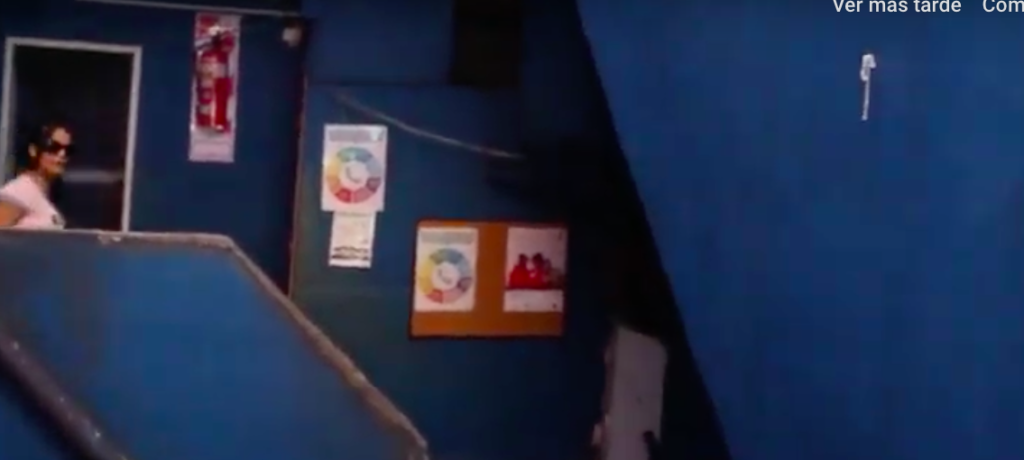
While for many the quarantine is just beginning, for Luz Aimé Díaz it's an indefinite, continuous period that has already lasted two years. “Aunt Zoe loves to cook. She prepares everything and in large quantities because there are 47 of us and some of us have big appetites.” Unjustly accused of a crime that her defense maintains she neither participated in nor was aware of, Aimé (as she's called at the hotel) spends her days within the blue walls of the building in Villa Crespo.

In the mid-1990s, the Gondolín was a boarding house that rented exorbitantly expensive rooms to many trans women who earned a living on the streets and barely scraped by. Until one day they said enough was enough. They organized, filed a complaint, and an inspection led to the hotel being shut down… with them inside. Since that day, they have occupied the hotel, which is now their home, and have been managing it themselves for over 15 years.
[READ ALSO: Calls for acquittal for Luz Aimé Díaz, imprisoned for being a transvestite, migrant, and poor ]
“There are days when I feel good and days when I don’t. On the days I feel good, I feel like doing things. I do laundry, I clean, I do my nails, I chat with the girls,” Luz says. “But when I’m feeling bad, I don’t feel like doing anything and I stay inside, in my room, and I don’t go out all day.” Luz came to Buenos Aires from Salta and began studying at the Mocha Celis Trans Popular High School with the intention of finding new jobs. Transphobic attacks she suffered at a young age left her with a severe vision problem, and for that reason, she was granted house arrest.
“Honestly, it’s a drag being locked up for two years without doing anything practical. I wanted to study, keep going to Mocha, and finish high school.” Due to the measures taken by the government in response to the spread of COVID-19, Luz’s trial, which had been postponed from February to April 3, was once again suspended. “I asked my lawyer, and she told me there’s no new date because the coronavirus situation is kind of indefinite.”
Daily life in the Gondo
Aimé isn't scared of the coronavirus. “Even though they say it's dangerous. I'm calm, I feel protected by the girls and by my psychologist and psychiatrist who come to drop off my medication and who offered to do video calls.” Other things in their routine have changed: they don't share mate, nor do they lend lipsticks. “Some had to quit their jobs and were barely getting by. They're scared. But none of them are going out; they've been forbidden from leaving.”
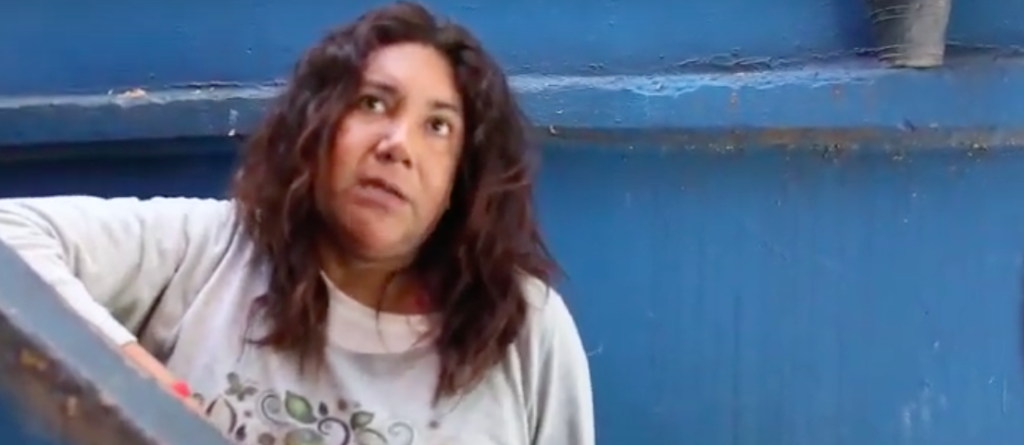
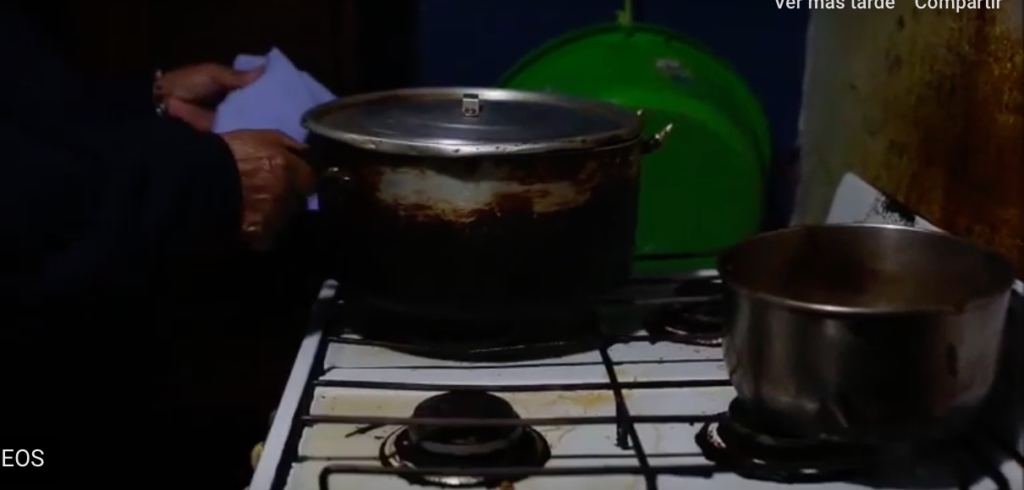
Zoe apologizes for not replying sooner: she was cooking. “It’s a time for support among my colleagues. And it’s true what they say, I love to cook. I prepare the lunches. We all eat together at the tables in the courtyard and we have daily meetings to manage orders or receive donations. Supplying the hotel is everyone’s priority here.”
Now: fritters with honey. Meanwhile, others are making collages. “There’s always something to do. The girls are drawing, painting, others are doing manicures. There’s always something going on.” Despite the enthusiasm, Marisa is getting tired. “I’m getting old. This is my home, I receive a lot of affection, but I’m old. And we have some needs besides financial ones. The main one is to be informed about the virus and what’s happening in the country. Then, a trained professional to guide us on how to navigate this during or after it’s over.”
Marisa lives on a disability pension she received five or six years ago; she doesn't remember exactly. “I was always poor. Now I follow my medication routine, I eat well, I try to rest. I'm getting old…” She repeats like a mantra, “I'm getting old, I'm getting old, I'm getting old.” “I would love to get a housing subsidy so I can rent a room somewhere else. I've been here for many years, and I'd like to live my own life and finally rest. I have no words to explain what I gained in Gondolín, the love and affection I received. I would never stop coming to visit the girls; they are my family. But there comes a time when you need some solitude.”
A solidarity network: being helped in order to be able to help
The Commission for Luz's Acquittal assures that the girls at the Gondolín shelter are doing well. "The girls are asking for donations of food and hygiene items, not money, and they are receiving them at the Gondolín shelter," they told Presentes.
Hygiene and food: these are the two pillars that the women consider most important to get through this time, Zoe explains. “We need meat, vegetables, water, personal hygiene items, sheets, and blankets. When the supplies arrive, we put together bags for the women who are outside and for those who are in other hotels.”
“I suggested that,” Marisa confesses. “Just as I received love here and found a family, I know that outside there are girls who need food, who lost their jobs and are under a lot of stress. We not only put together bags of groceries, we also help by providing support through WhatsApp and social media.”
[READ ALSO: Mocha Celis, the first transvestite-trans Popular High School in Latin America ]
In this regard, the Mocha Celis High School also launched a campaign to help trans and gender-diverse individuals facing housing, resource, and health risks. “This collection is for our fellow trans people in other hotels who are scattered throughout the city and are organized. We are also in constant contact with Gondo to stay informed of their needs and ensure they have everything they need to meet their most urgent requirements,” says Andrea Alcalde, a teacher in the Occupational Training Project at the high school.
Face masks, an alternative to quarantine
A few weeks ago, the women at the Hotel Gondolín launched a campaign to obtain donations of sewing machines. Their goal is to produce face masks for personal use and to sell them as an alternative to the disruption to their work caused by the quarantine.
The initiative arose from a conversation they had with Josefina Fernández, coordinator of the Gender and Sexual Diversity Program at the Public Defender's Office of the City of Buenos Aires. “Josefina and her team are supporting us during these difficult times of quarantine. Together we thought of some alternatives that would allow us to keep busy during this time when we can't go out to work,” Zoe explains.
By mid-April, they had received a donation of four sewing machines. A fifth machine, donated by a friend of trans activist Marlene Wayar, will be added to this donation. According to Zoe, the machines need maintenance to function, but they currently have the help of a neighbor who is a seamstress. Furthermore, part of the funds raised through donations to Gondolín will be reinvested in repairing the machines and purchasing the necessary supplies to begin production.
“Josefina put us in touch with Paula Viturro so we could move on to this second stage of training and entrepreneurship development. She has experience and developed the El Teje project at the Rojas school. We're already exchanging ideas about possible designs, strategies for organizing ourselves autonomously, and some training so that we can all participate and have a role in this,” Zoe explains, clarifying that not all the girls from Gondo have experience in the textile industry.
At the boarding house in Villa Crespo, the girls are enthusiastically celebrating the new initiative. “We have some ideas about what we’d like our face masks to look like. Right now, we’re practicing the finishing touches, checking fabric availability, things like that. We’re going to try to make enough to meet the demand, which we expect to be high, since we’re going through a lot of hardship and have to cover our expenses. Anyway, we hope that in the near future face masks won’t be necessary, and when that time comes, we’ll use this experience to develop other textile products. Maybe bags, some clothing. We certainly don’t lack ideas or enthusiasm.”
To help the Gondolin Hotel
For donations, please go to Aráoz Nº924 Villa Crespo, strictly within the limits allowed by the quarantine.
Or contact:
→ Marisa: 1167835833
→ Zoe: 1132762955
To collaborate with the Mocha Celis Trans Popular High School
There are two possibilities for collaboration:
1⃣ As a Donor Friend, making a unique and unrepeatable contribution of $100 (suggested amount) to support the purchase of essential items for our comrades.
2⃣ As an Emergency Godparent, taking the items to a friend near your home, within the protocol strictly allowed by the quarantine.
🦄 If you're interested in being an Emergency Godmother/Godfather, write to us at 011 6353 2927 or 011 6443 6950 📲
💸 To donate, the details are:
Savings Account $ 000000300203558568
CBU: 0290030810000035585689
Alias: maryanne86
Headlines: Procachini Maryanne
CUIL: 20325534606
Once you have made the transfer, please send us an email with the receipt to cooperadora@bachilleratomochacelis.edu.ar
All our content is freely accessible. To continue producing inclusive journalism, we need your help. You can contribute here .
We are present
We are committed to journalism that delves into the territories and conducts thorough investigations, combined with new technologies and narrative formats. We want the protagonists, their stories, and their struggles to be present.
SUPPORT US

FOLLOW US
Related notes


We are present
This and other stories are not usually on the media agenda. Together we can bring them to light.