

Transvestites and trans people in quarantine: evictions and housing emergency
Although evictions are illegal today, an activist was forcibly removed in Córdoba. There were other attempts in Buenos Aires and Rosario.

Share

By: Alexis Oliva from Córdoba, Ana Fornaro, Lucas Gutiérrez and Maria Eugenia Ludueña
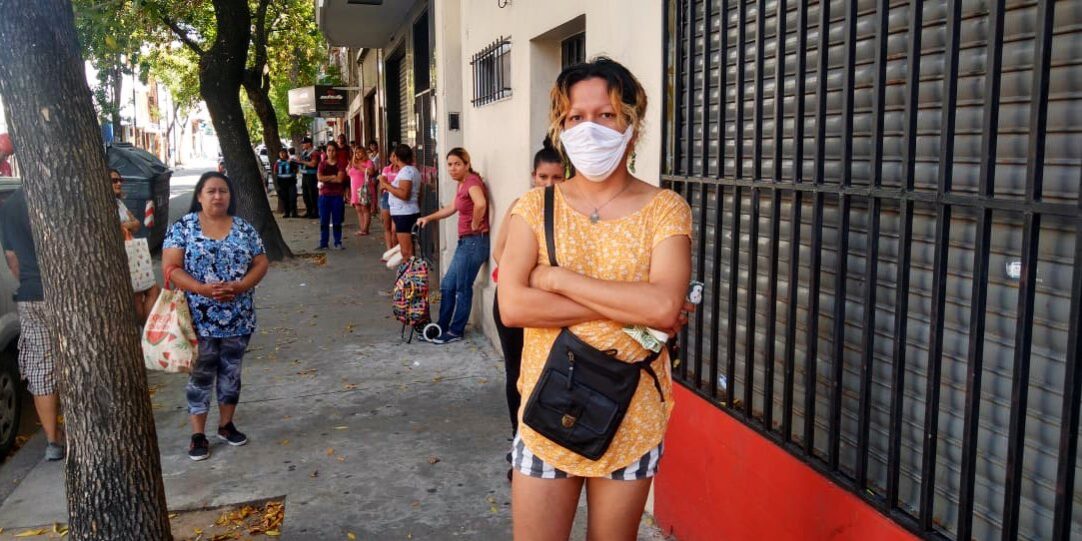
The coronavirus quarantine exposed the underlying structural violence. The first week of mandatory preventive isolation in Argentina revealed, among other things, the housing crisis and the precarious living conditions of the trans and gender-diverse population. Most of them work in the sex industry, and these new regulations imposed due to the coronavirus pandemic have prevented them from generating income for their survival. In many cases, this has meant being unable to pay their rent and facing threats of eviction, or, as happened in Córdoba, being violently thrown out onto the street in the midst of the pandemic quarantine.
“The quarantine is only making visible a long-standing demand of the trans and travesti community in Argentina. We are a vulnerable community, and almost 90% of trans and travesti people were involved in sex work. Without income to cover food and rent, they need to prioritize state aid,” Claudia Vasquez Haro of Otrans Argentina told this publication. More than 600 women contacted the organization, based in La Plata, to request assistance.
READ MORE: Coronavirus and LGBT+: useful phone numbers, information and support
Evictions are prohibited
On March 27th, on Public Television, news anchor Diana Zurco, a trans woman, asked President Alberto Fernández about the precarious situation of many of her peers, and in particular about the housing emergency so many of them are facing. The president spoke of a ban on evictions and rent increases, and said that this measure would apply to everyone. He added that if any evictions occurred, he would personally report them to the National Institute Against Discrimination, Xenophobia and Racism (INADI).
Today evictions are already illegal: on March 29, the public emergency decree 320/2020 was published in the official gazette, which among other measures provided "the temporary suspension, until September 30 of the current year, of evictions from properties" intended for single personal or family housing, cultural activities and small productions, among other exceptional situations.
Trans activist fired in Córdoba
But on the same day that measure was published, Belén Rapela, a trans woman and leader in the city of Villa María, Córdoba, of the Association of Sex Workers of Argentina (AMMAR), reported that the owner of the house she rented and her son insulted, threatened, and forcibly evicted her. Accompanied by the Emergency Committee of the Union of LGBTIQ+ Organizations in response to Covid-19, she filed a complaint at a Judicial Unit and will present it today at the National Institute Against Discrimination (INADI).
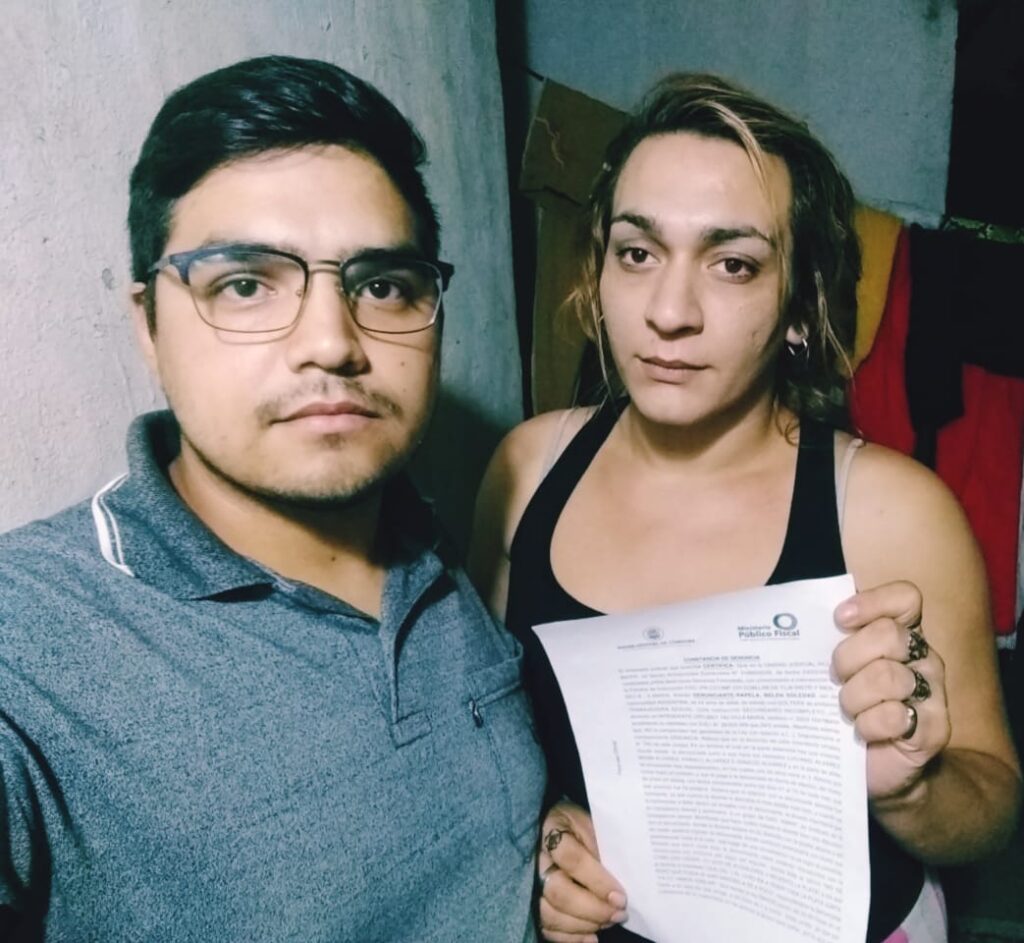
The eviction, for which Ivana Cortez and her son Brian Álvarez were singled out, was carried out at 00:30 on Sunday the 29th.
According to Rapela, Cortez would often enter the house she rented from him at the back of her home, located at 740 Ortubey Street in the Botta neighborhood, without warning. Months earlier, he had threatened to "throw her belongings into the street," according to the police report. His behavior worsened when the tenant was sometimes more than 10 days late with her rent payments, although she never stopped paying altogether.
On Saturday the 28th, they had another argument. “She was angry because, as a leader in AMMAR Villa María, I was delivering food packages to my fellow members from my home. I never used my house for that before, but now I had no other option because all the distribution points are closed due to the quarantine ,” Belén told Presentes. “And the way she told me to leave was awful: 'How long do I have to put up with you filling my house with faggots and whores?'” she added.
That night, Rapela and another friend who was staying with her went to dinner at the home of some other women with whom they shared food expenses to cope with the crisis. Upon returning, they found that someone had broken into their home by smashing a window and all their dishes were scattered on the floor. The police report states that the homeowner herself called to tell her: “Tata (Brian Álvarez) broke everything, he’s looking for you and that other whore.”
“She (Cortez) sent her son Brian to break my things. I went to ask why, and again she said 'the faggots and whores…'. That's when she came at me and tried to hit me, but her sons grabbed her. She was well aware of the (emergency) decree and was going to wait until after the 10th with part of the rent, but she told me that if I didn't get money, I would have to leave. And on Saturday they used that as an excuse,” Rapela recounts.
“After that, she went to a colleague’s house and called us from there. Inadi and other organizations intervened,” Georgina Orellano, national general secretary of AMMAR, told Presentes.
On Sunday, Belén went to the Judicial Unit at the neighborhood police station, where she also had to obtain a permit to move. Nelson Mamóndez, a member of the Putos Peronistas organization, accompanied her to file the complaint. This forced eviction “constitutes a crime, because it not only violates the integrity of our comrade, but also forces her to break Article 4 of Decree 297/2020, which declares mandatory social isolation,” Mamóndez maintains.
“More than we already are exposed as a trans community and as sex workers, this exposes me even more, because I was respecting the quarantine,” says Belén. She also announced that today they will file a complaint with INADI (National Institute Against Discrimination, Xenophobia and Racism) “for the discrimination, the insults, and the doubly violent content against trans identities and sex workers.”
Emergency, transphobia and prejudice
For Alejandra Navarro, from Villa María Diversa (Córdoba), the incident reveals “a problem of transphobia and a certain prejudice against sex workers.” In a statement released by the LGBTIQ+ Emergency Committee, the activist expressed: “It’s unbelievable that with all the social gains and progress in exercising citizenship we’ve achieved, trans women still have to endure so much infamy for free. We demand that the State intervene to rectify this and prevent these terrible situations from continuing to occur in the future.”

“This situation has undeniably exposed a known problem, one that is becoming more visible to the general population: the emergency situation of trans women . Not only in terms of housing, but in all areas,” Francisco Quiñones, director of the Mocha Celis Trans and Travesti Popular High School in Buenos Aires, told Presentes.
Mocha is implementing a solidarity network of support and accompaniment. She added, “They live in hotels in extremely overcrowded conditions for which they pay a lot of money , up to 25,000 pesos for fifteen days. If just one of them gets sick, it would cause a cascade of infections. Because of this inability of our trans sisters to go out and work as sex workers or to leave their situation of prostitution, they find themselves with no way to resolve these conflicts.” She also explained that many haven't yet obtained their new documents, and they are having difficulty registering for the support programs offered by the government: “The sisters sign up for everything, but the help still hasn't arrived.”
Evictions in the City of Buenos Aires
In Rosario, a group of trans people was also nearly evicted, but the eviction was stopped. The same thing happened in Buenos Aires, where there are at least ten hotels where mostly trans women live. Sources familiar with the area told Presentes, "Not all of them have evicted the trans women, but three of them tried, without success."
One of these halted evictions was reported in the media. On Friday, March 27, a day after President Alberto Fernández publicly urged their suspension, the owner of the Saavedra Hotel in the Once neighborhood, where more than 15 people live, mostly transvestite and transgender sex workers, were nearly left homeless.

Georgina Orellano shared the complaint on her social media: “Eight members of the trans and travesti collective are in a housing emergency. They live in the Hotel Saavedra in the Once neighborhood, paying 800 pesos per day. They live and work in that hotel.” “Since Saturday, they stopped paying because they are unable to work. Since Monday, the owner has been harassing them and threatening to evict them if they don't pay the debt. This morning, he cut off the electricity to their rooms.” She shared the situation of her colleagues minute by minute in a Twitter thread:
In an interview with Nueva Ciudad, Silvana Patricia Chocobar, who lives at the Saavedra Hotel, recounted that the owner is very aggressive, that he threatened to evict them if they didn't pay the 800 pesos per day he charges for the rooms, and that, despite signing an agreement with the prosecutor's office to stop charging and evicting people, he continues trying to get money or expel them: “I don't know what this person is trying to achieve; all he cares about is making money. He told me to pay him, and I told him that when the quarantine is lifted, I'm going to go to work, but he told me to call clients to come, and I wasn't going to do that because I have to comply with the quarantine,” Chocobar explained.
Thanks to the intervention of various public agencies, the eviction was ultimately prevented, and some of the women were relocated. However, they will remain vigilant to ensure that the owner of the Hotel Saavedra does not attempt to evict them again.
Isolation in housing emergencies
In La Plata, Otrans Argentina is asking for help to resolve another emergency situation. “Our colleagues Nicole and Gisela live at the bottom of Los Hornos , in a makeshift shack without walls or a bathroom, on government land, right above the train tracks. It's worrying that they live like this. We hope the government can provide an immediate response,” said Vasquez Haro.
While the general lockdown continues, not only is the housing problem exacerbated, but also access to healthcare. “Many women are having difficulty accessing the medication they need. They can’t leave their homes and are considered high-risk. That’s why we need to rethink our policies; these women can’t travel, they shouldn’t go to hospitals in this context. There needs to be a mechanism in place to assist them. Hospitals aren’t treating them because they’re exclusively dedicated to coronavirus, and these women are starting to circulate from hospital to hospital, putting themselves at greater risk,” Quiñones told this publication.
“In La Plata, we are still waiting for food aid from the national and provincial governments. We have sent the lists, but our colleagues haven't received their food packages yet. Since the quarantine began, the food we at Otrans Argentina have distributed has been the supplies arranged for us by the Network of Migrants and Refugees in Argentina. The work of civil society organizations strengthens bonds of solidarity and provides support through care policies,” says Vasquez Haro.
And she reflects: “What this teaches us, among other things, is that you can't only make a living from prostitution. We have to make an effort to advocate and demand that the State pass a national law for trans labor inclusion. It is urgent and necessary that our trans sisters have the support of the State to access all the policies that are being implemented, such as subsidies and aid programs that benefit them.”
We are present
We are committed to journalism that delves into the territories and conducts thorough investigations, combined with new technologies and narrative formats. We want the protagonists, their stories, and their struggles to be present.
SUPPORT US

FOLLOW US
Related notes


We are present
This and other stories are not usually on the media agenda. Together we can bring them to light.