

Memory: Why is there talk of 400 disappeared LGBT people in Argentina?
Where does the figure of 400 LGBT detainees and disappeared victims of State Terrorism in Argentina come from?


Share

(Updated 24/3/2023)
On the anniversary of the civic-military coup, with a model of Memory, Truth, and Justice that serves as an example worldwide and has led to the conviction of over a thousand people in Argentina for crimes against humanity, LGBTQ+ activists are denouncing the fact that crimes against LGBTQ+ people have still not been made visible or punished. Within the LGBTQ+ activist movement, many are using the symbolic figure of 400 to demand Memory, Truth, and Justice for the disappeared LGBTQ+ people.
[READ ALSO: #24M Why is there no talk of persecution of LGBT+ people in the dictatorship ]
Where does this figure come from?
The first mention of this number appeared in 1987 in Carlos Jáuregui's book, "Homosexuality in Argentina." Then, in 1996, in an article for Nx magazine, Jáuregui elaborated: "Our community, like every minority during the dictatorship, was a prime victim of the regime. The late Rabbi Marshal Meyer, a member of the CONADEP (National Commission on the Disappearance of Persons), created during the Radical Civic Union government, told me in 1985 that the Commission had identified four hundred homosexuals on its list of ten thousand people reported missing. They hadn't disappeared because of their sexual orientation, but the treatment they received, the rabbi stated, had been especially sadistic and violent, like that of the Jewish detainees.".
[READ ALSO: #24M Santa Fe: historical reparation for trans people persecuted during the dictatorship ]
"Four hundred homosexuals"
The figure roughly estimated “four hundred homosexuals.” At that time, the word “homosexuals” was a way of designating all identities that were not strictly heterosexual. It included gay men, lesbians, trans people, transvestites, bisexuals, and more. The context of that figure was a number that, in 1985 and with many limitations, was just beginning to take shape, and over the years, with the denunciations, it became 30,000 disappeared persons. But the arrests and persecution of LGBT people had not begun with state terrorism.
[READ ALSO: #24M “The faggots”, memoirs of the repression of gays and trans people ]
Ivanna: survivor of the dictatorship
Ivanna Aguilera is a trans survivor. She was 13 years old that afternoon in May 1976 in Rosario. It was seven o'clock, and she was with other girls in front of the Automobile Club in San Martín Square, five blocks from her house, when she saw a truck and two army jeeps approaching, as she told Presentes. “We were just discovering ourselves, going out into the streets. We were going to the square because we had met a trans girl, Poropá, the first one we had ever met. The truck stopped, and they threw us in, beating us. An older girl protected us. They took us to Battalion 121 (a clandestine detention center), where I was beaten, gang-raped, tortured with electric shocks on my genitals, and left with a broken leg. All of this was accompanied by insults about my identity: faggot, queer, degenerate, you are a disease, you should be killed when you are little.”
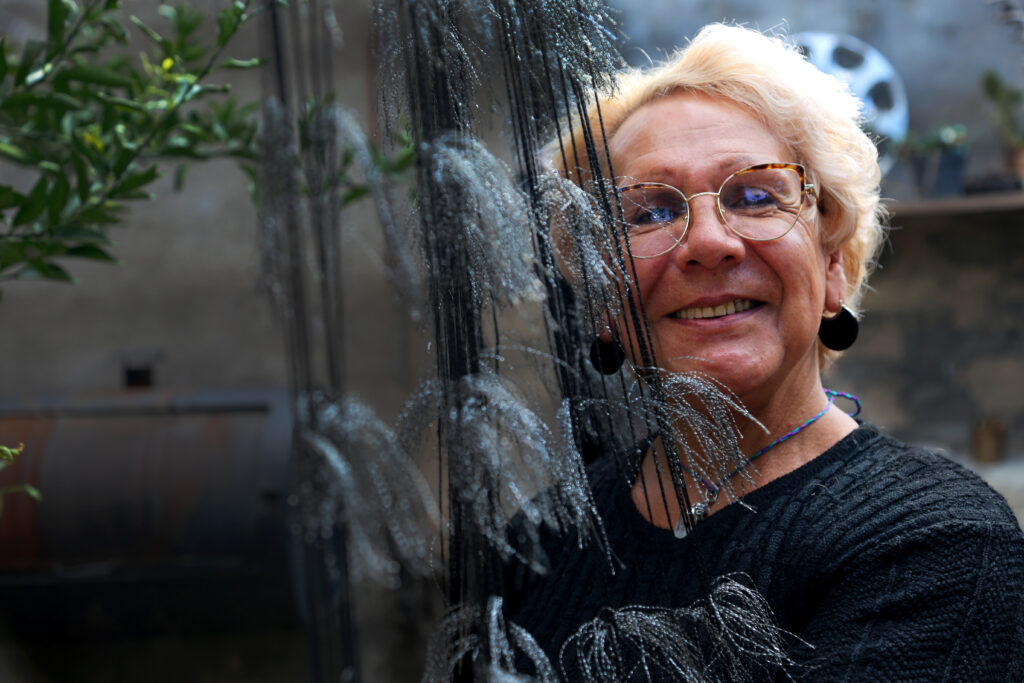
Ivanna recounts being held captive for 72 hours with her companions. “They dumped all of us in an open field. But one of us didn't survive,” she says. Later, Ivanna would be arrested repeatedly. “They arrested us because of our sexuality. But they never put us with our fellow political prisoners, only with the general population: rapists, criminals, thieves. And some of them abused us again. The same thing happened to the few of us who survived. Why did they take us and torture us? They never told us. We weren't part of a union,” Ivanna says.
Today she lives in Córdoba and is president of Devenir Diverse. “Trans women don’t have justice. We only started working on it a few years ago. And this genocide against our LGBTQ+ bodies didn’t end when democracy arrived. We only got a gender identity law a few years ago. Before, we would go to a hospital and they would arrest us, based on police edicts created by the dictatorship.”
We are present
We are committed to journalism that delves into the territories and conducts thorough investigations, combined with new technologies and narrative formats. We want the protagonists, their stories, and their struggles to be present.
SUPPORT US

FOLLOW US
Related notes
We are present
This and other stories are not usually on the media agenda. Together we can bring them to light.