

Three trans women were murdered in Michoacán in two months.
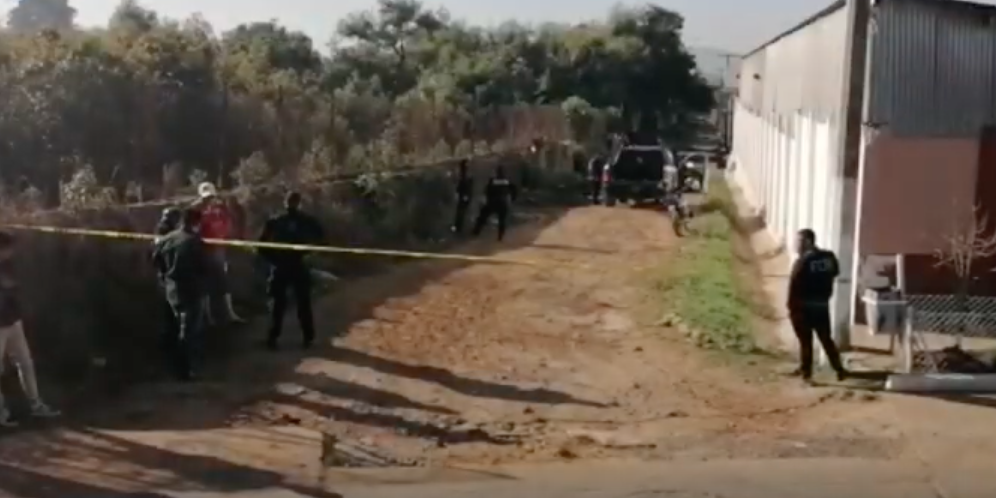
In the last week of February, Samantha, 26, and Karla H, 35, were shot to death in Uruapan and Zamora.

Share

In the last week of February, Samantha, 26, and Karla H., 35 , were shot and killed in Uruapan and Zamora, respectively. A month earlier, Angiie Aguilera, 25, was also shot in Tarímbaro, Michoacán. All three were sex workers.
Samantha lived in Apatzingán and had moved there to escape transphobia. She was a sex worker and performed in bars. According to local press, her body was found bound and showing signs of torture.
[READ ALSO: Transfeminicide of Aylín Hernández in Chiapas: demands to investigate as gender violence ]
Angiie Aguilera had studied nursing and was one year away from graduating. “She was shot 14 times with bullets of different calibers. It seems unfair to me that people like her don't receive support; the truth is, we live in a very discriminatory world. Why were they so vicious towards her, when she didn't bother anyone? When they released her body to us, they said she didn't have her keys, purse, or phone—they didn't give us any of her personal belongings. Not her earrings, necklaces, or bracelets. They say they found her body with nothing,” Angiie's mother told Presentes.
Since 2014, the Michoacán State Penal Code has classified sexual orientation or gender identity as an aggravating factor in homicides. There have been 27 cases between 2014 and 2020. Three cases have been reported in 2020 alone, though these are not being investigated as such, according to LGBTQ+ organizations . Furthermore, the Michoacán Attorney General's Office issued a statement referring to the victims as "men dressed as women," and the local press has also adopted this terminology to describe them.
“The human rights prosecutor’s office is handling these crimes. We requested a meeting with the head prosecutor and asked them to hold a working meeting, not a lecture. The problem isn’t just access to justice, but also the classification of crimes—whether it’s femicide, transfemicide, or something else. Experts and investigators are leaving issues of sexual orientation and gender identity out of their lines of inquiry,” Raúl Martínez, coordinator of the organization Michoacán es Diversidad, told Presentes.
[READ ALSO: 3 trans women murdered in one month in Mexico City ]
“In Michoacán, there’s a dispute between cartels. In some situations, trans sex workers are used as lookouts or drug dealers. Lookouts are used to warn of approaching patrols or police, to act as lookouts. Sometimes they’re forced into it because they’re standing on a corner or in the street. I don’t mean to say that all of them are involved in this, but it does seem to me that the Prosecutor’s Office uses this to argue that they are victims of organized crime. It’s easier for the Prosecutor’s Office to close the case by saying it was a settling of scores or drug dealing, and they don’t investigate further,” added Mochocán Diversidad.
Report by: Milena Pafundi
We are present
We are committed to journalism that delves into the territories and conducts thorough investigations, combined with new technologies and narrative formats. We want the protagonists, their stories, and their struggles to be present.
SUPPORT US

FOLLOW US
Related notes

We are present
This and other stories are not usually on the media agenda. Together we can bring them to light.