

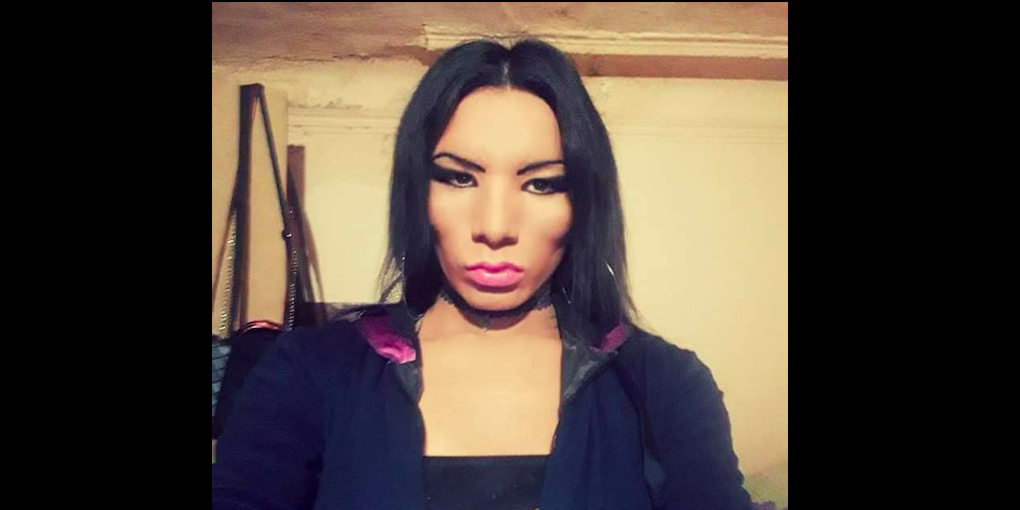
Transfemicide: Karly, a 33-year-old trans woman and migrant, murdered in Ciudadela
Karly Sasha Chinina Palomino was murdered on March 5 in Ciudadela, Buenos Aires province.

Share

By María Eugenia Ludueña
Karly Sasha Chinina Palomino, a 33-year-old trans woman, was murdered in the early hours of March 5th in Ciudadela, Buenos Aires province. Originally from Peru, she lived in the City of Buenos Aires and survived by offering sex work, like many other trans people affected by structural violence.
The San Martín Prosecutor's Office No. 5 intervened at the crime scene following a 911 call. Karly's body was found at the intersection of Rivadavia Avenue and Granaderos Street, where the avenue runs parallel to the train tracks and there is a level crossing.
The autopsy results are still pending, but it is known that she was shot. It is estimated that Karly was murdered between 1 and 2 a.m. on Thursday, March 5, according to sources from the prosecutor's office who spoke to Presentes. Some people reported seeing two men running away near the train tracks.
Police officers from the Ciudadela Sur precinct intervened in the case. At the time of the incident, the victim had no identification with her name on her. Fingerprint tests were ordered, but her colleagues are certain it is her, Chinina.
READ MORE: Journalistic mapping of hate crimes in Argentina
The organization La Rosa Naranja announced the news in a statement published yesterday on Facebook: “Our comrade, known as Chinina, was at the Ciudadela bus stop with other sex workers when she was intercepted by a group of criminals, mobsters, and extortionists who got out of a car with a firearm and shot her three times, leaving her lying lifeless on the ground. They then fled. The Trans community is filled with immense pain and sadness, and we are furious that they continue to kill us! We ask and demand that all authorities investigate, that justice be served for Chinina, and that her murder not go unpunished.”
Marcela Tobaldi, president of La Rosa Naranja, says that Karly's murder is linked "to the human trafficking mafias that the trans and travesti community suffers. These are mafias that force us into the drug market and force us to pay for places where it shouldn't be that way. In this case, this girl always refused to pay and ended up with a bullet in her chest."
READ MORE: Transfemicide in La Plata: Roberta, a trans woman and migrant, was murdered with 4 stab wounds
With this transfemicide—the second this year—La Rosa Naranja reports that “11 trans women have died in Argentina so far in 2020.” This represents nine social transfemicides/travesticides, or deaths caused by structural violence and lack of access to basic rights: health, education, work, and housing.
"Transvesticide murders will not be televised"
Florencia Guimaraes, a trans activist, also reports on this number of murdered women. “Trans murders won't be televised. The media says nothing. The State turns a blind eye. The issue of trans murders isn't addressed in the feminist movement's agenda either,” she told Presentes after learning of Karly's transfemicide. “We have to go out and make this strongly visible. They can't continue to be silenced. March 8th is coming up, and it seems that only femicides are being discussed, which are of course extremely serious, but hate crimes and trans murders continue to occur, and this isn't on the agenda.”
On February 1st, Roberta, a 45-year-old trans woman, was stabbed to death at the corner of 1st and 62nd streets in La Plata, Buenos Aires province. Roberta had also come to Argentina from Peru, and at the time of her murder, she was in an area frequented by other trans women working as sex workers. Roberta was a survivor: she had surpassed the average life expectancy for a trans woman in Latin America, which hovers around 35 years. Karly didn't even make it that far.
We are Present
We are committed to a type of journalism that delves deeply into the realm of the world and offers in-depth research, combined with new technologies and narrative formats. We want the protagonists, their stories, and their struggles to be present.
SUPPORT US

FOLLOW US
Related Notes
We Are Present
This and other stories don't usually make the media's attention. Together, we can make them known.