

Letter from a queer person to Daniel Zamudio 8 years after the hate crime
"I was twenty years old when I turned on the television one foggy day in the city of Concepción (Chile) to glimpse your death, Daniel."


Share

But here I stay forever
in my tropics.
Is anyone to blame?
Is there any guilt?
Feeling, being, I am me.
MY TROPICS
(Fragment)
Mara Rita Villarroel
I was twenty years old when I turned on the television one foggy day in the city of Concepción, Chile, to glimpse your death, Daniel. To learn that the night before, the yoke of injustice had fallen upon you, fascism upon your little blond mermaid body, ending what you loved most: dancing under the starry night. How many candles did we wanderers light to warn our ancestors to save you and tell the truth that was being suppressed by the police and the government of the day; but death is a subterranean carousel that moves forward and forward, leaving silent devastation in its wake. And so you left, Daniel. So you left… with a swastika drawn on your lifeless body on March 27, 2012, after twenty-odd days of agony in La Posta Central (Santiago, Chile).
The “phobias” are real, however, no one should die for being trans/lesbian, and as in your case, Daniel: from homophobia. Since you left us, we all became aware that going out at night was dangerous. Since you left us, we became aware that there were neo-Nazis carrying out raids. Since you left us, we knew there were extremist religious groups that wanted us extinct, even though they weren't in favor of abortion. Many of us understood that we posed a danger because we filled avenues demanding justice for you and for those who had fallen. But we also understood that we were weak in the eyes of the oppressor.
Writing about Daniel Zamudio is not an act of rebellion. Writing about Daniel's murder is exposing the constant abuse to which many members of the LGBTI+ community have been subjected.
READ MORE: Hate crimes against LGBTI people have doubled in Chile
For years I've had the urge to write this chronicle, to speak to Daniel through my queer writing. He knows who I am; more than once I've gone to his shrine in San Borja Park, a main thoroughfare in Santiago, to leave him a little poem with flowers, or to the general cemetery to tell him that we were still living under repression outside.
READ MORE: Anniversary of the attack on Daniel Zamudio, murdered for being gay
Writing about Daniel is to expose one of the many problems that currently exist in this painful country that managed to explode on October 18th regarding the social demands not met by the current government that believes it can become an empire with only 6% approval.
Months after your death, a law bearing your name, the "Zamudio Law," was enacted and passed. Its fundamental aim was to establish a legal mechanism to protect all those who had suffered discrimination at the hands of others. This would have brought the perpetrators to trial with potential sanctions. I write all this as if it were in the past because, in reality, it never happened, Daniel.
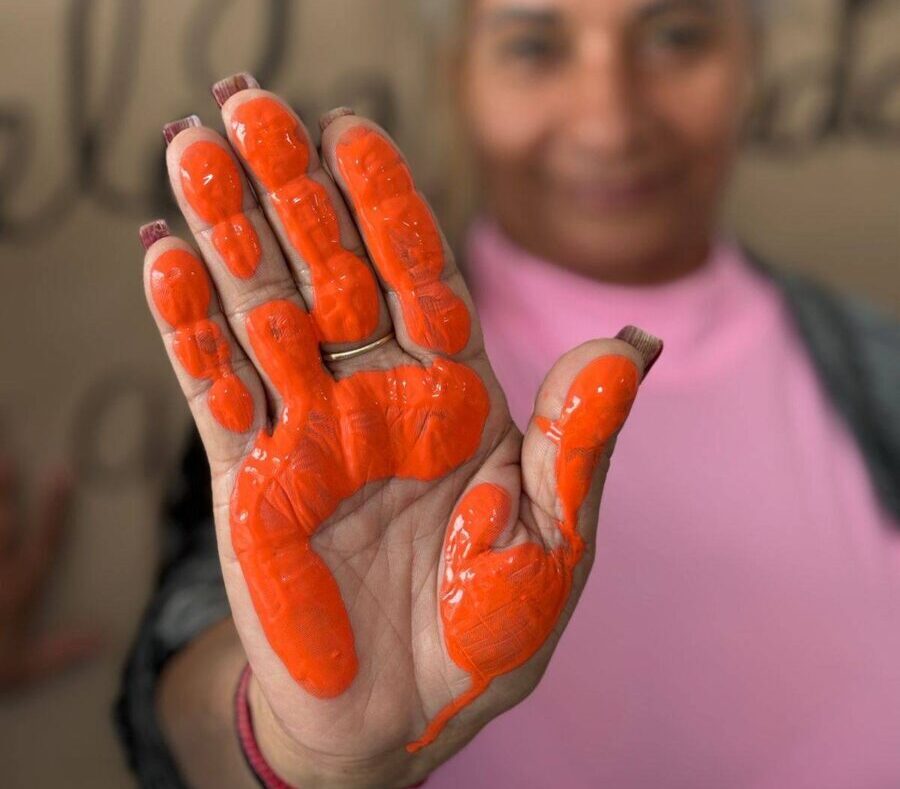
It was never implemented effectively. And if it ever was, the loopholes in the law were so weak that many cases bypassed the proper procedures and went unpunished. This is certainly happening to Josue Maureiria today, in 2020, eight years after the law's approval and his death for failing to comply with its provisions. During the social uprising, he was arrested by special forces, who, upon noticing his apparent homosexuality after seeing his red-painted fingernails, subjected him to various forms of abuse. The most cruel of these was when two police officers, holding him down, repeatedly inserted and withdrew a baton from his anus.
I am writing this to you, Daniel, not so that you see everything as lost, nor feel sorry for me wherever you are, but so that you understand that once again we queers are taking to the streets armed and, without ever having heard the name or surname of Josué Maureira, we are shouting about the injustice so that no one will ever again see their human rights usurped.
READ MORE: Young gay man who reported torture and sexual abuse by Carabineros testified in court
Outside, the avenues were paralyzed. I think you would have liked to be fighting against the repression, throwing stones and combating injustice. However, you would have felt the same eye pain that many of us feel: Chile, a country without retinas. Tomorrow, sexist comedians will continue saying that you are our martyr. Don't believe them. Tomorrow, oppressive statistics will continue saying that discrimination doesn't exist: don't believe them. One day I met someone who knew you, and while they were talking about you, I also saw myself in them. They told me that you were wounded, good at cheesy karaoke, kind of good at partying, and with artistic talents. They told me that your dream was modeling and acting. It pains me to tell you that you fulfilled it. Several films have been released where I'm sure you would be the main star of your own tragedy. You would also have been on national morning shows and in print and digital newspapers: all because four murderers corrupted your days.
It is painful to commemorate you today, Daniel. Outside, autumns continue to pass like enormous birds. You are not a martyr for the LGBTQ+ community; no one could be after enduring more than two weeks of agony in a public hospital for having been kidnapped for an entire night. But you are more than that to us: you belong to a lived and visceral reality: you belong to our queer imagination. You embody the duality of the strong and fearless tail. We learned many things from you, Daniel. Surely the earthquake of your death will continue to haunt us for many more years; possibly, out there, they will continue killing different sisters in the community: patriarchy has no borders or limits: it is perverse. But we already know how to attack it. Daniel: we are not alone. No, we are no longer alone.
Puerto Varas, Chile. March 2020
*Héctor Margaritas is a writer and performer.
We are present
We are committed to journalism that delves into the territories and conducts thorough investigations, combined with new technologies and narrative formats. We want the protagonists, their stories, and their struggles to be present.
SUPPORT US

FOLLOW US
Related notes
We are present
This and other stories are not usually on the media agenda. Together we can bring them to light.