

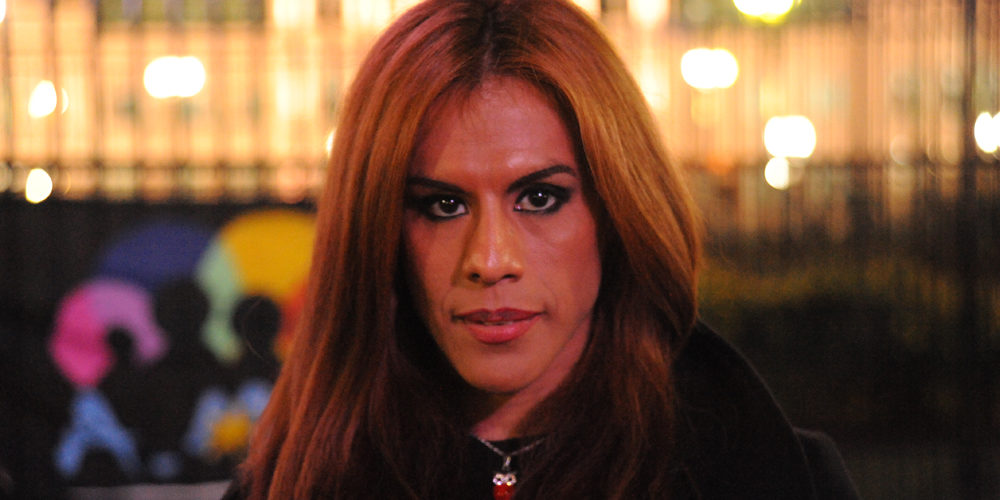
Who is Diana Zurco, the first trans woman to anchor a news program on Public TV?
She always played with voices and created characters. But the path to her vocation was long. Diana Zurco is 37 years old and two years ago became the first trans woman to graduate from ISER with that gender identity. Since 2015, she has been one of the voices of Radio Ciudad.

Share

Opening photo: Ariel Gutraich. She always played with voices and created characters. But the road to her vocation as a radio announcer was long. Diana Zurco is 39 years old and four years ago became the first trans woman to graduate from ISER with that gender identity. Since 2015, she has been one of the voices of Radio Ciudad, and now she will co-anchor the main edition of the TV Pública newscast with sports journalist Ariel Senosian, thus becoming the first trans woman to host such a high-profile program in Argentina. Diana grew up in Hurlingham, Buenos Aires province, and attended a Catholic school, Cardenal Stepinac, from kindergarten. It was there, in her fourth year, that one of the priests told her she had to talk to her parents and tell them what was happening to her. “Of course it was noticeable. It was obvious,” she says now. At the time, she was 16 or 17 years old, with short hair, wearing a uniform, and using a male name. But she already knew she was going to be called Diana, like the protagonist of the series V: The Alien Invasion , which she was a huge fan of and had pretended to be since she was little. Her classmates, except for her only friend who was the (other) gay boy in the class, bullied her. She survived. “Since I can remember, I knew I wasn't just another boy. But because of immaturity, a developing mind, and what I was taught, you experience it with fear and guilt. And you repress it. With pain, because you're repressing who you are. The fear of rejection and mistreatment that trans people suffer, even from their own parents, is a devastating cocktail for anyone.”
-How was the process with your family?
My family respected and supported me. My parents, my mom and my stepfather, whom I consider my dad, are both from the countryside and have no formal education. And yet they accepted it. They didn't kick me out of the house, and for our community, that's a huge deal. I lied at first and told them I didn't know if I liked boys or girls, that I didn't know what was happening to me. I did know, but I didn't want to be so abrupt. My dad, who was much older than my mom, told me they would support me and that we could see a psychologist… The typical thing parents do when you tell them you're confused, but they were able to understand. Later, as time went on, I started growing my hair long and dressing as a woman, and that's when it became harder for them. Especially for my dad; for him, it was about accepting my female identity. He had trouble calling me Diana. When I was 18, I had a kind of major crisis, because even when everything is fine in your family, you still have to go out and face the world. You can't stay locked away forever.-Was it more difficult to face the world than your family?
Yes, I lost a year of school during that crisis, not knowing what to do. I was depressed, I didn't want to go out or do anything. I went to therapy every now and then, but I was in a bad way. Still, I think that depression helped me finally say: “I'm not a gay man. I'm Diana. I'm going to live as Diana.” But not because identity is a choice. No. You don't choose your identity, but you choose whether or not to repress it. And once I chose not to repress it, that whole crisis came: What am I going to do for work? What am I going to do? Am I going to have to prostitute myself? Because even when you're not kicked out of your house, the thought crosses your mind that you have no other option. Because what are the possibilities for a trans girl? That's when I started going to gay clubs to make trans friends to see what they wore, because that's also when the whole issue of the body and hormones begins. At that time, the Gender Identity Law didn't exist. Everything pushes you towards entering a more marginalized world because the other one is very hostile to us. I never had to prostitute myself and I was able to do other things. But it's not the most common thing in my community.-What was your path to becoming a voice actor like?
-It was a long road. Because I still had many steps to take along the way. First, I had to find a way to make a living, so I enrolled in a hairdressing course and started working. And it went very well. I realized then that communication was my thing, whether with clients or with the team. Mind you, there was discrimination there too: a trans woman could wash hair but not work at the register, for example, or be an administrative assistant. They even told me, "You faggot, don't dream." And I moved from reception to the register and eventually became the head of personnel with 100 people under my supervision… Do you know how important it is to feel like you belong, or where you can grow and plan for the future? It was a wonderful time, but it came to an end because I was working long hours and being paid little, I was being exploited, and I got tired of it. Right then, I separated from my partner, and everything went wrong. I became depressed again and was in a very bad place. Once again, the question was what could I do? I took a manicure course and started doing house calls. But that wasn't what I wanted. And the idea of voice acting had always been there. So I looked into it, finished high school, got the ISER study materials, applied, and got in.-Besides the vocation, is there a symbolic weight to being a radio announcer?
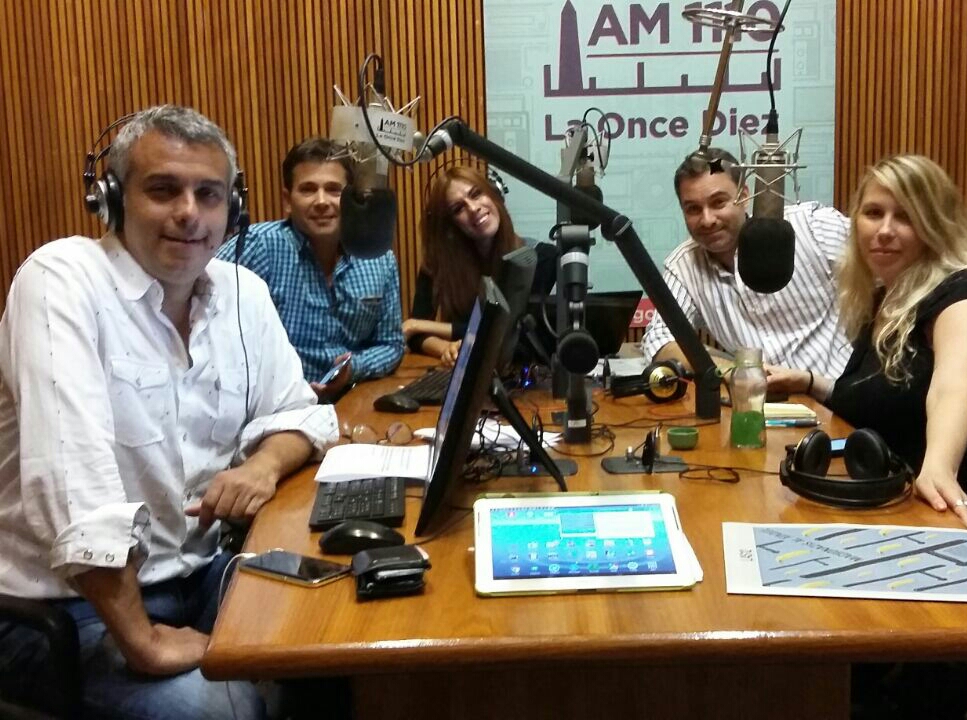
Absolutely. First, I think that if it weren't for my natural voice, ISER wouldn't have hired me. I have a vocation and something concrete, which is my voice timbre—feminine. But also the health of my voice, because you have to take all kinds of tests, like audiometry and vocal cord exams. That's the technical side, but there's also undoubtedly a whole symbolic weight to this, because it speaks to having a voice in this society. For the first time, I feel like I have a voice. I'm going to say something interesting that Franco Torchia said when I went on his program, right before I started at La Once Diez: he said something like, "How interesting it would be to give Diana a job. Not because she's trans, but because she is trans." And I thought that was really cool. Because unfortunately, that's how it is: today I'm the first trans radio announcer, and I hope that one day that won't be news anymore. That's why, from my place, from my life, from my actions, I want to be one more person in her place, fighting in this process for the normalization of our identities in society. So that we stop being considered strange."-Do you feel you have to take action because your situation is exceptional for the trans community?
I'm aware that I'm "privileged," and I take that responsibility seriously. I'm not politically affiliated with any party, but I feel committed to my community. My daily struggle is against anti-trans sentiment. Always. And even more so now as a communicator. It's a painstaking, painstaking effort that I'm engaged in through my work: delivering a well-founded, clear, and concrete message. Because there's so much misinformation and prejudice that needs to be dismantled. And this platform I have helps. Do you know how many people still believe that gender and genitalia are the same thing? Do you know that the psychiatry manual still considers transsexuality an illness or an aberration? Do you know how many people feel differently because the announcer is trans? I'm trying to change that. We can't even sit on a bus or in a restaurant without being stared at, pointed at, or laughed at. On the train when I'm going home, people often say things to me. That's why, every time I'm called for an interview, I talk about how they're killing us. And I talk about rights. Which are many more today than when I was 18. Today, thanks to the Gender Identity Law, I have rights I didn't have before. And that's thanks to the activism of so many who gave their lives for this fight. But still in Argentina, as in the rest of the world, your life depends on where you're born: a trans girl here isn't the same as in Tucumán or Salta, where in 2017 they were debating whether to offer catechism classes in public schools. And this is political: look at how the State can give you the tools to make your life better or much worse. How what the State does affects you.We are present
We are committed to journalism that delves into the territories and conducts thorough investigations, combined with new technologies and narrative formats. We want the protagonists, their stories, and their struggles to be present.
SUPPORT US

FOLLOW US
Related notes
We are present
This and other stories are not usually on the media agenda. Together we can bring them to light.