

This is how the Second Inter-American and Caribbean Conference of Intersex People was experienced
It took place in Buenos Aires and involved about 30 activists. A local forum was established.

Share

By Carolina Balderrama
Photos: Immensities
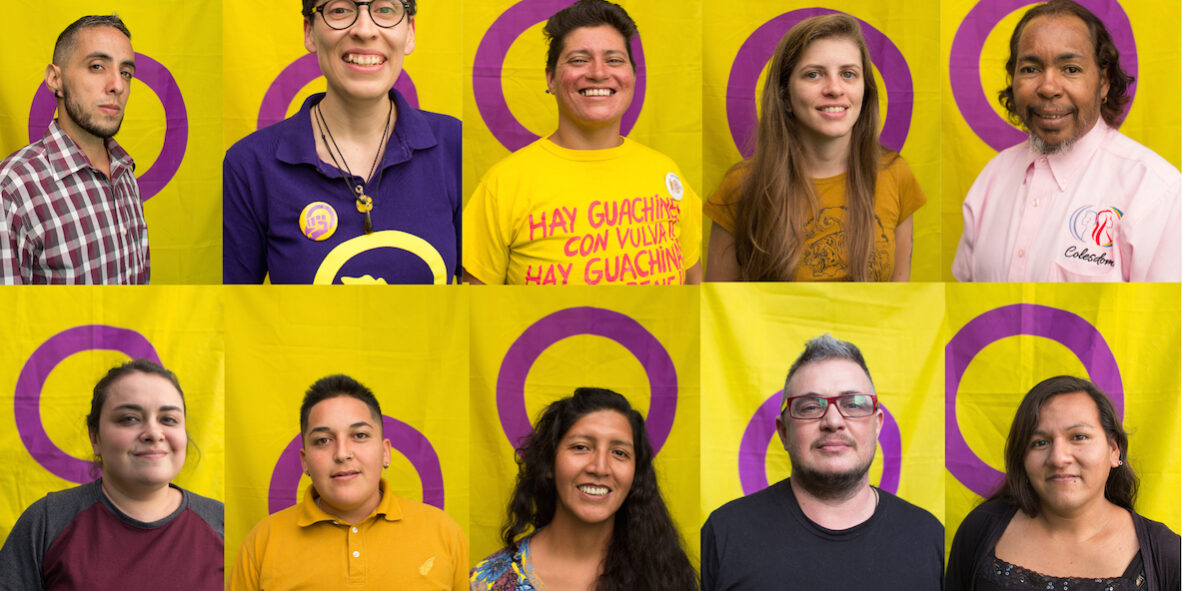
Intersex activists from Argentina, Colombia, Bolivia, Peru, Mexico, Chile, the Dominican Republic, and Brazil met face-to-face, shared their experiences, and analyzed various issues affecting them. This took place at the Second Inter-American and Caribbean Conference of Intersex People in Buenos Aires, held from February 3 to 5.
The first Conference was held in 2018 in San José, Costa Rica, and culminated in the declaration that was ratified at this second meeting. See more at https://intersexday.org/es/declaracion-san-jose-costa-rica/
The event opened with a public presentation, followed by closed-door sessions, and concluded with a party at Casa Brandon. “ It was an opportunity to assess where the region stands in terms of the human rights of intersex people,” explained Mauro Cabral, an Argentine activist with extensive international experience, a member of Intersex Justice, and part of the organizing committee. He added, “The group of participants is very diverse. For the first time, a married couple from Brazil, the parents of an intersex child, participated. In general, intersex spaces involve both intersex people and their families, who are the decision-makers .”
Media violence against intersex bodies
Some of the topics covered included media, funding, families, sexuality, a regional overview of legislation, and working with the medical and legal systems, among others. “ There were workshops on funding activities and media relations. “For intersex people in general, media coverage is a nightmare,” said Cabral.

For Natasha Jiménez Mata, Director of Mulabi – Latin American Space for Sexualities and Rights, and a member of the organizing committee, knowing how to confront the media is crucial. “ Because there is not only surgical violence against intersex bodies, but also media violence. Most media outlets distort information through sensationalism. For them, our genital morphology is more important than the real information, which is how the healthcare system affects us, how we live in a society that is dichotomous and only accepts male and female bodies .”
First Forum of activists: intersex and plurinational
During the conference, the First Intersex Activist Forum of Argentina was formed, with the participation of activists from the provinces of Tucumán, Mendoza, Santiago del Estero, Córdoba, La Pampa, Neuquén, as well as from the City of Buenos Aires and the province of Buenos Aires. While the forum's final name is still being determined, it is known that it will include two key words: " Intersex and Plurinational."
Contexts, demands, background and challenges
The first four international intersex forums were held in Europe, with very little Latin American participation due to limited resources. Therefore, this time the issue of funding was a key focus.
The discussion also addressed specific issues related to intersex families and sexualities, a topic that is not widely discussed, “ despite the fact that intersex activism is about bodily diversity, sexuality is rarely, if ever, addressed. In general, most people are interested in what to do with intersex children and are not as interested in the situation of adults in relation to this issue, ” Cabral points out.
In the region, the movement is still in its early stages, but it has gained momentum in Latin American countries in recent years. “Argentina has a strong push: we are trying to get more people involved, to encourage them to join the activism and our goals so we can promote the rights we need,” says Gaby González, a member of the organizing committee and of Orquídea Intersexual de Mendoza, who in 2019 coordinated the first workshop on intersexuality at the 34th Plurinational Meeting of Women and Dissidents in La Plata.
[READ ALSO: What is intersex: concepts to debunk myths and prejudices ]
“ That workshop came about through the collaboration of other women. It was a very powerful experience, being able to express an experience that, for the vast majority, has been a burden, a very complex situation, involving secrecy, denying ourselves the freedom to live our bodily nature from birth. Being able to talk also brings out those negative feelings from within and allows you to liberate yourself . Many of the people who came to this meeting came from that experience .”
Hana Aoi, a member of the Organizing Committee and the organization Vivir y Ser Intersex (Living and Being Intersex) in Mexico, emphasizes that “ it’s not that there wasn’t activism before; it’s precisely this inability to connect that we’ve only recently begun to overcome in the last seven or eight years. But the creation of a community that can communicate with each other has been truly significant in breaking down the barriers of isolation, social conditions, and the very precariousness of our region. Networks were definitely the fundamental tool for communicating, connecting, and creating these kinds of spaces .”

“What we have to share is very painful.”
In April 2019, The Intersex Book was presented at the Tierra Violeta Cultural Center, a work that is part of the multimedia project by the Mexican artist Adiós al Futuro ( https://brujulaintersexual.org/2019/01/15/biblioteca-el-libro-intersexual-adios-al-futuro-2018/ ). During that event, Cabral recalls, “ there were people in the audience who stood up and said, ‘I am intersex.’ Or they stay and approach us later; it happens to us quite often. On the one hand, it’s wonderful to see the number of people; on the other, it’s terrible to realize that all the stories are very similar and that we all carry tremendous burdens of violence. And that what we have to share is very painful .
Why comprehensive laws are needed
Adding to and strengthening activism is very important to Mauro. “ We know the situation of families, the different intersex bodies, the medical treatments, the legal systems. Without arrogance: we know everything there is to know about the subject; the hardest part is getting things to change. But at the same time, we have to keep pushing, and that's very draining; it's exhausting being part of a movement that isn't winning. We want there to be no more non-consensual, medically unnecessary interventions, for people to have access to the information they need, and for them to have access to reparations for the harm done to them. What's needed are comprehensive laws that state that these practices cannot be done; we need those laws in our countries. ”
During both the opening and closing events, no photographs could be taken without the express consent of the intersex individuals. This decision stems from the practice of medical photography and filming they were subjected to in childhood.
[READ ALSO: A law to protect the human rights of intersex people ]
“ The reality is that one of the most studied aspects of the impact of this medical practice of photography on people's behavior is that it does leave a mark, a trace. It conditions the person's body's ability to interact with other human beings, with life, with the environment; it truly creates a trauma that is unexpectedly repeated in different circumstances. You see in books, in conferences, naked bodies without faces, with their eyes covered; you don't know if it's your body or the body of someone else you know ,” Hana recounts.
Fat activism: intersex ally
At the closing event, the ratification of the final declaration from the First Meeting in San José, Costa Rica, was read aloud collectively. There were testimonials and expressions of gratitude to the organizing committee. Mauro thanked the organizers for their alliance with another body diversity movement, the fat movement. Thanks to their drive, he emphasized, “ we managed to get intersex demands included in spaces that intersex people couldn't access. It was the activists from the fat movement who took our demands and ensured they were incorporated.”
Towards the end there were hugs, music and celebration for the meeting. “ The opportunity to come and spend a few days here is to be with other people who are like us, it helps activism, but it also saves your life, for me coming and being together has to do with surviving ,” says Mauro.

Testimonials
Cecilia from Tucumán
“Coming here and meeting people who are going through the same thing as me was a unique opportunity for connection. When you're going through all of this, which is often disturbing, you think you're alone and unique in the world. Being able to hear other people's experiences was powerful.”
Andrea from Colombia
“The conference allowed us to connect with other participants. There are some very developed activism experiences from Mexico, Argentina, and Chile that lay the foundation for our future work so that people can become aware.”
Macarena of Cordoba
“Many thanks to the organizing committee, expressing the relief felt after so many years of being alone and feeling that we had no one to lean on, that we were the only ones in the world, and to arrive here and find this support, this generosity, is very exciting.”
]]>We are present
We are committed to journalism that delves into the territories and conducts thorough investigations, combined with new technologies and narrative formats. We want the protagonists, their stories, and their struggles to be present.
SUPPORT US

FOLLOW US
Related notes
We are present
This and other stories are not usually on the media agenda. Together we can bring them to light.