

In their own name: Argentine trans and travesti activists in public office
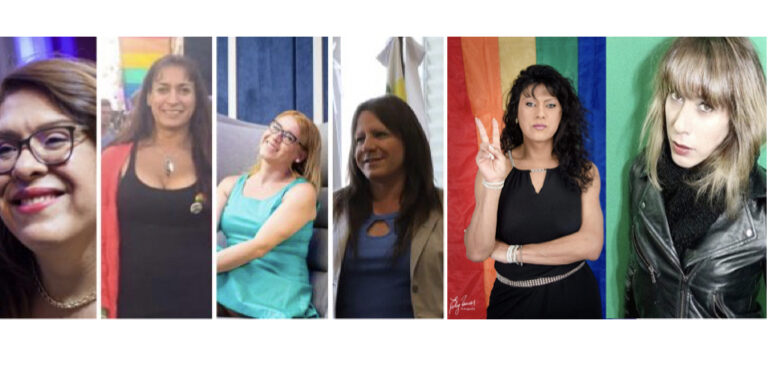
Activisms, expectations and agendas of Alba Rueda, Daniela Castro, Ivana Gutiérrez, Ornella Infante, Violeta Alegre and Nancy Sena.

Share

[News updated on May 13, 2010]
Trans activists and activists Alba Rueda, Daniela Castro, Ivana Gutiérrez, Ornella Infante, Violeta Alegre, and Nancy Sena are among those nominated for various positions in national, provincial, and municipal government, as well as other state institutions. In an interview with Presentes, they shared their beginnings in activism, their political agendas, and their expectations.
Alba Rueda

Undersecretary of Diversity Policies of the Ministry of Women, Gender and Diversity of the Nation.
She is the president of Mujeres Trans Argentina, a militant and activist for the rights of trans and transvestite people , a researcher in the Gender and Communications department of the Floreal Gorini Cultural Center of Cooperation, a member of the Advisory Council of the Gender Observatory of the Justice of the Judicial Branch of CABA and part of the NotiTRANS team, the first trans magazine in the country.
Originally from Salta, she came to Buenos Aires with her entire family in the early 1990s for economic and family reasons. She lived in the Belgrano neighborhood and attended high school at Normal 10. At 17, she left home, expelled due to discrimination and because she needed to embrace her identity, to definitively come out of the closet, and her family did not support her.
She has been called Alba since she was 16. She started working in a small ceramics workshop; the owner let her live there while she completed the first year of university for a Philosophy degree at the University of Buenos Aires. There, she experienced numerous instances of discrimination because of her self-identified gender. Her first space for activism was the Hotel Gondolín, where she met Lohana Berkins, Diana Sacayán, and Marlene Wayar.
“I started working to help my trans and travesti friends finish their studies. Back then, they wanted their legal cases dropped and wanted to get passports so they could leave the country. The 2001 crisis was compounded by the enormous criminalization we were experiencing. You'd walk down the street and they'd drag you to the police station by your hair ,” she recalls. She says she learned a lot from all her colleagues at Gondolín, especially about “ trans affection .”
Alba dedicated herself to developing projects and seeking funding at a time when the agenda was dominated by HIV prevention. In this way, “ the trans women themselves were the health promoters, distributing condoms, and that was an opportunity to talk, as Lohana said, about trans citizenship .” She has been a state employee for 14 years, since joining INADI in 2006 as coordinator of the 0800 hotline.
Alba considers her appointment to the ministerial portfolio as "a historic opportunity, not only on a personal level, but for an entire social and political movement that is taking a fundamental step, that of being able to think about public policies and that trans and travesti comrades can develop the answers that we give ourselves, thinking collectively, with our agendas such as the trans job quota, the historical reparation towards the victims of so much institutional violence, is fundamental."
The work plan they are designing is being developed in dialogue with activists and social organizations and is not centralized in Buenos Aires. The goal is for it to be a federal project " to consider the marginalization of those excluded by administrative, state, legal, and judicial bureaucracies. This is a key ethical consideration and a search for trans-feminist policies, for logics that are not inherent in the State or in the history of the State. It is precisely this opportunity to see how these tools that constitute public policies can be transformed, redefined, and shifted to much more decolonial, more horizontal logics. To envision ourselves in a society where diversity is not just a term but rather constitutes the richness of our social experiences. How to protect these diversities is part of our mission ."
Violeta Ríos Alegre

In charge of the Gender Identity and Sexual Orientation Office of the Justice Observatory of the City of Buenos Aires.
A trans activist with a degree in Gender and Politics and an Anthropology student, she says her trans identity was a process. She explains that she constructed it by meeting other trans women. It was also a way of reclaiming an insult, of challenging the male/female binary; "it's a political discussion," she emphasizes.
"There are forms of violence that may not be extreme, but they also devastate you emotionally and spiritually. The difference was this: I would come home, cry, and my mom would hug me. I didn't engage in prostitution or sex work, but people threw stones at me in the street and called me a fucking faggot. And I experienced rejection in healthcare institutions. Having the embrace of family is crucial for any child, but, of course, then we encounter reality. We leave home and the violence is there, and that's the point where it clicks. And even though there are situations I didn't experience, my community did, which is why I'm committed. And I'm not exempt."
Violeta recalls, “My colleagues embraced me, especially Marlene Wayar,” with whom she shared the training space in the Gender and Politics diploma program, and where she was able to collectively examine her own history. “I was always very open to learning. I approached activism from a very sensitive, loving place, and that allowed many other colleagues to open doors for me to continue learning.”
Violeta worked as a consultant for international organizations such as the United Nations (UN) for the United Nations Development Programme (UNDP) and the World Bank. These jobs allowed her to meet and connect with colleagues from all over the country and learn a great deal from them. “They were experiences that left a lasting impression on me.”
Her path through activism led her to found La Colectiva Lohana Berkins . Some of the milestones she highlights include organizing "El Gritazo" (The Shout) on November 24, 2016, after a march by the Mothers of Plaza de Mayo, and a march with the Mothers in Plaza de Mayo in August 2017, following the transfemicide of Ayelén Gómez. For Violeta, it was like the "Never Again" for trans women.

She teaches at universities and feels she expresses herself better in writing than orally. She says she prefers a low-profile activism, based on reflection rather than a leading role, not one focused on vying for power. She is interested in articulating, strategizing, reflecting, building and participating in networks, and taking actions that will then follow their own paths.
“I believe in micropolitics. That’s why I think training is so important, and that our voices are there,” she says. One of her jobs at the Human Rights Secretariat was training members of the police force. “Imagine the police force, with all that apparatus, and me standing in front of about two hundred officers, explaining to them what the gender identity law is.”
When asked about the history of the space she now occupies at the Observatory, she recalls that Lohana Berkins, Alba Rueda, and Blas Radi all worked there. "I'm in a learning phase, exploring how we can support certain legal processes and provide training to members of the judiciary. The Observatory is an academic space; we're just beginning to develop its structure."
Violeta wants to contribute to “cultural change and education from a transvestite-trans perspective. This is what is lacking, even in certain sectors of the feminist movement; this needs to be included in the country's affective agenda so that our particularities can be taken into account and, based on that, actions can be taken responsibly, considering what the States owe to our community,” she states.
“My wish is that we can, beyond simply occupying spaces, have the tools to generate the changes we want to generate. Because if we're in a job and there are no resources, and you have people telling you what to do or you don't have the possibility of expanding, it's more of the same.”
Nancy Sena
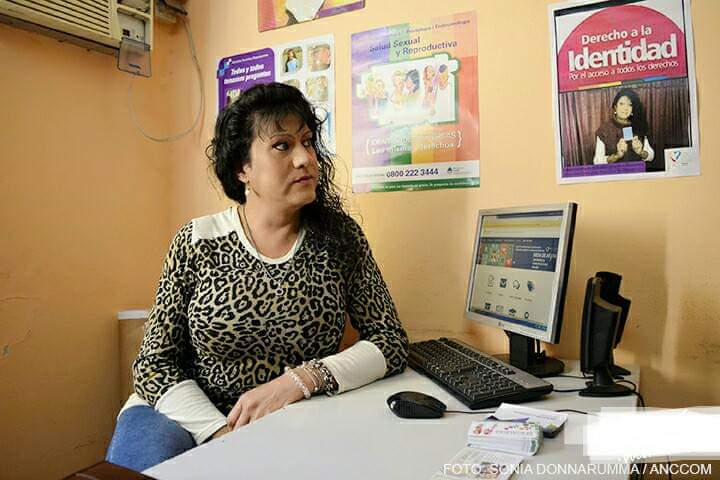
Director of Diversity for the Municipality of Moreno.
Nancy Sena, a 49-year-old transgender woman, was born in Buenos Aires and lives in Moreno, Buenos Aires Province. She says she was able to express her gender identity from the age of 14, although the context was complex: the beginnings of democracy. "It was quite complicated; we're talking about 1984, and I still think the military only changed the color of their uniforms, turning them blue, the color of the police who systematically persecuted us."
Nancy started working at a young age and couldn't finish high school. With her first paycheck, she bought women's clothing and identified as a trans woman. Her family supported her: "This is so important! And it doesn't happen to all of our peers."
“Back then, we didn’t know what it meant to be a trans woman, but from then on, I understood that I needed to get an education. I went to a hairdressing academy, I worked at a local radio station. There, we received complaints from people. I’m a professional DJ, and I started getting into the world of radio and television. I did voice-over work and journalism, which opened doors for me to stand in front of a camera. I was also a model and a singer; I recorded two albums. That was my way of life for years.”
She began her social activism in an organization, cutting the hair of people who lacked financial resources. “I understood that the voices of transvestite and trans people had to be present, but in a cross-cutting way. We have the same rights, because if some people can work and others can't, then it's a privilege for those who do. And work is a right, like health, education, and decent housing.”
Until then, her activism was at the neighborhood level, without any political affiliation, but with the arrival of Néstor Kirchner, that changed. “I fell in love with his approach to politics. And then, with Cristina's arrival, I began to be active in the Front for Victory. That led me to work in the government, because they understood my activism and not my sexuality.”
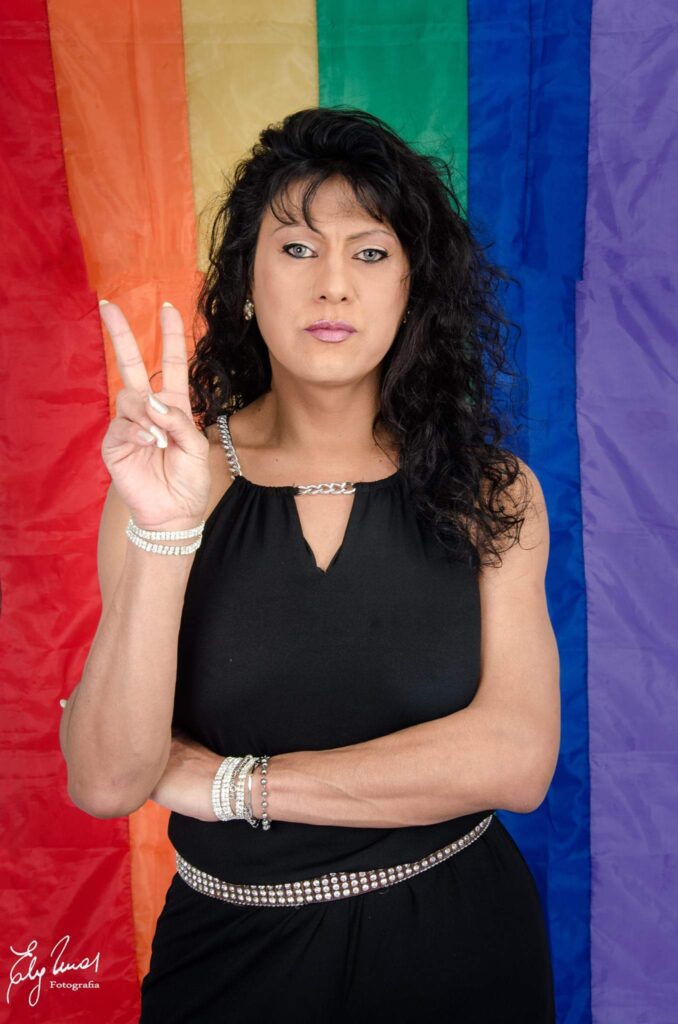
The Directorate headed by Nancy will celebrate its third anniversary in June 2020. It was opened in 2017, by a group of self-organized transvestite and trans women who understood the importance of having such a space in Moreno to listen to all the problems of this community.
Nancy has worked at the Municipality of Moreno since 2006. She was in the social action area, in the human rights area -attending to the lgbtq+ community- and when the Directorate of Diversity was opened, she was chosen by the unanimous vote of more than seventy colleagues to occupy that position.
"It filled me with emotion, pride, and a great responsibility to carry it forward. Over these years, we have worked to make our community visible. We declared May 17th the International Day Against Discrimination Based on Sexual Orientation and Gender Identity in the Municipality. We put on transvestite-trans theater productions, and we worked very hard with Comprehensive Sexuality Education and the Gender Identity Law."
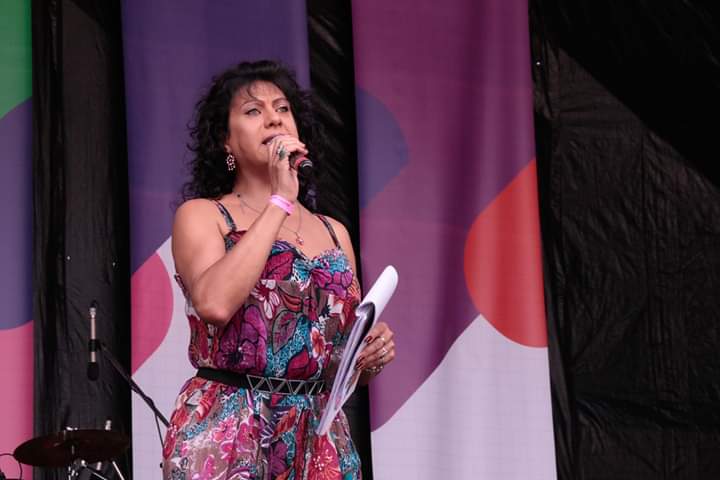
For Nancy, “the State is a tool and should be used for work. What it allows us is access to everything. I believe it is extremely important that trans women and trans men assume public office, because it is a way of making visible that the State is responsible for the genocide that has occurred throughout history. The State is the first one that has to take responsibility and give us the opportunity to work, but not only in a diversity-focused way .”
Daniela Castro
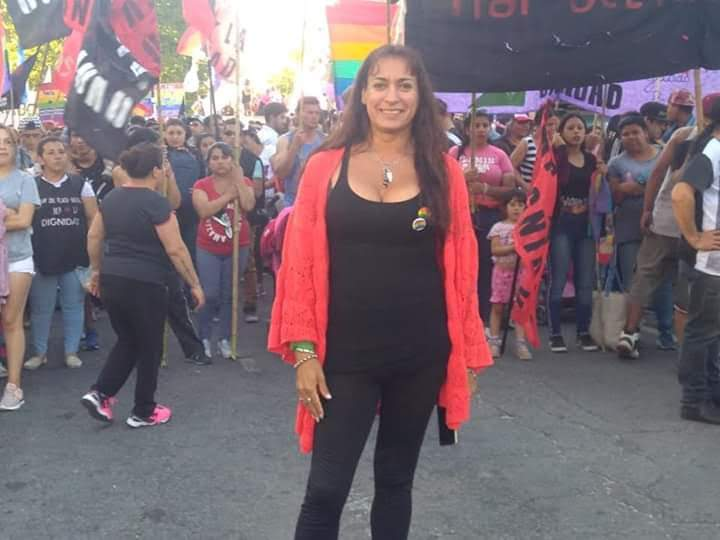
Provincial Director of Gender and Sexual Diversity Policies of the Ministry of Women, Gender and Diversity of the Province of Buenos Aires.
Born in Ezeiza, Buenos Aires Province, she is 44 years old. In 2011, she was the first transgender person to obtain her national identity document (DNI) in Buenos Aires Province. She is active in the Frente Patria Grande political movement, is a leader in the Movimiento Popular La Dignidad (Popular Dignity Movement), was a candidate for city councilor and senator in Buenos Aires Province, and worked as director of the Human Rights Secretariat in Mar del Plata (2012-2015).
Her family supported her transition from a very young age. This support was fundamental for her " primarily psychological development and later for her activism. It has been fundamental as a lifeline; it's not the reality for all of us trans women who are expelled from our homes at young ages by our own parents, and that's where our difficult transitions begin, " she emphasized.
She began her activism in the CTA in 2001: at the time, she was receiving social assistance and volunteering at a community clothing bank. Later, she started working as an administrative assistant at the union headquarters, became more involved in union activism, and gained a more active role in the local community.
“For many years I've been socially active, outside of the LGBTQ+ community, understanding that my activism, the demands I made regarding violated rights, intersected with others. My situation was no different from that of a kid in a neighborhood stigmatized for wearing a baseball cap, or someone working in a soup kitchen, or a woman living in poverty, experiencing homelessness. From that understanding, I realized that activism, building and fighting for rights, is a social issue, more so than a matter of gender. From that point on, I began to approach it from that perspective, and that's how I became a social leader rather than just a LGBTQ+ activist.”.
Daniela recognizes unionism as one of the fundamental pillars of her political formation. Then came social movements. “ That allowed me today to sit down and work with different sectors, reach good agreements, manage, bring public policy to the local level, and ensure that politics is the tool to transform people's basic needs ,” Castro states.
Daniela sees herself as a political leader within the community. “Politics has taken me to a position of leadership, regardless of my experiences, my gender identity, or my undeniable commitment to the people I represent .”
[READ ALSO: Map of the transvestite-transgender employment quota in Argentina ]
One of the fundamental pillars of his administration in the Buenos Aires Ministry will be the real implementation of the trans labor quota, Diana Sacayán Law, within the PBA. “ It will be under my direction. We are already receiving resumes from colleagues; it has been prepared beforehand, and there will be support before and after they enter the public sector. We are developing programs that provide comprehensive support when they arrive at their workplaces; this is the main challenge . Statistics show that trans women rarely live past 35. Those of us who have lived past that age are survivors and have the opportunity to influence policy from a different perspective, to understand through our very difficult experiences and to help transform that reality so that today's youth who will walk this path have a much smoother road ahead. The Gender Identity Law, the Equal Marriage Law, and now, the Diana Sacayán Law, have been undeniable achievements of a collective and have become a social victory, setting in motion the wheel of cultural change that we have needed for many years. These laws were enacted to address these objectives and were achieved through the struggle of so many colleagues who, sadly, are no longer with us.” to repair those terrible times we have had to live through, and also so that these new generations can find new opportunities today, can live from a different place, and not go through the same stages of discrimination that we went through due to the absence and dismantling of the State. Undoubtedly, today is a much better and very different time than what some of us had to endure .”
Ivana Gutiérrez

Director of Diversity Policies within the Secretariat of Women, Gender and Equity, Diversity and Human Rights of the municipality of Morón, province of Buenos Aires.
A trans activist, born 38 years ago in the Carlos Gardel neighborhood of Palomar. Her mother, "Piruni," was a renowned community leader who, during the 2001 crisis and before the shantytown was officially established, opened the "Los Gardelitos" soup kitchen. It was there that Ivana began her grassroots activism alongside the local community. She grew up surrounded by 15 siblings and an adopted sister. At 14, she chose the name Ivana. "I was supported by my family, which, instead of being a right and a duty for us, is a privilege, and I was fortunate to have a family that adored and accepted me from the very beginning," she says, recalling Diana Sacayán, Lohana Berkins, and Claudia Pía Baudracco as comrades she looks up to.
She has been a member of Nuevo Encuentro for over ten years and participates in the Gender and Dissidence group. She campaigned for the Equal Marriage Law and the Gender Identity Law. She is a member of Conurbanes por la Diversidad and the Transvestite-Trans Abolitionist Front of Argentina.
She was a candidate for councilor for the Frente de Todos in Morón in the 2019 elections and was later called to the Directorate, she highlights that in 2007 the Municipality already had an ordinance of respect for transvestite and trans people in health institutions.
She studied for a Bachelor's degree in Social Work, and worked at the Public Defender's Office (2015-2019) as an administrative technician in the protection of rights and legal affairs.
[READ ALSO: Two trans mothers now receive the universal child allowance ]
¨It's a challenge; it's the first time a department has been created specifically for a completely vulnerable population. We're starting from scratch, with reports, designing a municipal operation, and conducting a selection process to identify suitable candidates and coordinate our work with the education sector. We want the LGBTQ+ community to have a space where they feel supported and from there, we can create public policies. The first step is to implement the Trans Employment Quota Law in the province of Buenos Aires, primarily in the Municipality of Morón, in conjunction with the ordinances we passed in 2016 to require the municipality to hire transgender people, and another ordinance we presented in 2017 that proposes productive action plans also aimed at transgender people in prostitution. None of these were implemented during the Macri administration. The department will address the needs of transgender children, provide support to families within the LGBTQ+ community, and address the violence suffered by the transgender community, one of the most neglected groups. The department will coordinate with all areas of the Municipality. My initiative in taking this position is to improve the quality of life of the transvestite-trans community, and that has to do with the acquisition of human rights, access to health, education, and employment..”
Ornella Infante
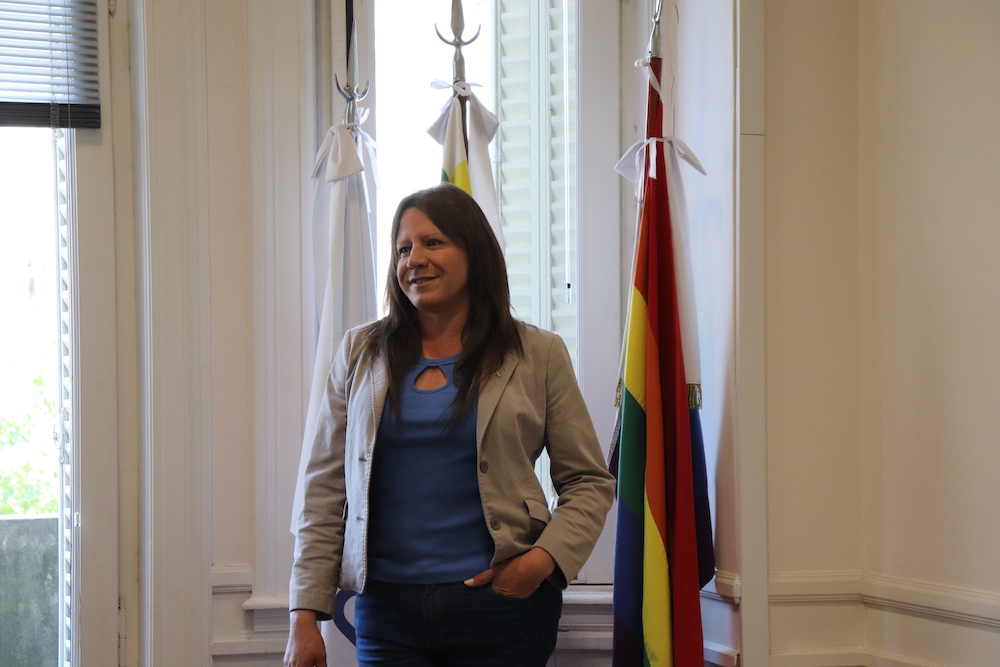
Director of anti-discrimination policies at the National Institute against Discrimination, Xenophobia and Racism (INADI)
Born in Santiago del Estero, the capital city, 42 years ago, into a farming family, she left home at 18. She did not continue her studies. In her words: “ I am no exception to the discrimination, convictions, and prison cells. It was all part of the reasons.” In 2012, she joined the Evita Movement along with other comrades who were part of the National Roundtable for Equality and form the Equality Front within the movement.
One afternoon in Santiago del Estero, around 2000, she met Claudia Pía Baudracco at the home of activist Luisa Paz. After 2001, she moved to Neuquén, reconnected with Claudia Pía, and joined the national organization of ATTTA, the Association of Transvestites, Transsexuals, and Transgender People of Argentina. Her colleagues, along with Marcela Romero, were already involved. She took on the coordination first for the province of Neuquén and then for Río Negro. After 2001, she joined the Argentine LGBT Federation, of which ATTTA was a part.
After the Gender Identity Law was passed, she became involved in party politics. “ I was skeptical of party politics because the Argentine national government had only ever devised policies of repression and imprisonment for us. With the arrival of Néstor Kirchner, the National Plan Against Discrimination was launched by decree in 2005. That's where I learned to understand political will. At INADI (National Institute Against Discrimination and Xenophobia), with María Rachid as president, the First Forum on Sexual Diversity was held.”
Her activism for the Gender Identity Law increasingly involved her in the anti-discrimination policies of the Equality Front. Today, she recognizes that space as fundamental to her political development: “ With the tools the organization gave me, I was able to understand that it wasn't just within that LGBT+ microcosm (where we had to work), but that we had to transform the outside world in order to include everything that wasn't inside. I don't believe in isolated individuals, in those who aren't part of an organization, because that way there's no one to hold them accountable for their actions. If I hold a position today, it's because of the ideologies of the organizations I'm active in. I put my life on hold to be fully committed to activism ,” she says.
As lines of work, Ornella envisions that INADI needs to be present everywhere, but especially in working-class neighborhoods: “ Where the understanding that discrimination is violence is still not fully grasped. We need to achieve broad social awareness and demystify the violence generated by discrimination, which ultimately takes lives. Meetings with social organizations, civil associations, community leaders, and social movements will resume because together we will shape policies and laws against discrimination. At INADI, we have the political will to bring about fundamental transformations. We don't believe in symbolic politics; we're not here to warm desks, but to ensure that the people have the necessary tools for transformation. That's why it's important that people like me, or from any sector, are within the government. There are no political gurus who will create public policy without us. The national government or the current administration must reflect the people. We are at a moment in Argentina where a president and vice president will go down in history for allowing us to be ourselves .”
If you are a transvestite or transgender public servant and would like to share your experience, write to us at contacto@agenciapresentes.org
]]>We are present
We are committed to journalism that delves into the territories and conducts thorough investigations, combined with new technologies and narrative formats. We want the protagonists, their stories, and their struggles to be present.
SUPPORT US

FOLLOW US
Related notes

We are present
This and other stories are not usually on the media agenda. Together we can bring them to light.