

After being refused reinstatement, trans people in Paraná call for a march
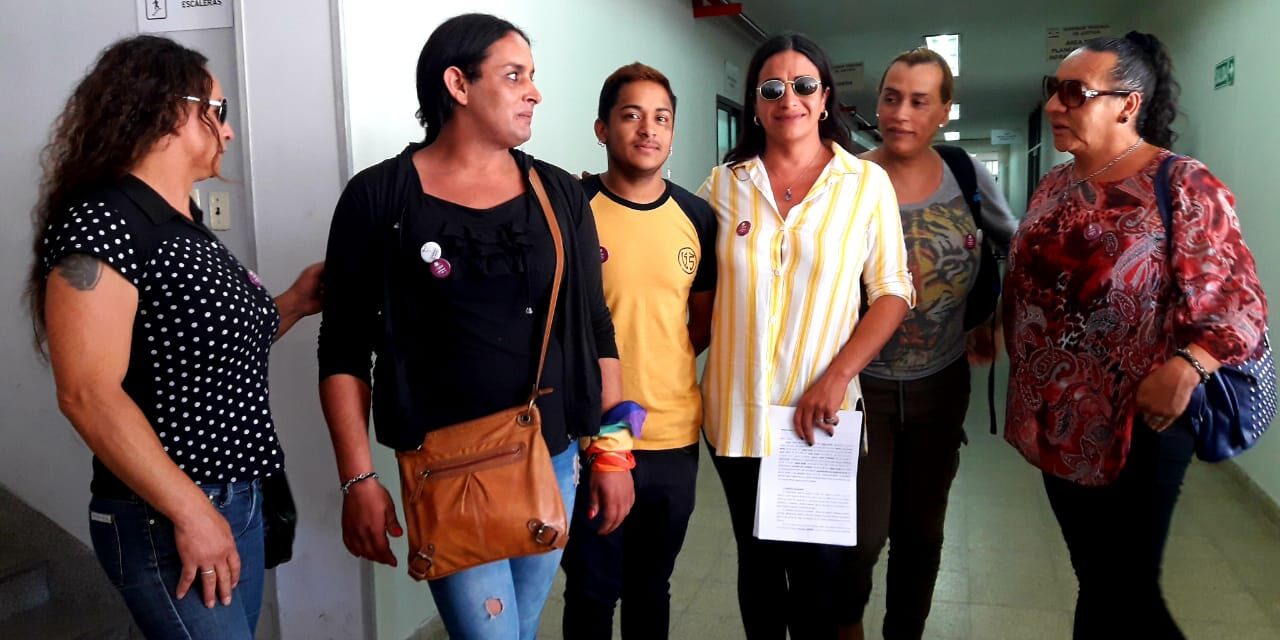
The LGBT+ community of Paraná is calling for a march in Paraná on Wednesday, January 15, to demand that Mayor Adán Bahl reinstate the lost jobs.

Share

By Silvina Mernes
“In Paraná, we will march on Wednesday the 15th at 6 PM from the Government House to the City Hall. We demand that Mayor Adán Bahl reinstate our dismissed trans colleagues,” reads the call to action, which was disseminated through social media and includes the hashtags #RightsAreNotToBeTouched and #ReincorporationNOW.
The contracts of Iara Aranzazú Quiroga, Vanesa Aramí Bello, Matías Lucas Damián Berón, Gabriela Abigail Manrique, Paola Natalí López and Fernanda Ramírez ended on October 31st – during the administration of the previous mayor, Sergio Varisco – and were not renewed.
“We demand the immediate reinstatement of our trans and travesti comrades from the current mayor,” emphasized trans feminist activist from Nogoyá, who will be in the capital of Entre Ríos to support the struggle. “We have organized to defend a fundamental right because we shouldn't have to continue enduring having our lives stolen and having those lives used to build policies that benefit only a few. We shouldn't be a variable to be adjusted. We must be part of the decisions that improve the lives of the oppressed,” she added.
[READ ALSO: Judge in Paraná ordered the Municipality to reinstate trans workers ]
The activist considered it “incompatible that, simultaneously with this violation of rights, the Women, Gender and Diversity Area is created in the Municipality, and that those who are sitting in positions of responsibility ignore and are complicit in the violence that the State exerts on our community. These are colleagues who are sitting there thanks to our struggles,” she recalled.
The march was decided at an open assembly held on Saturday, January 11, in Plaza Sáenz Peña, after the Municipality officially informed the workers of the decision not to reinstate them.
“Due to the economic emergency the Municipality is facing, which was declared by ordinance, and the lawsuits filed in court regarding the administrative actions taken by the previous government, it is not possible, at the moment, to reinstate the six transvestite and trans people whose contracts expired on October 31,” they were informed at a meeting held on Monday, January 6, between representatives of the LGBT+ community of the capital of Entre Ríos and two municipal officials: the Secretary of Participation and Community Management, Juliana Robledo, and the Undersecretary of Women and Diversity, Cristina Ingleson.
[READ ALSO: Trans workers in Paraná fight for their jobs: they took their proposal to the national government ]
“I left feeling disappointed,” said Iara Quiroga, one of the trans workers, after the meeting. She recounted that, in an attempt to alleviate the situation, the officials offered to get them “a bag of groceries and a voucher for the electricity bill.” But she lamented: “There are colleagues who don’t own their own homes, like me, and we have nowhere to live, so how are we going to pay the electricity bill?”
A few days earlier, on Friday, January 3, the group traveled to Buenos Aires to present their situation to Cecilia Merchán, Secretary of Equality and Diversity, and Alba Rueda, Undersecretary of Diversity, both under the Ministry of Women, Gender and Diversity of the Nation, headed by Elizabeth Gómez Alcorta.
They returned happy because the national officials showed a willingness to contribute to finding a solution and proposed forming a working group comprised of representatives from the Municipality of Paraná, the Government of Entre Ríos, and the National Ministry of Women, Gender and Diversity, with the objective of “resolving this particular situation as well as promoting the inclusion of the trans community of Paraná in general.” They also noted that this case could spur the development of public policies that would allow access to formal employment for the entire trans community in the country.
However, at the meeting with the Paraná authorities, they did not find the answers they were hoping for. After the change in municipal government on December 11, the workers felt that obtaining new contracts and maintaining formal employment was a real possibility. But the Municipality maintained its decision not to reinstate them, citing two reasons: first, the obligation to comply with the ruling of the Superior Court of Justice (STJ), which overturned the initial decision (by Judge Pablo Barbirotto of the Juvenile Criminal Court) that had granted the injunction filed by the six transgender individuals; and second, that the contracts expired on October 31 and the decision not to renew them was made by the previous administration.
The group has already announced that, in addition to Wednesday's mobilization and any future administrative actions they may take, they will appeal to the Supreme Court of Justice. Their primary objective is to recover their jobs. But their main aspiration is to vindicate the right of the trans community to access and maintain dignified work.
We are present
We are committed to journalism that delves into the territories and conducts thorough investigations, combined with new technologies and narrative formats. We want the protagonists, their stories, and their struggles to be present.
SUPPORT US

FOLLOW US
Related notes
We are present
This and other stories are not usually on the media agenda. Together we can bring them to light.