

2019: 67 murders against the LGBTI+ population in Central America
The Northern Triangle of Central America, one of the deadliest regions for LGBTI+ populations on the continent.

Share

By Paula Rosales with Pilar Salazar
Photos: Presentes archive (Paula Rosales, Celeste Mayorga)
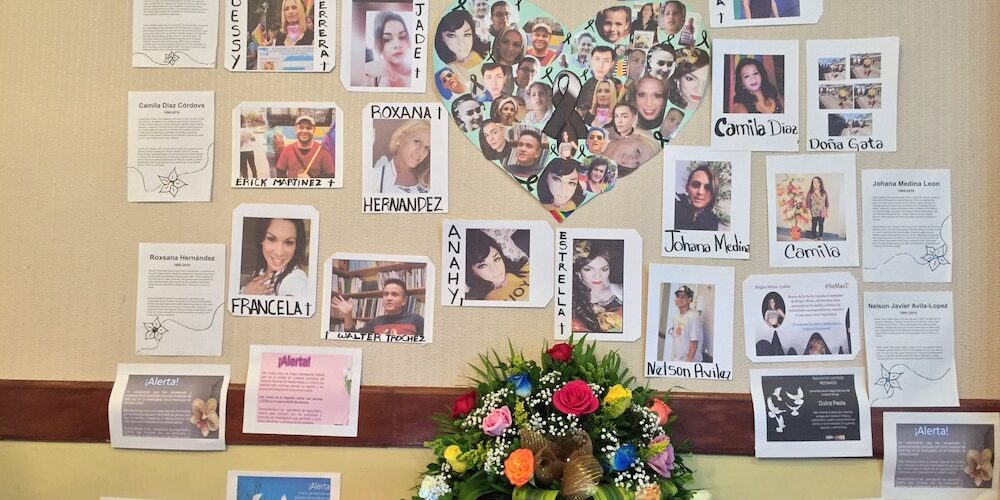
The Northern Triangle of Central America, made up of Guatemala, Honduras and El Salvador, continues to be one of the deadliest regions for LGBTI populations on the continent.
At least 67 murders of LGBTI people have been recorded in 2019 in the northern region of Central America. This figure already exceeds the number of murders committed the previous year by six cases, according to a count by human rights organizations.
According to the report, Honduras tops the list with 34 hate crime cases, followed by Guatemala with 24 and El Salvador with nine. Only two of these murders in El Salvador have gone to trial: those of Camila Díaz and Anahí Miranda .
In Honduras, the number of femicides increased by 36 percent compared to 2018, when there were 25 cases. The majority of the crimes were committed against gay men, with 19 cases; nine transgender women and six lesbians died violently, according to the organization Cattrachas.
Meanwhile, in Guatemala, murders of the LGBTI population rose by at least 60 percent compared to those recorded last year, when 15 cases were reported.
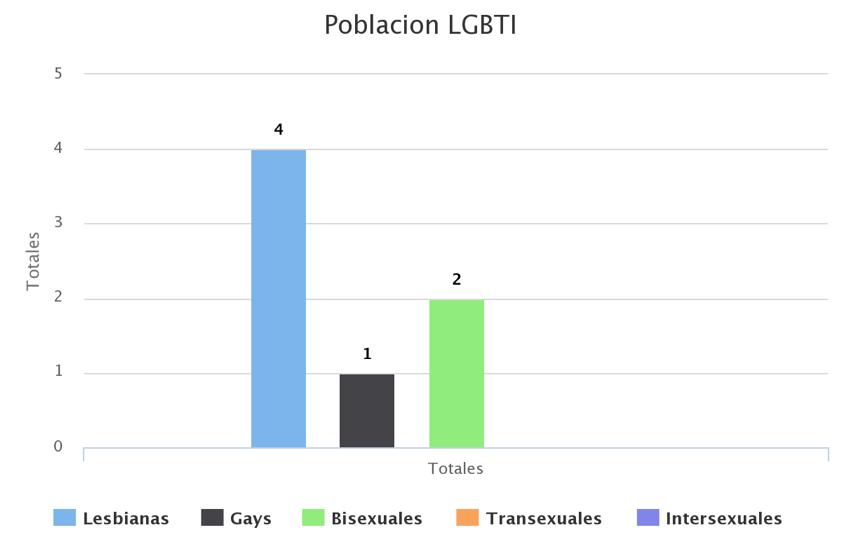
The observatory of the National Network of Sexual Diversity – REDNADS – in Guatemala, indicates that of the 24 cases, 10 correspond to gay men; six trans women; three lesbians and five cases whose gender identity has not been determined.
El Salvador is the only country that reported a reduction of 35.7 percent. In 2019, nine cases were registered, eight of which involved transgender women and one a gay man. Last year, 14 cases were reported.
The northern part of the Central American region shares similar characteristics, among them, its populations are deeply conservative and religious, and they report high rates of violence and homicides, attributed to gangs, drug traffickers, and state security forces.
Gays and lesbians, the most affected victims in Guatemala
READ MORE: A lesbian and a gay man were murdered in the same region of Guatemala
According to information shared with this media outlet by the Office of the Ombudsman for Sexual Diversity of the Human Rights Ombudsman's Office (PDH) in Guatemala, reports of violence against LGBTIQ+ people filed with state institutions are limited. From January to August 2019, the PDH received only 15 reports of violence against LGBTIQ+ people in that country. According to the Ombudsman's Office, this is due to widespread distrust of the justice system. This distrust is exacerbated for LGBTI people due to the stigma and discrimination associated with their sexual orientation, which affects the care and services they receive.
The information system that records reported cases of violence at the various Victim Assistance Offices nationwide only reflects five cases of violence against lesbians, gays, and bisexuals between January 1, 2019, and September 23, 2019. Upon requesting updated information, the number increased to just two cases, none of which involved transgender individuals. This clearly demonstrates a lack of reporting, either due to a lack of trust in the justice system or because their complaints were ignored, leading to their becoming victims of hate crimes.
For Carlos Romero Prieto, secretary of REDNAS, the symbols used on the murdered bodies denote a high level of hatred toward dissidents. Most of the victims were marked with messages rejecting their gender identity and sexual orientation.
“There is a pattern of normalizing violence. People believe it is legitimate and good to be violent towards us, and of course, this is a pattern throughout the region. And that accentuates vulnerability,” Romero pointed out.
In 2019, the gaps for the LGBTIQ+ community in Guatemala were significant, but compared to 2018, civil society organizations perceive a more visible and informed population. And for the first time this year, two openly gay members of parliament were elected: Aldo Dávila and José Hernández.
READ MORE: Guatemala adds two gay congressmen: progress and impacts
But organizations in Guatemala are worried. On the one hand, they are concerned about the rise of the incoming president, Alejandro Giammattei, as they believe his conservative rhetoric could increase attacks and hate crimes.
Giammattei was accused by the now-defunct International Commission Against Impunity in Guatemala (CICIG) of extrajudicial killings of prisoners at the Pavón prison. Imprisoned in 2010 and acquitted by a court citing lack of evidence, his case has now been closed.
During his election campaign, Giammattei stated his opposition to same-sex marriage and abortion. His party, Vamos por una Guatemala Diferente (VAMOS), will govern until 2024 and is pushing for the strengthening of the armed forces and the reinstatement of the death penalty.
READ MORE: Presidential candidates speak out against LGBT+ and women's rights
On the other hand, on April 29, the third reading to approve proposal 5272, "Law for Life and Family," was already on Guatemala's legislative agenda. This proposal prohibits talking about sexual and reproductive rights, increases prison sentences for abortion, prohibits same-sex marriage, and prohibits talking about and promoting sexual diversity in state institutions and public and private educational establishments. However, this initiative did not reach a quorum in Congress and is suspended until next year.
READ MORE: A bill seeks to criminalize discrimination against LGBT people in Guatemala
Honduras accounts for the majority of hate crimes.
The Observatory of Violent Deaths of the LGBTI Community in Honduras, of the Cattrachas Lesbian Network, recorded 317 hate crimes in the last ten years, of which 92 percent are unpunished. Of the cases recorded, 180 are gay men, 37 are lesbians and 100 are trans people.
“In our observatory of violent deaths of LGBTI people, we have always observed that some years are especially violent. This year there is a large increase in violent deaths of LGBTI people in the country, but also a significant increase in violence in Honduras,” Indyra Mendoza, director of the organization Cattrachas, told Presentes.
Honduras: A young gay man was brutally murdered, but there is no investigation.
According to the 2019 World Study on Homicide, published in July 2019 by the United Nations Office on Drugs and Crime (UNODC), Honduras has a homicide rate of 42 per 100,000 inhabitants, one of the highest in the world.
In July, the Office of the United Nations High Commissioner for Human Rights in Honduras (OHCHR) condemned the violent deaths of LGBTI people in 2019. The international body lamented that in July alone, three trans people and one bisexual person were murdered.
READ MORE: The UN condemned the wave of murders of LGBTI people in Honduras
The current president of Honduras, Juan Orlando Hernández, won re-election in 2017 with the support of the right-wing Honduran National Party, which opposes same-sex marriage and promotes Bible reading in schools.
The political crisis triggered a mass exodus of people seeking to reach the United States. Since October 2018, hundreds of Hondurans have joined the so-called "Caravans," which have caused one of the largest migration crises on the U.S.-Mexico border. These groups were joined by LGBTQ+ individuals fleeing violence, discrimination, and poverty.
Roxana Hernandez, a 33-year-old trans woman who joined the migrant caravans, died in May 2018 in the custody of U.S. Immigration and Customs Enforcement (ICE).
“It is important to note that for us, all of this is related to a public policy that does not exist. A public policy aimed at reducing deaths from drug trafficking and organized crime such as gangs, but nothing related to the promotion of hatred, contempt, and discrimination, neither against women due to the increase in femicides, nor against LGBTI people,” Mendoza stated.
READ MORE: Honduras: Three hate crimes against LGBT people in one week
June and July were the most violent months of 2019. Cattrachas recorded at least 25 hate crimes in 2018, of which 16 were committed against gay men, 5 against trans women, and 4 against lesbians.
READ MORE: Trans activist Bessy Ferrera murdered: fifth hate crime this week
El Salvador: Violence against trans women
The third country in the Northern Triangle recorded the murder of nine LGBTI people as of December 30th; eight were transgender women and one was a gay man. Compared to the previous year, these crimes decreased by 57 percent. October and November were the most violent months for the transgender population.
READ MORE: Trans woman attacked in El Salvador and police refused to take her report
According to the Solidarity Association to Promote Human Development – ASPIDH Arcoíris Trans, 14 trans women were murdered in 2018. None of these cases have been prosecuted.
According to Mónica Linares, director of ASPIDH, the decrease in crimes against LGBTQ+ people may be due to the forced migration of the LGBTQ+ population.
“The last few months were the most violent; many LGBTI people have migrated out of El Salvador, and that is precisely why we don’t have more registered deaths,” Linares told Presentes.
READ MORE: Another hate crime in El Salvador: four transfemicides in 40 days
According to a report on human displacement by the Association Communicating and Empowering Trans Women in El Salvador (COMCAVIS TRANS), gangs are the main perpetrators of attacks against the LGBTI population. This is reflected in 79 percent of the documented complaints filed between March and December 2018.
COMCAVIS recorded the internal displacement of 102 LGBTI people between March and December 2018. Seventy-eight percent of them are trans women. Those interviewed reported receiving threats, but the prosecutor's office did not investigate the cases. COMCAVIS also notes that from 2014 to the present (November 2019), 116 trans women have left El Salvador seeking humanitarian asylum in various countries.
READ MORE: Hate crimes remain unpunished in El Salvador: calls for investigation
In 2015, El Salvador's Congress reformed the penal code to criminalize offenses based on sexual orientation, gender identity, and gender expression. However, to date, all such cases remain unpunished.
The Salvadoran state turns its back on the LGBTI population
The president of El Salvador, Nayib Bukele, who took office on June 1, eliminated five State Secretariats just hours after beginning his term, including the Secretariat of Social Inclusion, which served vulnerable and LGBTI populations.
Within the Secretariat of Social Inclusion, the first Directorate of Sexual Diversity was established to promote the eradication of discrimination based on sexual orientation and gender identity in the public administration. Bukele's decision was to transfer this directorate to the Ministry of Culture. ASPIDH believes that the lack of public policies could further endanger the LGBTI population.
READ MORE: Trans people in El Salvador denounce hate and demand a Gender Identity Law
“There is a lack of interest from the State in guaranteeing the human rights of the LGBTI population, who are in vulnerable situations. There isn't even an identity law for trans people, and that makes it difficult for this population to access services,” Linares emphasized.
Bukele, who will govern for the next five years, was elected in the last elections with the right-wing Grand Alliance for National Unity (GANA) party. During the election campaign, he stated his opposition to same-sex marriage and abortion.
El Salvador does not have a gender identity law that would allow, among other things, the collection of official statistics on crimes committed against the LGBTI population.
We are present
We are committed to journalism that delves into the territories and conducts thorough investigations, combined with new technologies and narrative formats. We want the protagonists, their stories, and their struggles to be present.
SUPPORT US

FOLLOW US
Related notes
We are present
This and other stories are not usually on the media agenda. Together we can bring them to light.