

2019: At least 17 murders against LGBTI+ people in Peru
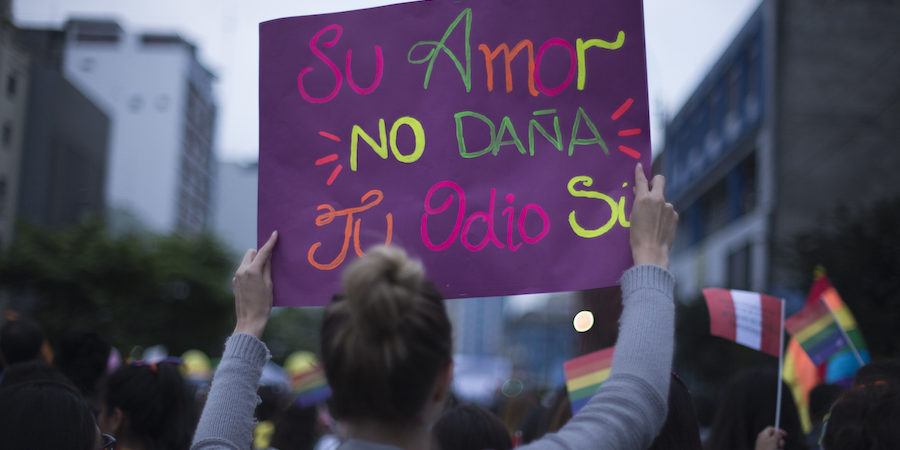
They denounce underreporting: for every hate crime, there are two that go unreported.

Share

By Vero Ferrari, from Lima
Thinking that a “good year” is one in which “fewer of us are killed” might seem paradoxical. But it is, in a context where an average of 15 LGBTQ+ people were killed annually since our deaths began to be recorded—back in 2005, thanks to the first reports from the Lima Homosexual Movement, published in 2006, 2007, and 2008, to confront the State about the lack of protection and guarantees for our community, and to show them with statistics that we were being killed. Subsequently, the annual reports were produced by the organization Promsex from 2009 to 2015. And from 2016 to the present, the task of documenting human rights violations against LGBTQ+ people has been carried out by the LGBTQ+ Rights Observatory of the Cayetano Heredia Peruvian University.
According to data from the TLGBI Human Rights Observatory, at least 17 hate crimes have been recorded in Peru this year..
Among them:
Moisés HN (17 years old), was killed by his father during a fight with his mother, whom he was trying to kill. The man then committed suicide. It happened in the department of San Martín on January 1, 2019.
Claudia Vera (30), a trans activist, was shot and killed on March 30 while walking down a street in the Independencia district of Lima. She was the founder of the organization Jóvenes cambiando VIHdas (Youth Changing HIV/AIDS).
Guillermo Sandoval (68), known as “The Makeup Artist to the Stars,” was murdered on May 18 at his home in the Jesús María district of Lima . His body was found partially undressed, with his hands and legs bound, his mouth covered, and several stab wounds to the chest. He had been beaten and strangled.
Jorge Javier Cabrera Canales (49), a nursing technician, was murdered on May 19th in his home in the Madre de Dios department. His body was completely burned, and to this day his killers remain unknown.
Aldo Condori (40), a folk singer known as “El Resplandor Huanca,” was murdered on June 25 at his home in the El Agustino district of Lima. Condori was stabbed and had his throat slit, allegedly by one of his employees, who has not yet been apprehended.
READ MORE: Two hate crimes reported in one week: Justice system is only investigating one
For every hate crime, two invisible ones
Through the collection of news reports from print media, two hate crimes were traced in 2004 and 14 in 2005. Considering the lack of better data collection methods, it is estimated that for every reported hate crime, there are at least two that go unreported . This used to triple the number of violence experienced annually by LGBTI people in Peru, which remained hidden due to the State's lack of interest in gathering this information, the heteronormative bias of the media that ended up—and still ends up—concealing the victims' identities, and the families' fear of stigma .
In 2006, 12 hate crimes were recorded, and the same number in 2007, demonstrating a consistent pattern of such crimes and highlighting the grave situation regarding the rights of LGBTI people. The majority of cases involved transgender people and transvestites, followed by gay men. Only one lesbian woman was reported killed during those years. However, murders of heterosexual women were not even counted in those statistics.
This changed in 2009 and ten years later the number of femicides has risen to a total of 1318 to this day, surpassing all previous figures this year with 166 women murdered.
Continuing with the list of hate crimes against LGBTI people, 10 murders were recorded in 2008, 19 in 2009, and 18 in 2010. This very high figure was only matched in 2016. In 2011, 14 LGBTI people were killed; in 2012, there were 7 victims; in 2013, the number reached 17 deaths; in 2014, 13 people from the community were killed; in 2015, the figure was 8, the lowest in a decade; in 2016, the violence intensified, precisely in the year of the Ni Una Menos (Not One Less) movement in Peru; in 2017, 8 crimes were recorded, and in 2018, there were 14.
Underreporting of crimes and discrimination
Manuel Forno, a long-time activist and president of Dignidades , told Presentes that the 17 hate crimes recorded are “an alarming figure, despite the government's claims of progress in reducing violence against us through the involvement of relevant institutions such as the Ministry of Women, the Ministry of Justice, the Public Prosecutor's Office, and the Judiciary. While these are supposedly the main places where we should file complaints, something hasn't changed and is repeated exactly every year: our main aggressors are the police or municipal security forces. We don't file complaints at police stations because from the moment we enter, we are vulnerable to all acts of violence, and this leads to underreporting, which is linked to mockery, indifference, and negligence .”
Forno adds that “the current government and the new Congress must prioritize addressing this problem with a gender perspective. In the case of women, there are laws that are ignored. In the case of us, there are no laws, and we remain invisible. And if we don't exist, our deaths don't matter.”
Decree against hate crimes and femicides
In Peru, the only legal protection against hate crimes is Legislative Decree 1323, which strengthens the fight against femicide, domestic violence, and gender-based violence . This decree, which states that it is an aggravating circumstance to "commit the crime motivated by intolerance or discrimination, such as origin, race, religion, sex, sexual orientation, gender identity, genetic factors, parentage, age, disability, language, ethnic and cultural identity, clothing, opinion, economic status, or any other factor, " was targeted for repeal by the Fujimori regime. The aim was to remove gender-based violence, sexual orientation, and gender identity from the protections, and while this was partially achieved, the repeal was never fully approved, and Congress was subsequently dissolved.
READ MORE: Closure of the Peruvian Congress: "May the new parliamentary groups embrace diversity"
The new anti-rights congressmen who enter will probably seek to push for this repeal, meanwhile, of the five hate crimes recorded, four have gone completely unpunished.
We are present
We are committed to journalism that delves into the territories and conducts thorough investigations, combined with new technologies and narrative formats. We want the protagonists, their stories, and their struggles to be present.
SUPPORT US

FOLLOW US
Related notes

We are present
This and other stories are not usually on the media agenda. Together we can bring them to light.