

2019: Year of the anti-LGBT lobby in Paraguay
Authorities declared themselves "pro-life and pro-family" while delivering anti-rights speeches. Torture was revived with "conversion therapies," and discrimination in public spaces increased.

Share

By Juliana Quintana
Photos: Jess Insfrán
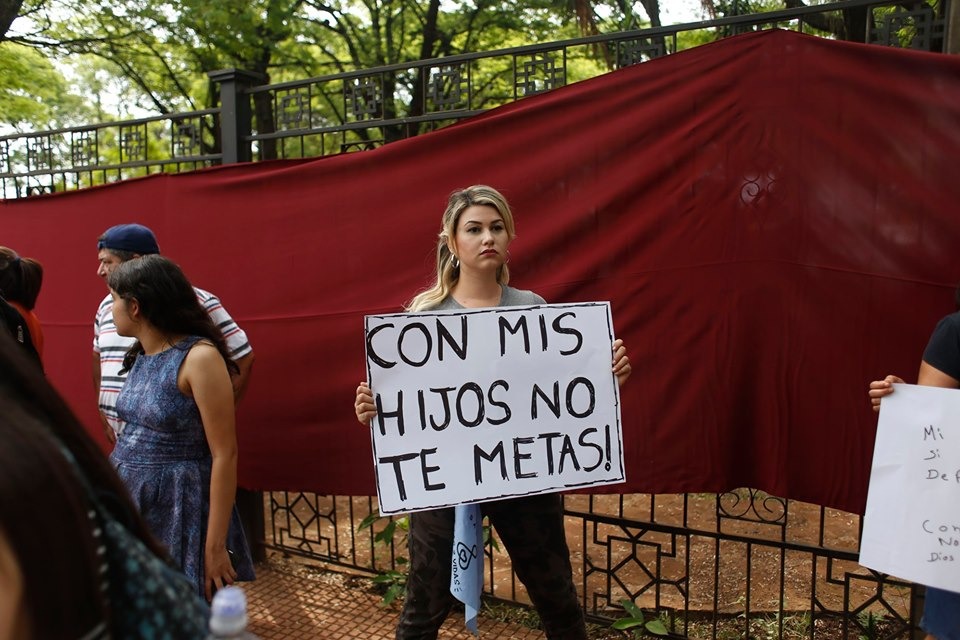
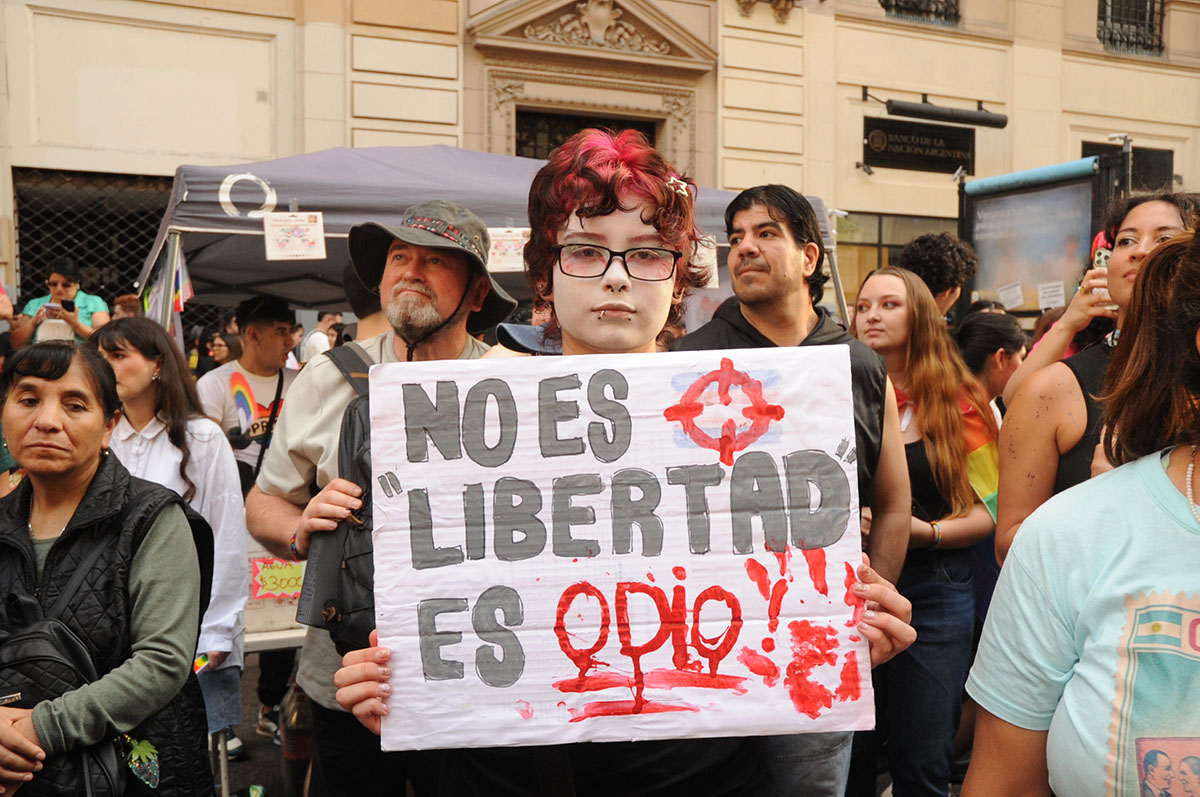
This past year, several municipal governments and the executive and legislative branches yielded to the anti-LGBTI demands of anti-rights groups. The Senate declared itself “pro-life and pro-family” on March 21, 2019, as the Chamber of Deputies had done in 2018. Several authorities in the country openly declared themselves “against the rights of LGBT people,” using references to the Bible and the National Constitution, even employing rhetoric about protecting children as an excuse to perpetrate violence.
According to the latest report from the Paraguayan Human Rights Coordinator (Codehupy), only the municipality of Presidente Franco declared itself pro-life and pro-family, but several municipalities preceded it with this measure in recent years: Encarnación, Ciudad del Este, Ñemby, Luque, and Limpio (2017), and Filadelfia (2018). The city of Hernandarias did so on July 6, 2017.
[READ ALSO: City councilman from Ciudad del Este assaulted LGBT activists at the Festival ]
Given the lack of official data on violence and discrimination against the LGBTIQ+ community, Rosa Posa, from Aireana (a group for lesbian rights); Erwing Augsten, from the network Against all forms of discrimination; and Mariana Sepúlveda, from Panambí (an association of transvestites, transsexuals, and transgender people in Paraguay) wrote the chapter “Rights of LGBTI people. Discrimination based on sexual orientation, gender identity, and gender expression” for Codehupy.

“We are experiencing a setback without having made any progress,” the report states. Sixty years after the first recorded defense of the rights of sexual diversity in Paraguay (that is, the case of Bernardo Aranda in 1959), and thirty years after the fall of the dictatorship, hate speech continues to operate within a symbolic framework belonging to the last military dictatorship that persecuted, tortured, and imprisoned those it considered “dangerous.”

Repression in Hernandarias
Once again, community representatives from the municipalities of Encarnación (Itapúa Department) and Hernandarias (Alto Paraná Department) took action to prohibit activities related to September 30th, National LGBTI Rights Day. Their tactics ranged from hate speech and pressure on authorities by church groups to a resolution banning the Second LGBTI Pride March in the city of Hernandarias.
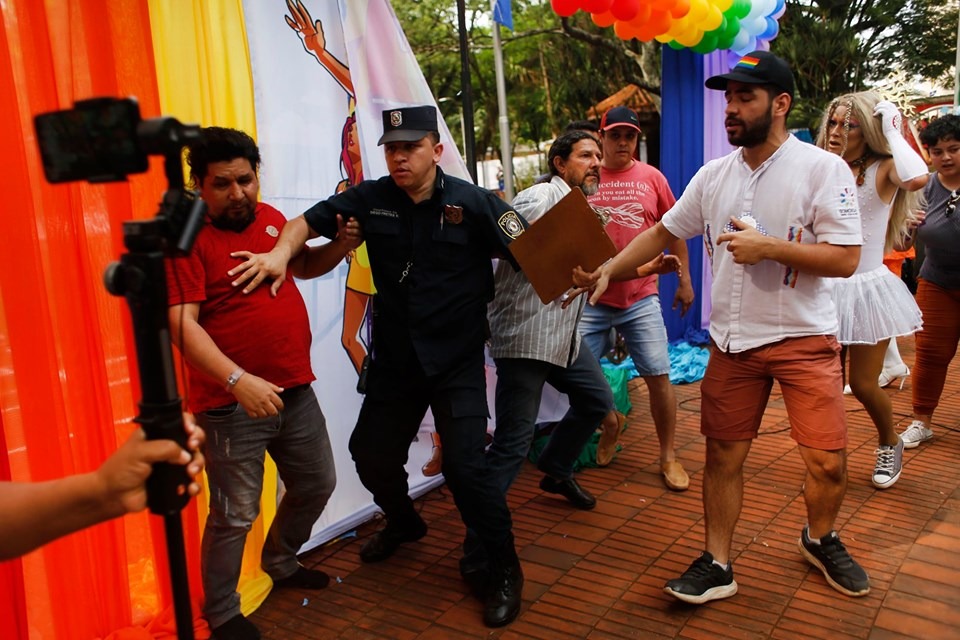
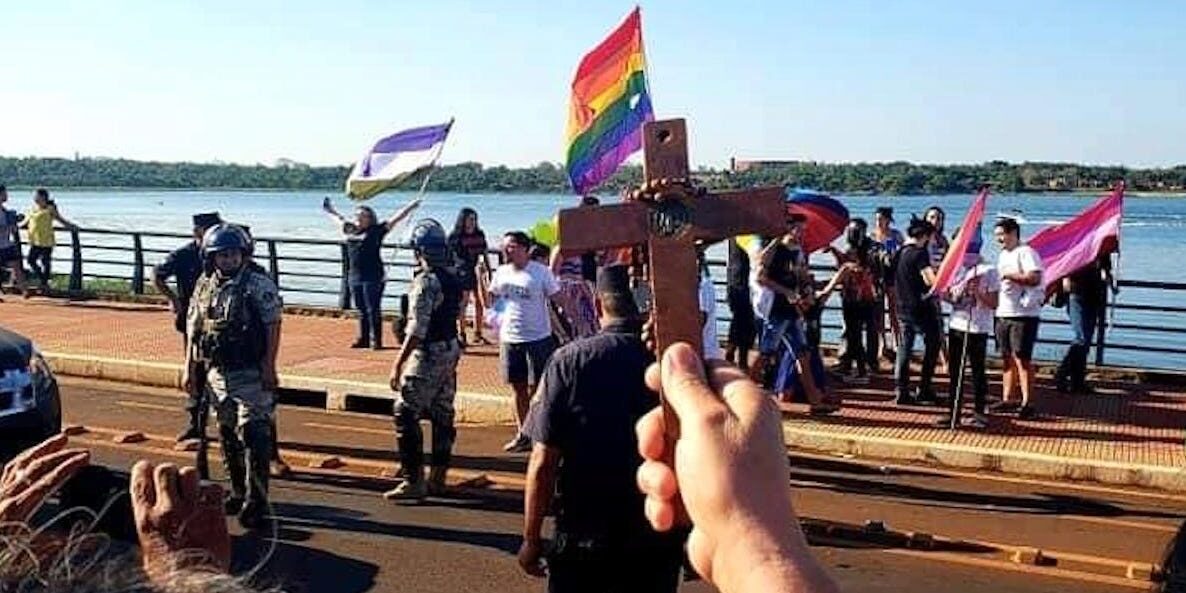
The repression in Hernandarias marked a turning point in the legitimization of violence against LGBT people. This context was enough for Rubén Rojas, the current mayor of Hernandarias, to attempt to prohibit the LGBTI march in that city. Through a municipal resolution, he communicated the measure to the Police and the Public Prosecutor's Office, which encouraged people to attack the demonstrators. They were pelted with stones, insulted, and threatened with weapons, crosses, and rosaries. An unprecedented event in Paraguay.
Various self-proclaimed “pro-life and pro-family” groups, outnumbering the protesters by three to one, began throwing stones, rubble, and Molotov cocktails at LGBT activists gathered for the Second Diversity March of Alto Paraná. Members of Amnesty International and Diversity Asunción traveled to support the march, which began at 3:00 p.m. The demonstration started at Plaza Niño Jesús and proceeded to a rented property in the city.
“This case was terrible for us because, while there is always police violence, we started receiving two to three reports a day of violent situations in public places. People see that they can assault another person and get away with it, so the cases become much more serious,” Robledo said.
176 cases of discrimination
From October 2018 to October 2019, the organizations Aireana and Panambi received 176 reports of various incidents of discrimination, threats, and physical assault. The Rohendu hotline (“we hear you,” in Guaraní) received 106 calls related to discrimination against LGBT people, and Panambi received 70.
According to Carolina Robledo Desh, president of Aireana, the increase in cases is due to a rise in violent rhetoric from authorities and the Church. In an interview with Presentes, she stated that calls increased by 70% after the violent incident at the Hernandarias march.
[READ ALSO: A trans activist arrived at the Paraguayan Supreme Court to change her name ]
Mariana Sepúlveda explained that the cases are similar to those of previous years, but that police aggression and discrimination based on gender identity have increased. The most common locations are shopping malls, university campuses, and police stations, which they refer to as "red zones" or areas of sex work. She also highlighted state violence in prisons (Tacumbú, Emboscada Nueva and Vieja) and discrimination in healthcare services.
[READ ALSO: Paraguayan trans women marched and denounced the police and the justice system ]
“There were threats from members of the public, even in supermarkets. On December 24th, after midnight, many of my colleagues have to go out to work. Last year, people threw beer bottles at women in red-light districts. We know that violence rates increase during these last months of the year, so we'll be open to receiving calls,” Mariana explained. According to Panambi's survey, the most violent areas for trans people in 2019 were San Lorenzo, Fernando de la Mora, Capiatá, and Roque Alonso.
The entire year passed without any investigation into the transfemicides of Ada Mía Naomi Gómez (29) and Nicol Ferreira (31), which occurred in 2018. A new case came to light in October of this year. A young man, approximately 20 years old, murdered Soledad Soler Fernández (42). Initially, the investigation pointed to a possible robbery, but, according to the prosecutor in charge, the nine gunshot wounds she sustained could indicate that it was a premeditated murder. The case was classified as intentional homicide.
If the hate crime is verified, it would be the 62nd transfemicide in the democratic transition. However, this figure only reflects the cases that were reported and reached the courts. The majority of cases of violence against trans people go unreported to Paraguayan state institutions due to the stigma, impunity, and structural discrimination faced by the community.
Maximum sentence for Romina Vargas's killer
On October 1, 2019, in Luque, the judiciary issued a landmark ruling in the first trial for the murder of a transgender person in Paraguay. It sentenced the killer to the maximum penalty, recognizing that his motivations were hatred and discrimination.
The incident occurred on October 15, 2017. Almost two years after Blas Amarilla (24) was charged, he was found guilty and sentenced to 25 years in prison for the murder of Romina Vargas. This is the first time the State has punished a transfemicide—even though this crime is not specifically defined or aggravated by law.
“It’s a ray of light for us that a 25-year sentence has been handed down. Out of 61 murder cases, this is the first time in history that we’ve had justice. I believe that, thanks to this, people will think twice before committing another crime. The idea that the murderer won’t go unpunished is already generating a bit of fear,” Mariana stated.

Discrimination in public spaces
Clubs, shopping malls (Del Sol, Villa Morra, Mariscal López, Pinedo, Multiplaza), restaurants, nightclubs (Faces), and food parks have subjected members of the LGBT community to violence, discrimination, or expulsion from their premises at least once a year. In Paraguay, there is still no law against all forms of discrimination, which allows institutions and private companies to discriminate based on gender identity or sexual orientation, causing moral harm with impunity.
Simón Cazal, director of the organization SomosGay, recounted that the last peak of aggression they experienced as a group was in 2010 with the approval of same-sex marriage in Argentina. It was a time when many LGBT people were expelled from public spaces. The second peak of violence, according to Cazal, occurred with the inauguration of former president Horacio Cartes. Since then, symbolic aggression from the state has not diminished.
“It always explodes during times of political tension. They use misogynistic and homophobic rhetoric as a scapegoat. Moral panic is used as a tool for social unrest. And now, in this period, we are facing an evangelical advance legitimized by the State,” says Simón.
Name change
In Paraguay today, there is no law prohibiting a transgender person from changing their name. On the one hand, the arguments of the Public Prosecutor's Office clash with the criteria upheld by the Inter-American Court of Human Rights, to which the country subscribes. On the other hand, in the advisory opinion requested by the Republic of Costa Rica, the Inter-American Court stated that people have the right to autonomously define their sexual and gender identity in both official records and identity documents.

Trans activist Mariana Sepúlveda, after winning the first instance in the legal process to change her name on her Paraguayan identity card, appealed to the Supreme Court. Following Judge Karen Leticia González's ruling, which was favorable to the Constitution and in accordance with international law, the Court of Appeals submitted the case to the Supreme Court for an advisory opinion.
Torture and domestic violence
This year saw a resurgence of torture through so-called "conversion therapies," primarily at the hands of evangelical groups. These are illegal torture sites disguised as religious centers.
A prime example of the case Aireana received was that of Alicia, a 23-year-old from the city of Luque. When she told her family she had started a relationship with a girl, they kicked her out of the house, and she went to live with her partner. After a few months, her father came looking for her and asked her to return home to her family, and Alicia agreed. But days later, they took her to an evangelical center and locked her up for three months to receive “treatment” that would “cure” her of her homosexuality.
[READ ALSO: Four stories of everyday LGBTphobia and resistance in Paraguay ]
The Paraguayan Societies of Psychiatry and Psychology took a position on this point in 2011, warning that such “therapies” for changing sexual orientation have no medical justification and threaten the well-being of people.
When asked about the growing wave of complaints in Aireana, Robledo responded that there is a delay in leaving the family home. As a result, they experience not only discrimination but also violence. “I think that, on the one hand, there is a generation that is losing its fear of demanding its rights, which is why they are speaking out. On the other hand, I think that the fundamentalist sector feels emboldened by a right-wing government that does not recognize LGBT people as subjects of rights,” she stated.
We are present
We are committed to journalism that delves into the territories and conducts thorough investigations, combined with new technologies and narrative formats. We want the protagonists, their stories, and their struggles to be present.
SUPPORT US

FOLLOW US
Related notes

We are present
This and other stories are not usually on the media agenda. Together we can bring them to light.