

Gay couples banned from hugging in Paraguayan shopping mall
Activists report that cases of discrimination and attacks against LGBT+ people increased in 2019

Share

By Juliana Quintana
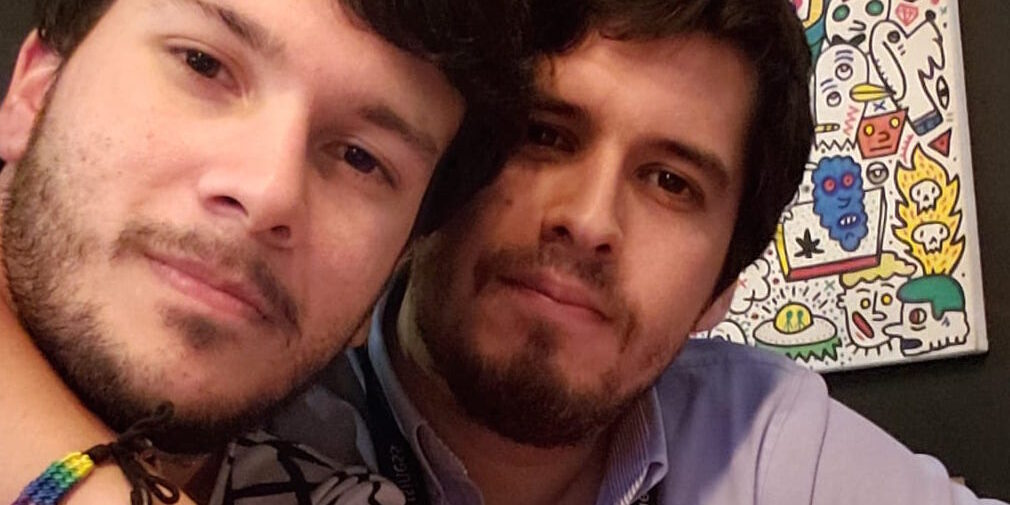
Rodrigo Paredes (23) and Daniel Moreno (30) went to the Pinedo shopping mall on Sunday, located in the city of San Lorenzo, 12 km from Asunción. Around six in the evening, they sat down on one of the benches in the corridor and hugged each other when a security guard named Claudia Herreira called them out. “You can’t be like that,” she told them. “What do you mean?” Rodrigo asked. “Hugging like that,” she replied. “Is it because we’re gay?” the young man inquired. Herreira affirmed and reinforced that they couldn’t be like that, “unless you’re straight.”
The case came to light following posts Rodrigo made on his social media . “It makes me feel so helpless because you just want to spend time like anyone else, with your partner, with friends, and you receive that discriminatory treatment. We saw other heterosexual couples calmly embracing, but we couldn't because we're both men,” he emphasized.
[READ ALSO: Paraguayan trans women marched and denounced the police and the justice system ]
The couple filed a complaint with the mall's management detailing the incident, and after six days, they received a response apologizing "if there was a mistake." When Cecilia Figueredo, marketing manager of the Pinedo shopping center, was contacted by Presentes, she stated that the space is "inclusive," but that, as per mall policy, couples must maintain "good behavior" in public, regardless of their sexual orientation.
However, the example he provided for this definition is that people should not be lying down on benches, which does not match Rodrigo and Daniel's version of events.
“Pinedo is a family-friendly shopping destination”
“Trans people and lesbians always come here, we have no problem with that. What we do focus on is good behavior because Pinedo is a family shopping center and some people complain to us. Hugging and holding hands, for us, is not a problem. The head of monitoring told the security guard what he saw and she asked them to keep it down,” Figueredo said, justifying himself several times by saying that they didn't ask them to leave.
“It’s an act of discrimination because we’re a gay couple, and it’s considered strange that we’re two guys hugging. The idea is that if you love someone, you want to show affection,” Daniel said.
[READ ALSO: Anti-rights groups attacked LGBT march in Paraguay ]
“The right of admission is in no case recognized as an absolute right, nor is it subject to the discretion of the establishment owner. Rather, it is subject to prior administrative review to guarantee its compliance with the purpose established by law,” they stated in one of their tweets . Furthermore, on the same day they filed their complaint with the shopping center's management, they contacted Paseo La Galería shopping center on social media to inquire whether they had similar policies to Pinedo's, and visited the location to verify their claims.
Complaints intensified in 2019
Simón Cazal, co-founder of the SomosGay organization, noted that this year the number of people who have approached the organization to report discrimination and violence has increased, reaching 13 to date, from both private and public spaces. This number includes the case at the Pinedo shopping mall and the case of Bruno Olmedo.
“This year we’ve seen a spike in aggression compared to the violence recorded in the last 10 years. There is constant and active militancy not only on the part of fundamentalist sectors but also from the State, and we believe that this is the cause of this situation,” Cazal maintains, adding that the right of admission is the excuse that establishments use to openly discriminate.
According to the annual report of the Human Rights Coordinator of Paraguay (CODEHUPY) to be published on December 10, up to last month three complaints of discrimination against lesbians in public places were registered (restaurant, sports club and denial of house rental).
“Most of the cases we receive about violence and discrimination against lesbians happen in the family setting,” explained Rosa Posa, an activist with Aireana, a lesbian rights group.
Without an anti-discrimination law
The document was prepared by Rosa Posa, from Aireana; Erwing Augsten, from the Network against all forms of discrimination (RCTD) and Mariana Sepúlveda, from Panambí (Association of transvestites, transsexuals and transgender people of Paraguay).
In June, Lola Asunción, a trans woman, was banned from entering Shopping del Sol. In September, Adison Montiel and Mattias Ayala were kicked out of the Mariscal López shopping mall for kissing, the same month the mall launched an LGBT inclusion campaign.
In November, Daniel Guerrero suffered a homophobic attack at a shopping mall in the city of Mariano Roque Alonso while he was changing in the bathroom. A cleaning woman poured bleach on his face. “You’re a disgusting piece of shit, stop spying on people,” she yelled at him. He called the police, recounted the events, but they didn’t believe him.
On Tuesday, at Villa Morra Park (a food court located on Mariscal López Avenue, in Asunción), Adriana Lezcano and her partner were asked not to kiss publicly in front of families with children.
In Paraguay, there is still no law against all forms of discrimination, and the government of Mario Abdo Benítez reaffirmed its opposition to LGBTQ+ rights. During his campaign, he declared that he would "run out of ink" vetoing any bills that threatened "the family."
However, Article 25 of the National Constitution refers to the expression of personality and states that: “Every person has the right to the free expression of his or her personality, to creativity and to the formation of his or her own identity.”
We are present
We are committed to journalism that delves into the territories and conducts thorough investigations, combined with new technologies and narrative formats. We want the protagonists, their stories, and their struggles to be present.
SUPPORT US

FOLLOW US
Related notes


We are present
This and other stories are not usually on the media agenda. Together we can bring them to light.