

Gay couple adopted baby girl suspected of having HIV: she had been rejected by ten families
Five years ago, Ariel and Damián adopted a baby girl with a possible HIV diagnosis. Later they learned she did not have the virus.

Share

By Soledad Mizerniuk and Victoria Rodríguez, from Santa Fe
Ariel and Damián rushed to the neonatal ward. The baby was 28 days old and still needed to reach the minimum weight to be discharged. Just hours earlier, a judge had called them to inform them that, after a six-year wait, a baby girl with a possible HIV (Human Immunodeficiency Virus) diagnosis was available for adoption. Ten other families had declined to take her in.
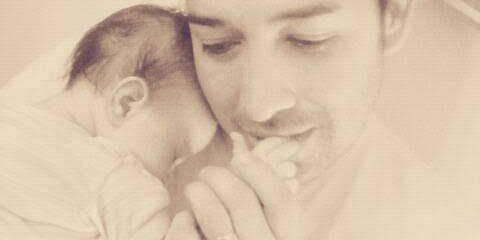
Today, Olivia is five years old. One of her parents, Ariel Vijarra, recalls: “We arrived at the NICU , which was huge and full of babies. The nurse came and told us, ‘She’s the baby.’ We fell in love at first sight. I didn’t dare pick her up because she was so tiny. Damián, my husband, picked her up. And it was wonderful. I’ll never forget that image.”
The desire to be parents and the certainty that this baby had the right to a family was everything at that moment: “The first thing the judge said was that the mother was living with HIV and had never been treated. For us, it wasn't a problem, because we knew that today, with medication, she could have a normal life. It was never an obstacle to saying yes.”
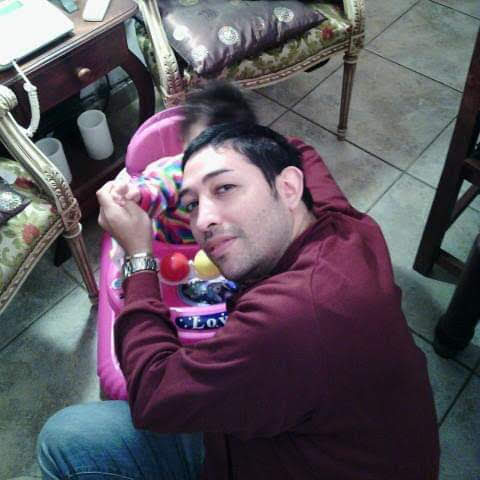
It was three days of back and forth, between the NICU and the court paperwork to move forward with the adoption. “We didn’t sleep, we ate poorly, it was a tremendous ordeal. In a pregnancy, families have nine months to prepare everything; but here they called us from one day to the next. We left the NICU with her, wearing clothes that our friends gave us, because we hadn’t been able to buy anything.”
READ MORE: Let's Talk About HIV: Chapter 1 What is HIV?
A good one
Before leaving the hospital, Ariel and Damián had an interview with the infectious disease specialist who later treated Olivia. One HIV test had come back positive, and the rest were negative. But they had to wait until she was a year and a half old to do the ELISA test—the one usually given to adults. The initial diagnosis was that she was living with HIV because her mother had never been tested, nor had she reported her status before or during childbirth.
The baby received preventative treatment, the same as for adults, because there was no pediatric medication available. “She had antiretrovirals, antibiotics, vitamins, and iron. When she was a year and a half old, we did the ELISA test, and it came back negative. It wasn't that she tested negative, but rather that she didn't have it. When Damián went to pick up the lab results, he called me crying and told me she didn't have it. I said, 'Why are you crying?' And he said, 'For her.' For us, it had never been a problem; we were prepared for anything. But she was very little and shouldn't have to pay for other people's mistakes. We were happy for her,” she says. Olivia never had to have any more tests or specific checkups.
Even though their case had a different ending than they imagined, Ariel insists on the need to raise awareness about HIV : “I think there is still a lot of ignorance , and that creates a huge division. The topic is still taboo how prudish Argentinians .
And she speaks of a change in mentality also regarding adoption and children's rights: “When we want to be parents, the desire to be so frees us from all prejudice , or at least it should. And we must also understand that children are not chosen , they choose us.”

She explains it with her own experience: “ Of the ten families offered the adoption, only a heterosexual couple had come to see the baby . They told us that the woman tried to bottle-feed her, and she wouldn't stop crying. In three days, from the moment we met, Olivia gained enough weight to come home with us. She had waited 28 days for us to meet.” Four months later, knowing their story, they were contacted about adopting their second daughter.
READ MORE: "HIV pride is about never giving up the fight"
Ariel and Damián together created the NGO Acunar , which advocates for the rights of prospective adoptive parents to reunite them with their children. For more information, you can contact them at acunarfamilias@gmail.com or via WhatsApp at +54 341 306 4162. They are also on social media as Acunar Familias.
Children with HIV
Taking cough syrup every day. Being required to take more medical certificates at school than other students. Being seen by an interdisciplinary team in addition to the pediatrician. Having a trip with your class trigger a meeting with administrators, teachers, and doctors. Stares, whispers, fear, anger, rejection. Living with HIV in childhood is complex, but the biggest obstacles are social, not medical.
“We need to understand that it’s just another diagnosis; we need to remove the negative stigma that has always been attached to HIV . That’s why I believe that Comprehensive Sexuality Education (CSE), as a public policy, is incredibly valuable and necessary for these situations,” says Lucrecia Williner, a social worker on the interdisciplinary team that supports children and adolescents living with HIV at the Iturraspe Hospital and at Cemafé (Santa Fe Medical Specialties Center).
READ MORE: #Books: Living with Viruses, by Marta Dillon
And she insists: “It remains a matter of great discrimination and taboo. This is due to the misinformation prevalent in society at large. People don't know what an HIV diagnosis entails, or even the routes of transmission. Otherwise, it's hard to understand why there's so much fear about being around someone in a classroom, a public square, or on a trip.”
From 2004 onwards, the protocols for the care of pregnant women included two mandatory HIV tests which allow the detection of the virus and prevent its transmission during pregnancy, childbirth or breastfeeding.
Today, the teams working on this issue insist on the need for tests to be repeated during the breastfeeding period, especially after the extension of breastfeeding to more than two years, to detect the virus in case the previous checks were in the window period or if it was transmitted after birth.
Williner emphasizes that scientific advances allow children living with HIV to have “normal lives,” but this doesn't prevent the first instances of discrimination from appearing when they start school. “ Today in Argentina, 98% of diagnoses are due to sexual transmission . So I can't be afraid to have a child in the classroom for fear that they will infect other children. That possibility doesn't exist,” the professional explains, adding: “We're always asked what happens if the child gets hurt and bleeds. We have to have the same safety measures for everyone. Biosafety measures are the same for everyone .”
The discrimination that stems from this lack of awareness leads most families to choose not to disclose the diagnosis, sometimes not even to their extended family; others involve the school and the neighborhood. In all cases, an important part of the process is working with children and adolescents so they can understand and process living with HIV.
“When they start taking medication, they are usually admitted for a few days to assess how they tolerate it. Then, if they are over 6 or 7 years old, we begin working with them. It's not referred to as HIV, but it is explained that there is an issue in their body and that it is necessary for them to start taking this medication. What we try to do is integrate taking the medication into their daily lives as just another part of their routine,” says Williner.
In general, children accept treatment without major difficulties. The first resistance usually arises when they have to stop seeing their pediatrician. The change often hits them hard and adds to the typical adolescent crisis. “They start wondering why they have this diagnosis inherited from their parents, a diagnosis they didn't seek or choose, and why they have to live with it. That's when anger and rebellion against the treatment appear. Some end up abandoning it,” the professional adds.
Change the message
Beyond the medical challenges, there is a social debt that must be paid to people living with HIV, but for that, more information and public communication campaigns that reverse prejudices are needed.
READ MORE: Da Morgue: the Peruvian artist who decided to dress up HIV
In recent years, campaigns by the former National Ministry of Health emphasized “Get tested” because “it’s better to know” and “#AlwaysUseIt,” referring to condoms. Children, once again, are rendered invisible when HIV is discussed and, therefore, are more vulnerable to discrimination, school dropout, and treatment abandonment. This situation is compounded by the almost nonexistent or inconsistent implementation of Law 26.150 on Comprehensive Sex Education.
Other campaigns, focused on the LGBTIQ community, had the side effect of reinforcing dominant representations about the association of HIV/sexual diversity, which is why there is a need to reach the populations with the highest prevalence through strategies that do not harm the development of their sexuality.
According to the latest official bulletin on HIV, AIDS, and STIs published by the Ministry of Health, 59,000 people with HIV were receiving antiretroviral treatment in the public health system in Argentina as of December 2019. It is estimated that approximately 139,000 people are living with HIV, and that 17% of them are unaware of their diagnosis.
The Health Answers hotline offers a dedicated number ( 0800 333 3444 ) to answer all types of questions about HIV and other sexually transmitted infections. It has nationwide coverage and is free, anonymous, and confidential .
We are present
We are committed to journalism that delves into the territories and conducts thorough investigations, combined with new technologies and narrative formats. We want the protagonists, their stories, and their struggles to be present.
SUPPORT US

FOLLOW US
Related notes
We are present
This and other stories are not usually on the media agenda. Together we can bring them to light.