

Society owes a great debt to people living with HIV
Is it World AIDS Day or a day of action? Journalist and activist Lucas Gutiérrez chronicles our failure as a society to respond to HIV.

Share

By Lucas Gutiérrez
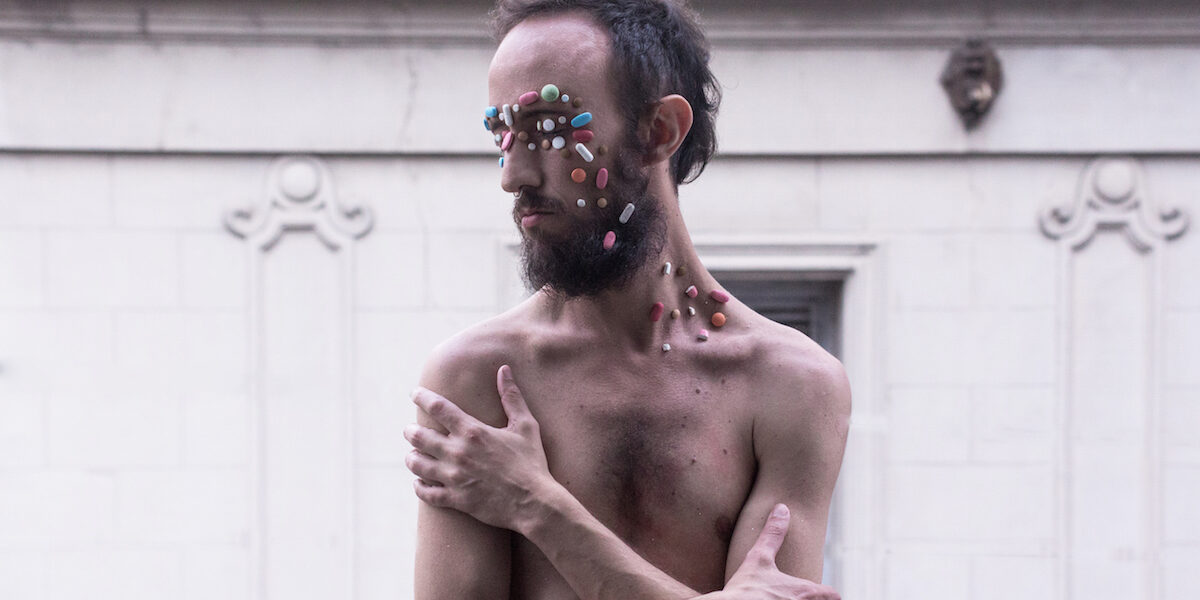
Photo: Pablo Gómez Samela
Is it World AIDS Day or a day of action? That seems to be the question every December 1st. Calling it a fight strikes me as overly belligerent: it constructs a narrative of heroes and enemies, like a Hollywood movie with martyrs and suffering, epic romances, and narrative arcs of pain and glory.
I don't want any of that.
I want the medication I'm entitled to by law, by human rights. I demand research for the best treatments and a cure. I don't know if I'm "battling," "fighting," "dancing," or "surviving." I only know that without a society with comprehensive sex and relationship education, a person living with HIV/AIDS will suffer not only physically but also in their daily life from stigma and prejudice. And if this is a war, I don't want one side to "win or lose," because this story is written in the blood of those who die (physically and socially) every day as a result of HIV and AIDS. A story rooted in, stemming from, and bearing fruit from, states and their (far from innocent) bureaucracy.
[READ ALSO: I'm on HIV+ treatment, I took a headache pill and almost didn't make it ]
Action Day? Response Day? Wait a minute! I just came up with a much better one: “Cover-up Day for the other 364 days of inaction and lack of response.” I know, it’s not very marketable. But you have to understand that those of us living with HIV do it full time. 24/7. 365 days a year. Not just the day people change their profile picture to one with a red ribbon or the day the media shares some statistic and a tear-jerking story of overcoming adversity.
I am furious
You'd expect me to speak from a place of pity, that from hearing "sick" so often the word has worn down and made me submissive, but no. I'm furious. And it's not a capricious fury. It's built up over time. For example, a few months ago, in front of the building that was once the Ministry of Health in Argentina—now a Secretariat—a police officer told us: "If you're sick, go home ." All I could do was swallow my pain and hug a comrade who was crying.
My fury is written in black and white, like the printer paper we've been seeing in hospital pharmacies since 2016 announcing shortages. My anger is tinged and branched out by the waiting that eats away at my immune system as I wait for the months to pass so I can get my viral load tests done. Urgent tests I should have had done three months ago, but maybe I'll be able to get them in two months because there are no reagents.
[READ ALSO: Gay couple adopted baby girl suspected of having HIV: she had been rejected by ten families ]
The genealogy of my hatred is rooted in a State that prefers us dead. In a perverse apparatus that, since 2016, has denied the shortcomings that destabilize us , that refuses dialogue, because receiving us in the derelict building of the former Ministry to lie to our faces and promise to do their job is not dialogue. So, what do they expect from my infected body this December 1st? Red ribbons and stories of overcoming adversity? No. My body is a site of denunciation. And this is not a war. This is a massacre. They are killing us physically and in terms of our identity. HIV-positive people discriminated against, silenced, denied, who day by day cease to be themselves and become what the virus made them. And no, I'm not referring to the HIV virus; I've barely spoken about that in years. I'm referring to the virus of indifference and abandonment by the State and society.
Does the cure cure everything?
Society as a whole has an enormous and historical debt to those of us living with HIV. Let's suppose a cure were to appear today. Great. I get vaccinated and "cured." But I'll live with the uncertainty that HIV will have returned. Then, we can only talk about a cure when my body has gone through 10 or 20 years after that "cure." And how am I going to live those 10 or 20 years? We need that time to be spent in a society where there is dialogue about the issue, about public health, about physical, mental, and emotional well-being. A cure is a collective solution, or it won't happen at all.
11 years with diagnosis
This December, 2019, also marks 11 years since my diagnosis. I've dubbed it a Capricorn virus (December 29). So don't be surprised if Virus Y Humanx (VYH) of this sign share such angry texts with you. But just as there is rage and a death-dealing spirit, there is also a lot of life. And within it lie all the achievements and embraces of activism.
[READ ALSO: Da Morgue: the Peruvian artist who decided to dress up HIV ]
I recently read a survey conducted in the United States that revealed that 30% of young millennials surveyed would not associate with a positive person. My first reaction was anger and sadness. How do we arrive at this reluctance to connect with each other?
I certainly point first to the State and its lack of policies. But I also invoke us as human beings and ask myself if HIV has humanity in its acronym, in its H, where do we, those who live in this world, have it?
[SEE ALSO: Let's Talk About HIV: Chapter 1 What is HIV? ]
I could answer that question with so many examples of love and support in the face of the virus (the virus of indifference and abandonment). I would never romanticize HIV and call it an "opportunistic crisis" as if it were all just a PowerPoint presentation some aunt used to send by email in the early days of the internet. But I do think it's worth saying that in these eleven difficult years, I've witnessed so much love and solidarity, so many gestures that build worlds, that no matter how tired and sad daily life makes me, I can still smile.
Because if there's anything more viral than HIV, it's the people who stand up to it and are active every day of the year.
And so, amidst shadows, I live another December 1st. And although I will always prioritize pessimism (because of the virus and me being a Capricorn, I repeat), I celebrate those who make each day a cure for every virus.
And if death were to call me today, before even considering a final assessment, I would make only one request, a tribute to those who came before me and a message to those who belittled me: that my body not be buried, no, that it be left in front of what was once the Ministry of Health. My body will always be a manifesto.
We are present
We are committed to journalism that delves into the territories and conducts thorough investigations, combined with new technologies and narrative formats. We want the protagonists, their stories, and their struggles to be present.
SUPPORT US

FOLLOW US
Related notes

We are present
This and other stories are not usually on the media agenda. Together we can bring them to light.