

Paraguayan trans women marched and denounced the police and the justice system
Within the framework of the International Day against Violence against Women.

Share

By Juliana Quintana
“Oñondive jejahei'yre, injustice kills us,” was the slogan chosen by the Paraguayan Women's Strike movement for their march on the International Day for the Elimination of Violence against Women. With a heat index of 40 degrees Celsius (104 degrees Fahrenheit), more than five thousand rural women, Indigenous women, transvestites, trans people, gay men, lesbians, and non-binary people marched from Plaza Italia (Asunción) to Plaza de la Democracia.

The march began shortly after 7 p.m., starting at Ygatimi Street and proceeding to Chile Street, where the artistic interventions were located. In front of the Public Prosecutor's Office, the names and faces of the perpetrators of the femicides of the 46 women murdered in 2019 were displayed, and the protesters chanted: “Judicial power, corrupt and criminal.”

Alejandra Villalba is a sex worker and promoter for Panambi. Two years ago, there was a robbery at her spot in the city of San Lorenzo, and without any evidence, they handcuffed her, put her in a patrol car, and took her to the police station. She was detained for three days. But they weren't going to let her go; she had to pay a lawyer to get her released. “I don't think there's any justice for trans people. They treat us like criminals and criminalize us for anything,” Alejandra told Presentes.

The activist recalled that she had faced discrimination on several occasions this year. A few months ago, she was near the Capiatá municipality in her work area when four police officers pressured her to leave because they didn't want her to be seen there. “I depend on this to survive. I think it's an outrage by the police,” she continued.
“The judges and prosecutors always request our imprisonment.”
“There is judicial and state ineffectiveness and a very high level of prejudice that simply imprisons us to punish us for our identity. At this point, we should have alternatives to house arrest, just like anyone else. Judges and prosecutors always request our imprisonment as punishment for our identity. The punishment for us is always prison or death,” explains Yren Rotela, president of Panambí, who also works as a judicial facilitator, along with activist Mariana Sepúlveda.

[READ ALSO: A trans activist arrived at the Paraguayan Supreme Court to change her name ]
According to the violence observatory's registry, compiled by the Center for Documentation and Studies (CDE) and based on cases reported in the press, there were 45 femicides in 2019. However, on the morning of the march, a new case came to light in the Santa Lucía neighborhood of Asunción. Transfemicides, however, are not included in the official count.
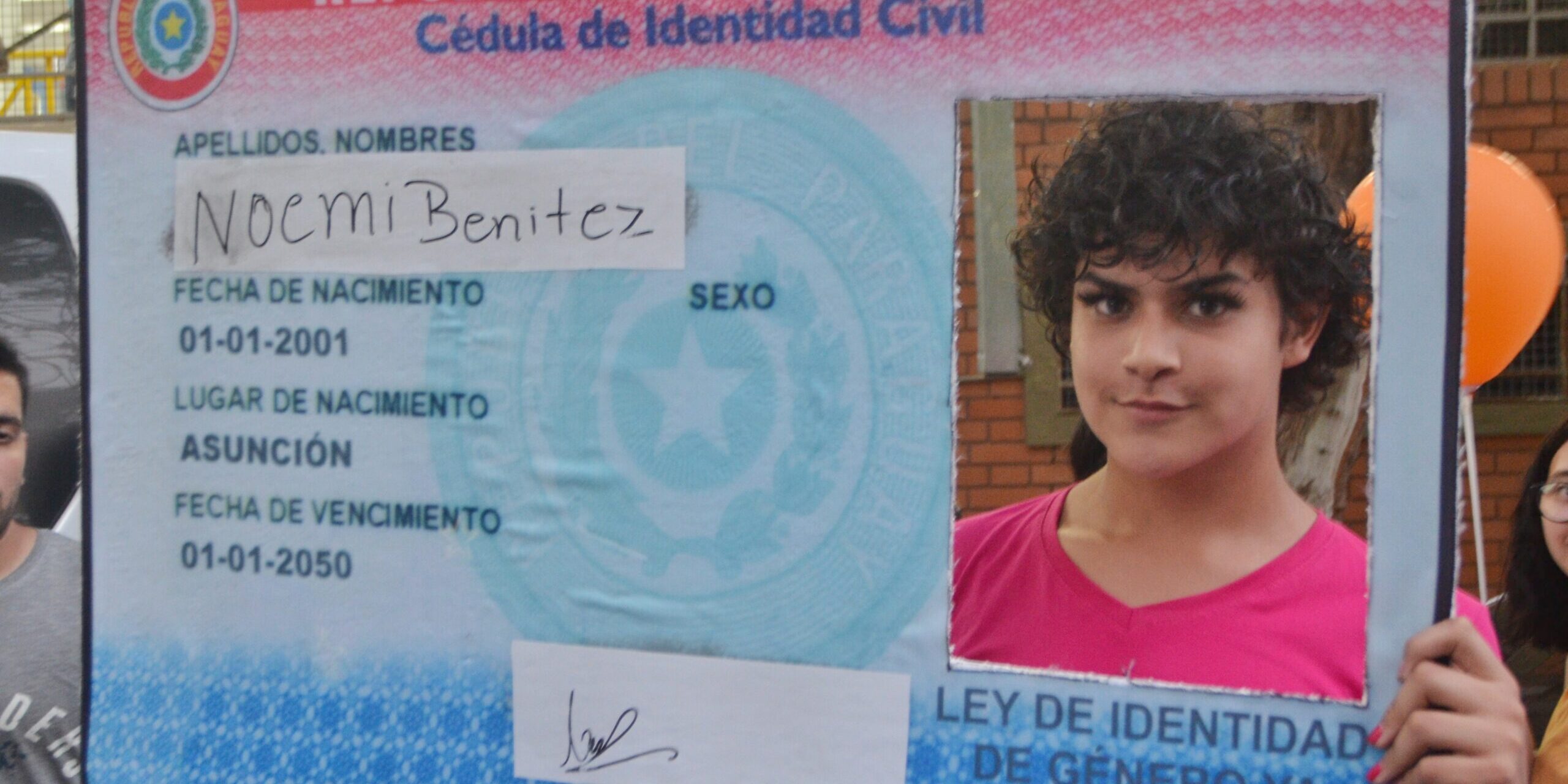
That's why, in 2013, Yren compiled the first list of murdered trans people, a list that the trans community and researchers were able to confirm. Since the fall of Alfredo Stroessner's dictatorship, there have been 62 murders of trans people and only one conviction for transfemicide.
[READ ALSO: City councilman from Ciudad del Este assaulted LGBT activists at the Festival ]
Xonorika, an activist with Transitar, stated that when trans people are excluded from society, they are also excluded from culture and politics. “It’s not just a bullet that kills you; they kill you by making your life precarious. The world actively creates conditions to exterminate us. I urge cisgender people to ask themselves why there aren’t trans people in universities, why they aren’t in their spaces. It would be wonderful if the trans community itself realized that more can be done about it. We can’t wait for changes to come from the State. Something has to be done about it because it’s urgent. The trans genocide is real,” she explained.
First conviction for a transfemicide
This year, for the first time in Paraguay, there was a conviction for the murder of a transgender person. The Sentencing Court of the city of Luque (10 km from Asunción) found Blas Enrique Amarilla guilty of the murder of Romina Vargas and sentenced him to the maximum penalty of 25 years in prison.
“Romina’s case was historic because it was the first time there was a sentence for a homicide and a hate crime, but it wasn’t a gift from the State. We, trans women and women in diversity, demonstrate and fight tirelessly demanding justice. I believe we cannot stop because we want justice for all the murders. We want femicide, transfemicide, and travesticide to stop,” Yren expressed.

“Romina Vargas’s case is the most explicit form of violence. Having your life taken. I was involved in that process, and what struck me was how the judge, a cis man, could never once mention the word ‘transphobia.’ I wonder what other ways of achieving justice there are besides criminalization. I think that’s another discussion, and I find it interesting that it’s related to the very long process of the trans community fighting for justice,” Xonorika reflected.
The protesters danced and sang “Sir, Madam, don’t be indifferent, transvestites are being killed right in front of everyone,” to the rhythm of Aireana’s tattooed song. Amid cymbals, drums, and vibrant colors, a new element stood out in the demonstration: the Wiphala flag, a symbol of solidarity with the struggle and resistance of Indigenous peoples in Bolivia.
The route ended in Democracy Square, where the 25NPy festival took place. Several performers graced the stage, among them the final scene of Cabaret Trans, a work by Panambi that seeks to raise awareness through art among society and state institutions about the everyday violence suffered by transgender people. The piece was directed by Omar Mareco, choreographed by Antonio Otazo, and the script was written by the actresses themselves.
[READ ALSO: Paraguayan justice system condemns for the first time a transfemicide ]
“They always blame the sinners. Sinners are pedophile priests, sinners are harassing university professors, sinners are those who deny our identity, those who criticize our appearance. Instead of worrying about much more important things. Femicides, for example, which today total 46 so far this year. They hurt children and adolescents, but we are pro-life and pro-family,” begins the musical number Fabu Olmedo.
Cabaret Trans was full of political messages. At the end of the musical, the artists looked toward the screen where news headlines about the trans femicides of recent years were projected. Romina; Nikol; Naomi; Andrea; the names that are repeated and multiply every year.
We are present
We are committed to journalism that delves into the territories and conducts thorough investigations, combined with new technologies and narrative formats. We want the protagonists, their stories, and their struggles to be present.
SUPPORT US

FOLLOW US
Related notes

We are present
This and other stories are not usually on the media agenda. Together we can bring them to light.