

Being trans in Guatemala: sharing stories to stop discrimination
Organizations launched the “sertrans.gt” campaign to raise awareness among the Guatemalan population with stories and information in order to combat discrimination.


Share

By Pilar Salazar
In a social and political context of extreme vulnerability for trans people, where 60% only finished primary school and the same percentage suffered an attack on their life at some point, various organizations launched the “sertrans.gt” to raise awareness among the Guatemalan population with stories and information and thus combat discrimination.

The areas of greatest exclusion for transgender people are often the workplace, the justice system—which is why they rarely file complaints—and, in particular, healthcare. Between homemade hormone treatments, exposure to HIV due to sex work, and attacks, the health of these populations suffers. But Guatemala's healthcare system doesn't respond to these needs; instead, it excludes and, often, mistreats them.

To address this, the “Differentiated Comprehensive Health Strategy” , but it remains unimplemented. “HIV has hit us very hard with a prevalence of 24%, and it continues to kill us, and we continue to be trapped in sex work and facing death,” said Andrea González, director of Otrans Guatemala, at the launch of the campaign by Otrans Guatemala, Redmutrans (Multicultural Network of Trans Women), the Men in Transformation Collective, and the Lactrans Network (Latin American and Caribbean Network of Trans People).
According to the National Network for Sexual Diversity, there were at least 24 hate crimes in 2018, and about 20 of the victims were transgender. But statistics aside: What does it mean to be transgender in Guatemala? To find out, Presentes spoke with two activists who shared their experiences and feelings.
Mónica Estefanía Chub Caal , 27 years old , a bilingual Maya Quekchi trans woman.
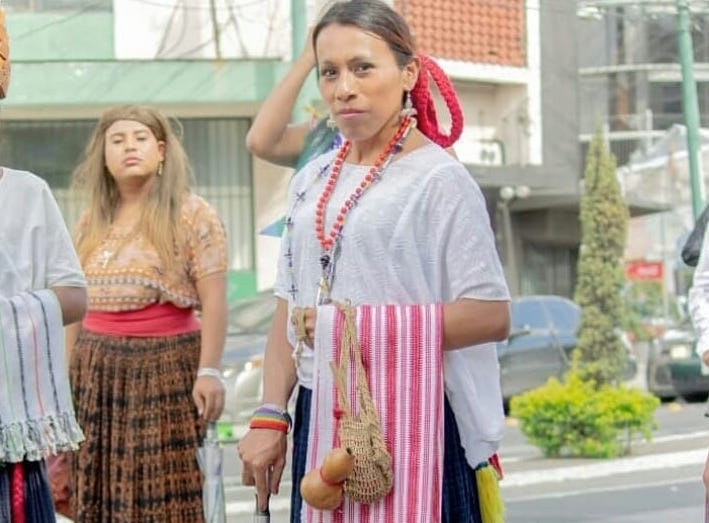
Originally from San Pedro Carchá (located in the central part of the department of Alta Verapaz, in the northern region of the country, 220 kilometers from the department of Guatemala), she works as an activist with the Gente Positiva Association and is the coordinator of the Office for Sexual and Gender Diversity in Alta Verapaz.
“Living in my community has been very difficult, knowing that we live in a sexist, conservative, and discriminatory municipality. We, as Indigenous trans women, have faced double discrimination because of our gender identity, our language, and the use of our Mayan clothing . These are some of the problems we face, and above all, the exclusion we experience from society. In the workplace, I was excluded because of the way I dress and express myself. Since I wore makeup, they told me that if I cut my hair, and if I dressed like a man, then I would get the job. The education system is even worse, as we are not allowed to receive an education because of the way we dress and express ourselves. I had enrolled in a night school, but I had to drop out because of the ridicule and bullying I endured due to my identity.”
[READ ALSO: The "feminism" that excludes trans people has arrived in Guatemala ]
Alex Castillo, a 48-year-old trans man, began his transition at age 43 because he felt he had no role models.
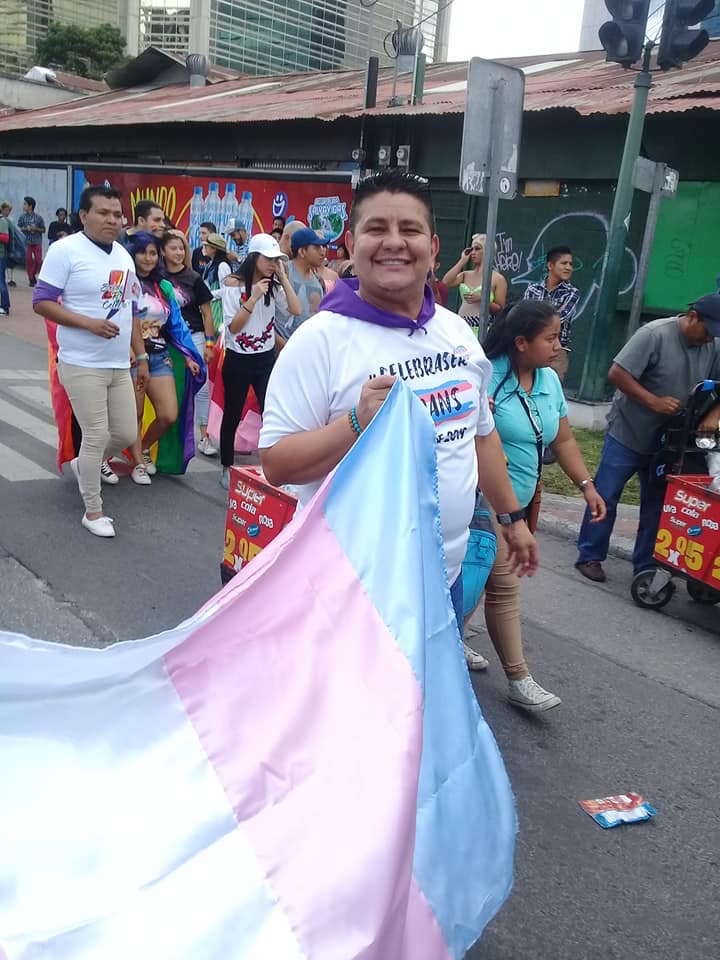
“It’s not easy to go through life without knowing who you are, especially because of the guilt you carry for feeling different, questioned, and not knowing why. When I discovered I was trans, I decided to start a collective to support others in my situation. So, I’ve had to forge many paths, fight for an inclusive agenda that reflects the needs of my community. Guatemala is a very hostile country for trans people, and if you add to that the complete lack of a transmasculine agenda, it makes everything even more difficult,” even within the LGBTQ+ community itself.
Health and education
“In terms of health, I was denied the right to gynecological care at the IGSS, since, due to the length of time I was on hormone replacement therapy, I needed a hysterectomy. When I went to request this service, in addition to questioning my masculine expression in the gynecology area, they told me that I had caused the gynecological problems I had at that time, so they could not attend to my case,” Alex continues.
“ For trans people, one of the most violent spaces is the educational area , since there is no respect whatsoever for your gender identity (this means that most children and adolescents are not currently studying). In my case, I still have a high school diploma with my female name, since to date I have not been able to get the Ministry of Education to change the diploma, even though I have already legally changed my name to male.”
«With the name change, my work history disappeared«
“I’m an administrator with 15 years of experience in banking. I also worked for the Guatemalan government for four years before my transition. Now, with the name change, my past has disappeared, since when I ask these institutions for references using my current name, they simply say that I never worked for them. I currently work, but only because it’s for an NGO focused on sexual diversity.”
-How do you see the sertrans.gt campaign and its social and political reach?
After two failed attempts to launch this initiative, it was finally with Victoria Orellana, a trans communicator, that we achieved this beautiful campaign, which is very much in line with our realities. I'm making this introduction because it's important to highlight that cisgender people are the ones who usually talk about and study trans people, and this has resulted in very little accurate information about us. This campaign embodies what we truly wanted, which was simple: to show our faces as what we are—"ordinary human beings"—in order to deconstruct the social stereotype that being trans equates you with being: troubled, a sex worker, addicted to drugs, incapable of having family, friends, or people who love and support you.
We are present
We are committed to journalism that delves into the territories and conducts thorough investigations, combined with new technologies and narrative formats. We want the protagonists, their stories, and their struggles to be present.
SUPPORT US

FOLLOW US
Related notes
We are present
This and other stories are not usually on the media agenda. Together we can bring them to light.