

Activist and dissident clowns: "We seek to break the alpha male humor"
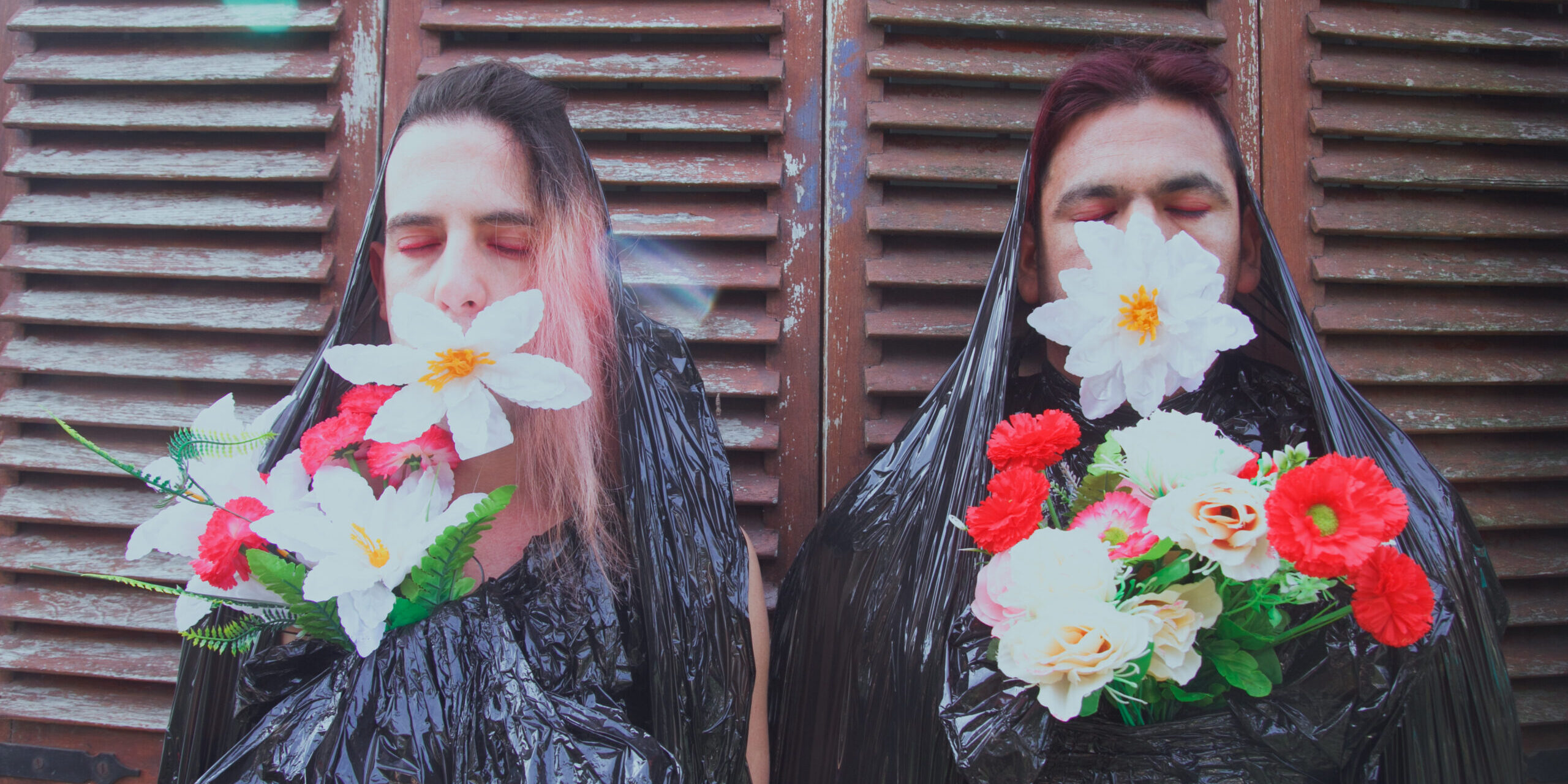
Carmelitas clown walks across the stage with a clownish gait, firm heels, and loud laughter.

Share

By Lucas Gutiérrez
Carmelitas Clown is making waves on the Argentine theater scene with a clownish gait, a firm step, and a hearty laugh. They are Lupe and Frenesí, who, through clowning techniques, share a show where laughter, emotion, and activism break down the fourth wall for an experience—or rather, a Journey, as they called their latest show.
Gemma Rizzo Ríos, a trans woman and theater teacher in public schools and a day center, who trained in clowning, singing, and acting with teachers from Buenos Aires and its surrounding suburbs, is also part of Frenesí. Alongside her is Lupe. She is Charly Camacho: queer, fat, non-binary, and a teacher. Charly studied acting, music, pedagogy, and clowning.

“In clowning, the clown breaks down the fourth wall and shares everything that happens to them with the audience. It’s a technique that tries to find something unique to each person without falling into essentialism, so it can have a poetic, humorous, or denunciatory tone. It will always depend on who is performing it,” Gemma explains.
[READ ALSO: The story of Ayelén Beker, the Gilda of trans women ]
“In clowning, you somehow take on a character with many of your own characteristics taken to the absurd, to the extreme, and that's where activism basically appears because in some way, before being clowns, we are also activists committed to dissent,” Charly adds.
“Personally, I believe there’s a very urgent need to make ourselves visible and challenge the status quo. We’re not interested in having our realities appear in academic theses, but rather in having them told by ourselves,” Gemma explains. Throughout the Carmelitas show, there will always be names and references. Lohana Berkins, Susy Shock, the Chilean Hija de Perra, and so many other friends will be present. Prejudice and intolerance will be exposed and denounced in a clownish style, but that doesn’t make what they say any less powerful.
Charly and Gemma met while participating in men's collectives, "although now we don't identify as men or women," they say. Gemma was involved with the Men in Bloom collective at El Transformador in Haedo, and Charly with Men in Antipatriarchal Groups.
“At first we didn’t talk about being trans or being fat because at that time it wasn’t part of our lived experiences. We were very much in contact with deconstructed masculinities, so we would go out and unleash all our queerness in front of all the men who were there, trying to stir things up, unsettle them, and make a bit of noise,” Charly explains.
[READ ALSO: Marina Kapoor, the artist who defies transphobia: "We are demanding rights" ]
And as invitations to perform and share in more activist and feminist spaces began to pour in, they incorporated this information into their show and their own lives. Gemma explains: “Our show Travesía was like amalgamating all that new information from performing together in variety shows or events we were invited to. We gradually incorporated more and more personal elements because each of us was going through our own process, our own journeys, breaking down our binary thinking within our own bodies.”
At one point in Travesía, Charly and Gemma, at that moment Lupe and Frenesí, pull out notebooks that transport them back to their childhoods, and there they read their raw stories. They share their own voices and those of other authors to speak out and denounce injustice. “We choose not to laugh at certain things that don’t amuse us because we don’t want other people to laugh at them. But if they do laugh, we want them to at least feel uncomfortable. Like when we talk about the violence that affects our bodies,” says Gemma.
"To break with the alpha males"
Fatphobia, homophobia, LGBTQ+phobia, and even some calls for activism are transformed into scenes from Lorca or Greek tragedies. “We want dissident performances to be on every stage and in every medium that each person wants to inhabit, so we can continue telling our stories for ourselves,” Charly explains.
Because where before gay men, trans women, lesbians, fat people, and more were the butt of jokes, here the laughter belongs to Las Carmelitas: “We seek to break with this heteronormative, hegemonic paradigm, which whitens bodies that can desire and segregates other bodies that cannot desire or that cannot be on stage. So what we hope is to make our art visible so that we can also break with the alpha males, the machos of humor, and heteronormative humor. We are disgusted.”
[READ ALSO: Sudor Marika: the band that brings cumbia to LGBTI struggles ]
These Carmelite nuns don't go barefoot, but rather stand on high heels and conviction. That's how they travel as far as they can: "We are nomads," says Gemma. And their nomadism isn't just geographical, but also in terms of their causes. "I believe the battle is collective, so we have more spaces to join this fight, not just Carmelite nuns," says Charly, adding how they connect with other artists they meet at events like the El Bolsón Diversity Festival, or when they're invited to spend time with trans children or to help raise funds for the Trans Teachers' Meeting. "These encounters make us feel that we are not alone."

In their latest show, they are accompanied by live music from Gaby Gap. The mutant clowns invoke Violeta Parra, Lorca, and Rachel Wiley, transforming into sirens of dissident song. While juggling teaching jobs, they travel with taco-style performances, poems, and other forms of expression, wherever they are invited, because they have so much to say. “We find ourselves in a moment where we need to be in homes that shelter us, that embrace us, and this happens with our friends. We build our own communities, our own villages with trans women, trans men, fat people, queer people, lesbians, non-binary people, and more.”
The upcoming dates for the show are listed here .
We are present
We are committed to journalism that delves into the territories and conducts thorough investigations, combined with new technologies and narrative formats. We want the protagonists, their stories, and their struggles to be present.
SUPPORT US

FOLLOW US
Related notes

We are present
This and other stories are not usually on the media agenda. Together we can bring them to light.