

Women and LGBT+ people denounce sexual violence and torture by the Carabineros (Chilean police).
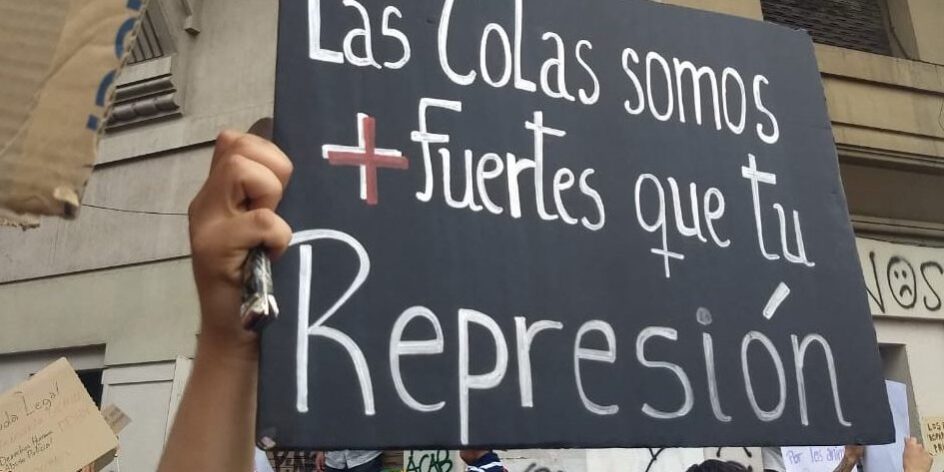
By Airam Fernández, from Santiago, Chile. Photo: Josean Rivera. During the eight consecutive days of protests in Santiago and other Chilean cities, social media has served to share images of massive marches, evidence of police repression, creative signs, reports of missing persons, and arbitrary arrests. But it has also served as a platform for…

Share

By Airam Fernández, from Santiago, Chile
Photo: Josean Rivera
During the eight consecutive days of protests in Santiago and other Chilean cities , social media has served to share images of massive marches, evidence of police repression, creative signs, missing persons reports, and arbitrary arrests. But it has also served as a platform to denounce sexual abuse against women and members of the LGBTQ+ community, including threats of rape, groping, vaginal or anal penetration with objects or weapons, beatings, forced nudity, and insults.
[READ ALSO: The biggest march in Chilean history in photos ]
Josué Maureira, 23, a medical student at the Catholic University, is one of these victims. He had been missing since October 21. His photo was shared more than 70,000 times on social media. Last night, he wrote on his Facebook page that he had been released from Santiago 1 prison, where he had been illegally detained for six days. “I was subjected to torture and sexual violence by several police officers from the 51st precinct in PAC (Pedro Aguirre Cerda),” Maureira wrote. He accused three officers: Marcos Valenzuela, Luna Huelche, and M. Vásquez, and made it clear that other officers from that same precinct threatened to kill him.
A lawsuit that invokes the Zamudio Law
The National Institute for Human Rights (INDH), which has so far reported at least 18 deaths and 3,162 arrests—343 children and adolescents, 545 women, and 2,150 men—filed a lawsuit yesterday in this case for the crimes of torture and sexual abuse. Because Moureira is gay, the legal action also considers the aggravating circumstance of discrimination under the Zamudio Law.
[READ ALSO: [In Photos] This is how feminism and diversity resist in the streets of Chile ]
“The victim, a university student, told observers from the National Institute for Human Rights (INDH) that on October 21, while traveling through the Pedro Aguirre Cerda district, he entered a supermarket to provide first aid to people inside during a disturbance. In the ensuing chaos, police officers violently arrested him, striking him with batons, punches, and kicks. As a result of the beating, the young man lost consciousness and was taken to the police station. After regaining consciousness, he was informed that he was being arrested for burglary. Despite already being detained, he was beaten and insulted because of his sexual orientation. He was even stripped naked and sexually abused as part of the torture he was enduring,” the organization detailed in a press release.
[READ ALSO: Emilia Schneider, trans student leader: “We lost our fear of repression and fought for our rights” ]
Presentes attempted to contact Moureira, but was unable to do so by the time of publication.
The Movement for Homosexual Integration and Liberation (Movilh) also highlighted his case and that of another where the victim is a 21-year-old gay man who went out to buy bread and was arrested while observing riots and looting at a supermarket. Ramón Gómez, the organization's Human Rights Officer, reported that the young man was kicked, punched, and beaten with blunt objects at the 11th Police Station in Lo Espejo. He also said that he was stripped naked. He remains in Santiago 1 prison "without the Public Defender's Office having filed any writ of habeas corpus to date."
“They are forcing women to do squats naked and are examining their vaginal cavity.”
The Chilean Association of Feminist Lawyers (Abofem) has registered at least 12 complaints of sexual violence against women and adolescents by Carabineros and uniformed members of the Army, who have remained in the streets since October 19, when the government decreed a State of Emergency to try to control a wave of looting and fires in supermarkets and several metro stations.
These cases are in addition to those handled by the INDH, Rebeca Zamora, partner at Abofem and member of the Strategic Litigation Commission in charge of the national coordination of legal representation for victims of sexual violence in the context of these demonstrations, told Presentes.
What they've seen most often are forced nudity, something that falls outside the Carabineros' protocol during an arrest. "They're forcing women to do squats naked and searching their vaginal cavity to see if they have any objects inside. That's completely outside the bounds of our national law and international law," Zamora explained.
Victims who continue to receive threats
Two lesbians from the Antofagasta region in northern Chile are among these victims. According to Zamora, they were arrested during a demonstration for walking hand in hand. They have since been released after being assaulted by police officers. “We cannot reveal the identities of those making these reports out of respect and because confidentiality is essential for the successful investigation of these cases. Some victims are still very frightened; some continue to receive threats or are being intimidated to prevent them from reporting,” the lawyer explained during a legal advice session for heterosexual women and members of the LGBTQ+ community held this past Saturday. Zamora is certain that the number of cases will continue to rise in the coming days.
[READ ALSO: LGBTI+ people organize against repression under the slogan “Dissidences in action” ]
Denial by the Ministry of Women and Gender Equity
This morning, the Minister of Women and Gender Equity, Isabel Plá, denied having received any reports of abuse against women in the context of the arrests made during last week's protests. "We, up to now, have not received any reports of that nature, and if there were any, given the current situation, it would be appropriate for other organizations to take charge, because we need organizations that guarantee autonomy," Plá said. Her statements come after the National Institute for Human Rights (INDH) filed three lawsuits alleging sexual abuse by police and military personnel.
We are present
We are committed to journalism that delves into the territories and conducts thorough investigations, combined with new technologies and narrative formats. We want the protagonists, their stories, and their struggles to be present.
SUPPORT US

FOLLOW US
Related notes


We are present
This and other stories are not usually on the media agenda. Together we can bring them to light.