

Emilia Schneider, trans student leader: “We lost our fear of repression and fought for our rights”
The first trans president of the Federation of Students of the University of Chile (Fech) takes stock of the protests that are shaking the country.

Share

By Airam Fernández, from Santiago, Chile
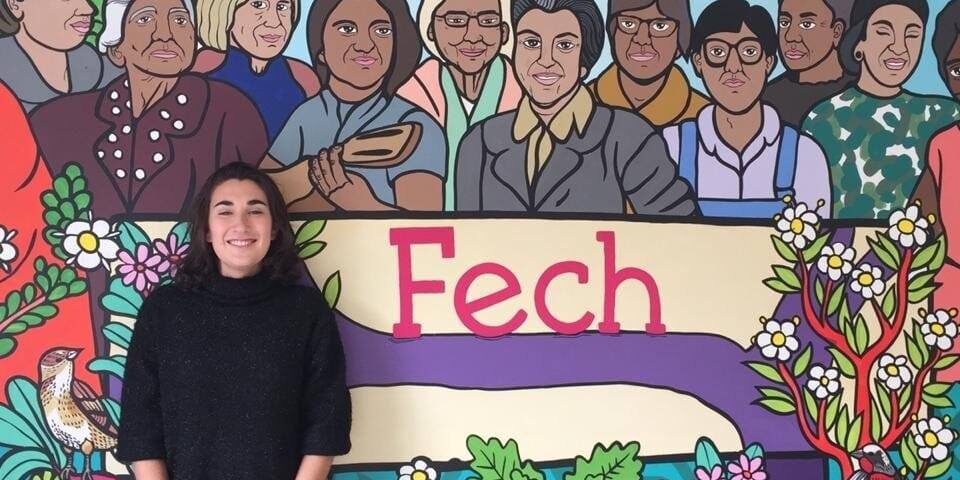
In May, Emilia Schneider became the first transgender president in the history of the Federation of Students of the University of Chile (FECh), the oldest student organization in Latin America. Since Thursday, the 23-year-old has been dividing her time between assemblies, meetings, and street protests. She is demanding improvements in healthcare, education, public transportation, and a reform of the individual capitalization pension system, which has been in place since the dictatorship of Augusto Pinochet and was created by José Piñera, an economist and brother of current President Sebastián Piñera.
Schneider studies law, is a member of the Comunes Party, is an outspoken feminist, and one of the many faces and voices of the protests shaking the country. It began with self-organized students, and then thousands of people joined in Santiago and other cities, protesting the third metro fare increase this year.
Emilia's name resonated strongly even before she arrived at the FECH (Federation of Chilean Students) to assume the same position once held by Camila Vallejo, now a member of parliament for the Communist Party. She was a member of the 8M Feminist Coordinating Committee, the organization that called for this year's feminist strike in the context of International Women's Day, in what they describe as the largest mobilization in the Chilean capital since the fall of the dictatorship. In 2018, Emilia was one of the leaders of the feminist occupation of the Law School at her university, which lasted 74 days and sought the resignation of a professor accused of sexual and workplace harassment.
"There's no turning back, we're going for it all."
This Thursday, October 24, amidst a national strike and minutes before entering a meeting at the FECH (Federation of Chilean Students) to discuss their next steps in the streets, Schneider spoke with Presentes. She is certain of at least two things: this is “just the beginning” and the package of social measures announced by the government on Tuesday night will not appease the protesters: “There’s no going back on this. Now we’re going for broke.”
-What is your assessment after six consecutive days of demonstrations?
This is a very important process for the country, and this uprising only demonstrates that we haven't received fair responses during years of mobilizations protesting the commodification of various aspects of our lives, such as healthcare, education, pensions, and job insecurity. While we still don't have concrete answers from the government, I think the overall assessment of our demands is positive. Because they are now addressing the most urgent issues raised by the mobilization. But what they intend to give us isn't enough. That's why I believe this is just the beginning of something bigger.
-Why do you think the conflict is erupting right now and not before, if the demands go far beyond the subway fare increase?
"Without a doubt, this goes far beyond that. It was the last straw. With this social movement, we want people to know that the market governs every aspect of our lives. It's an unsustainable way of life. It goes beyond public transportation: it's the culmination of 15 years of ignored protests, of widespread discontent with a model that has privatized everything, even our way of life."
READ MORE: [In Photos] This is how feminism and diversity resist in the streets of Chile
-The initial call was for mass fare evasion, for not paying for public transportation. It then evolved into a peaceful demonstration, and at some point, it spiraled out of control, with buses and metro stations burned and looting occurring. How do the FECH (Federation of Chilean Students) and other organizations distance themselves from this?
The mobilization not only began peacefully, but has generally remained so. Entire families, young people, children, and young people are in the streets, but it's true that there have been certain incidents of damage to public property, which are unjustifiable and completely unacceptable. At least I can understand them in a context of so much anger and indignation that has been simmering for years. The government has placed too much emphasis on this, and I think it's very inhumane to focus on these material losses and criminalize the protest, while ignoring the human rights violations committed by state forces, the arbitrary detentions, and the 18 deaths in recent days. This is widely documented by organizations and is far more serious than everything else. What I mean is that, of course, the destruction of public property must be condemned, but that cannot diminish the importance of human lives, and that's precisely what the government is trying to do.
-At least four of those deaths involved military personnel, as confirmed by the government on October 22. For many Chileans, this means reliving the pain of the dictatorship era. How do you respond to that?
One of our immediate demands is that the military leave the streets, because this is not where they belong. I didn't live through the dictatorship, in fact, no one from my generation did. And although these events reopen very deep wounds for the entire country, I believe that if we are mobilizing in this way, it is because we have lost our fear of repression and we want to fight for our rights and our dignity . I also believe that the government has understood that we will not accept the authoritarian solution they are seeking for this conflict.
READ MORE: LGBTI+ people organize against repression under the slogan “Dissidences in action”
-How are the demands of diversity incorporated into this conflict? How has coordination with other movements been?
On Wednesday, October 23, an assembly was held, attended by LGBTQ+ individuals from all over Santiago. We made the FECH (Federation of Chilean Students) headquarters available. Various organizations with which we have worked throughout the year were invited, and surprisingly, activists and many people concerned about the treatment we are receiving during the protests and in the days to come joined us. We are working on a statement to join the national mobilizations, because the privatization and commodification of life in this country also severely impacts LGBTQ+ individuals .
-How will they be added?
-We're already in the streets, but Wednesday's assembly was to continue doing so in a more organized way, always in large groups. We joined with the demands that have been historically held by the LGBTQ+ community: respect for our integrity and identity, social, sexual, and reproductive rights, comprehensive sex education, and in the case of trans people, a comprehensive law that guarantees us access to education, employment opportunities, training, reparations for human rights violations , and a series of issues that are not addressed by the Gender Identity Law that was passed last year.
We are present
We are committed to journalism that delves into the territories and conducts thorough investigations, combined with new technologies and narrative formats. We want the protagonists, their stories, and their struggles to be present.
SUPPORT US

FOLLOW US
Related notes


We are present
This and other stories are not usually on the media agenda. Together we can bring them to light.