

Hormone shortages denounced: “We are facing a life-threatening emergency”
Trans activists, transvestites, and representatives of various civil organizations denounce the lack of testosterone and other hormones in public health centers.

Share

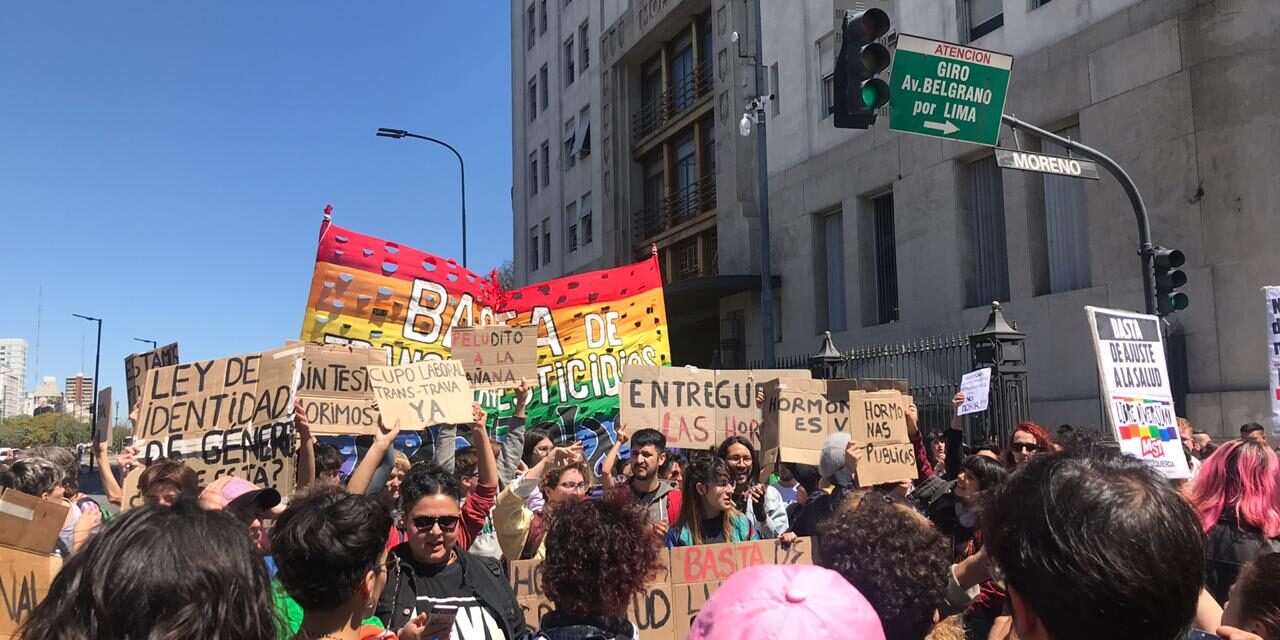
Trans activists, transvestites, and representatives of various civil organizations are denouncing the lack of testosterone and other hormones in public health centers. They will march to Congress today at 4 PM.
By Alejandra Zani
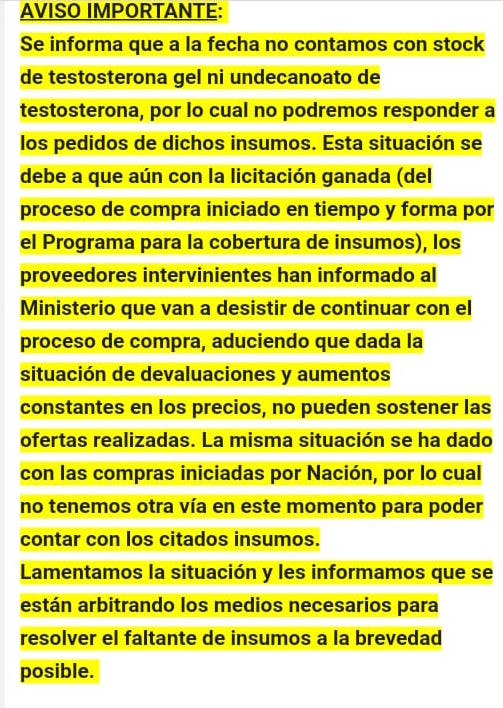
Last week, an email sent by the Ministry of Social Development, which oversees the current National Health Secretariat, was leaked. It explained that one of the companies supplying Testosterone 1% gel, brand name Androlone from Laboratorio Beta SA, would stop delivering it to health facilities because the devaluation of the peso against the dollar is causing "losses" to state suppliers.
“According to sources working at the Secretariat, the laboratories that supply testosterone are experiencing shortages. This constitutes a violation of the Gender Identity Law, which stipulates that comprehensive healthcare must be guaranteed in all public hospitals, including both surgeries and hormonal treatments for body modification in those who wish to change their bodies. So far, we have no further information because the Directorate of Sexual and Reproductive Health at the Secretariat is not responding or answering the phone, even though the elections are just a week away,” Franco Bova, a physician and Secretary General of the Ciclo Positivo Association, explained to Presentes.
According to Bova, it is currently estimated that approximately 20,000 people receive hormone therapy, and of these, between 5,000 and 6,000 receive testosterone. “The shortages of medical supplies are the result of a dual responsibility. On the one hand, the laboratories, since the rise of the dollar, have engaged in extortionate practices regarding drug prices, withdrawing bids and delivering less than the quantities specified in public tenders. On the other hand, state officials not only fail to resolve the conflict but are also absent from their posts.”
[READ ALSO: The trans odyssey of intervening in their bodies with home treatments ]
“We are demanding that the Ministry of Development guarantee and ensure the continuity of medication, as stipulated in the mandatory medical plan by law. If there is no response within the next 10 business days, or if the response is negative, we will proceed with the corresponding legal actions, requesting injunctions and everything necessary to guarantee compliance with the law,” Lara Bertolini, activist with the Lohana Berkins Collective, teacher, and the first person in the country to have her identity recognized as a trans woman in her official documents, told Presentes.
Today, another demonstration will be held to press for these demands in front of the National Congress. “We are facing an emergency not only of life, but also of health, housing, and employment. This State is complicit in identity killings, hate crimes based on a specific identity, because we believe that being absent and doing nothing to guarantee our rights is tantamount to killing us.”
The State is responsible
To date, the Directorate of Sexual and Reproductive Health has still not responded. Lida Santa Cruz, former coordinator of the Provincial Program for the Implementation of Gender and Sexual Diversity Policies in Health, told Presentes that in April the Program issued a year-end report explaining the supply situation at the national and provincial levels. “At that time, the precariousness of the anticipatory processes related to the exchange market was already foreseeable. In that context, one could anticipate actions and procedures that would guarantee the continuity of supplies,” explains Minis.
“We are in a complex situation where everything is in short supply in the healthcare sector. Inflation has affected all government procurement processes, and this isn't the first time it's happened. There was a very large currency devaluation in 2018. It was already known that this could happen, and the report suggested acting proactively to prevent a lack of treatment. I can't answer what was done after April, but the program remains in effect.”
Diuretics instead of hormones
“Yesterday I went to my doctor’s appointment and she confirmed that there will be a shortage of testosterone. She gave me less than usual, half the usual amount. She always gives me two boxes, and this time only one. They’re figuring out how to manage their stock, assessing the urgent needs and priorities,” Moyi, a trans activist and member of the Fútbol Militante collective, told Presentes. “The reason they gave was that the lab isn’t delivering because of costs, the rising dollar. I don’t think the outgoing Macri government will force the labs to deliver anyway.”
[READ ALSO: Trans youth: advocating for gender in schools ]
For her part, Ese Montenegro, a trans activist, believes the current situation is extremely serious and adds that “this isn’t just happening with testosterone.” “In fact, some of my trans and travesti colleagues are already having their medications changed, and we learned that last week one of them was given a diuretic instead of hormones. The government has been absent; months ago they said this was going to happen, and they haven’t put the program out to tender again. At the clinic where I receive treatment, in La Matanza, they told me that for the past two months they’ve been receiving a lot of requests from people in the capital. This means we’re going to be exploiting the resources of another province, resources that should be guaranteed by the national government by law.”
“Every experience with hormones is unique”
Since starting his testosterone treatment, Moyi says he feels happy. “I’m having a journey of self-discovery that strengthens me in many ways, and if someone told me now that I couldn’t keep applying the gel in the morning, I would be emotionally devastated. I can’t even imagine it right now. I prefer to think that won’t happen because I believe in our ability to organize ourselves as a community and find solutions.”
Juan Duncan, a member of the Trans Youth Movement, began his hormone therapy almost a year ago. “I’m fortunate to have private health insurance, which, according to the Gender Identity Law, provides my hormones free of charge every month. I had to think about it a lot because I was a little scared. It’s impossible to know how it will affect you physically and emotionally, but luckily I did it because it’s one of the things that has made me happiest so far,” he told Presentes. “Beyond the physical changes I was looking for, it also means being more aware of my health. It’s the first time I’ve had regular checkups; I’m aware of what’s happening with my body. It’s also something that’s allowing me to develop as an individual. I’m happier, more comfortable with who I am, and I want to continue enjoying the changes.”
“ For some people, hormone therapy means psychological and emotional stability; for others, it's essential for health reasons (like those who have had a hysterectomy); and there are also people who see it as a matter of bodily autonomy—I take hormones because I choose to. Many people, for one reason or another, decide at some point to discontinue treatment, which is a personal choice. Every experience with hormones is unique, but it's very different to decide to do it than to be forced to.”
That's why, when discussing the shortages, Juan can't accept that a fundamental right is being taken away from a segment of the population "for the sake of austerity." "Treating hormones is our right, and the State should ensure we have access to it, not the other way around. This is utter abandonment. We already face significant difficulties accessing basic rights like education and employment, and now we're being denied the last vestige of autonomy we enjoyed—absolute dehumanization. We're not only being denied the right to choose, to be who we are, but also, in a way, the right to exist. We're practically not considered citizens."
What happens if hormone treatment is interrupted?
According to Ana Paula Fagioli, a general practitioner who works at the Diversity Clinic in the Malvinas Argentinas Primary Care Center in Morón, hormone therapy treatments help transgender and transvestite people achieve the image they desire so they can live their lives according to their own desires, rather than the image society expects of them. “These bodily modifications are diverse and range from fat distribution to hair growth. Trans men or non-binary people, for example, often seek testosterone to suppress menstrual cycles.”
“If hormone treatment is interrupted, several things happen. For people who, as part of their transition, have decided to undergo gender reassignment surgeries—in quotes—or surgeries to further modify their bodies according to the standards they construct, for example, people who decide to have orchiectomies, which is the removal of the testicles, or vaginoplasties, which is the creation of a neovagina, or people who have their uterus and ovaries removed, which allows trans women or transvestites to avoid using anti-androgen blockers to suppress testosterone, hormone treatments become permanent,” Fagioli explains. “This is because the so-called sex hormones are steroid hormones, and these participate in the functioning of many bodily mechanisms, for example, bone remineralization. A person in this situation who cannot access hormones suffers consequences such as bone disorders, thyroid disorders, and metabolic disorders.”
On the other hand, the doctor continues, people who are on hormone therapy but haven't had surgery experience other consequences. “It involves the regression of many hormone-induced changes that aren't permanent, so when they stop the treatment, there can be a different distribution of fat, and menstruation, for example, can occur. The key is to understand that the reappearance of these situations generates significant emotional and mental instability in people who have chosen hormone therapy to transition.”
Regarding those who use estrogen, Faglioni adds, “the suspension of hormone therapy by the state forces our colleagues to resort to buying injections clandestinely at pharmacies because the pharmaceutical industry's speculation preys on some people's bodies, and in this sense, it puts their health at risk with unsafe hormone therapy. It increases the risk of undergoing body transformation procedures related to the injection of substandard oils or silicones.”
We are present
We are committed to journalism that delves into the territories and conducts thorough investigations, combined with new technologies and narrative formats. We want the protagonists, their stories, and their struggles to be present.
SUPPORT US

FOLLOW US
Related notes



We are present
This and other stories are not usually on the media agenda. Together we can bring them to light.