

This is what the Plurinational Meeting of Women, Lesbians, Trans, Transvestites, Bisexuals and Non-Binary People will be like
The XXXIV Plurinational Meeting of Women, Lesbians, Trans, Transvestites, Bisexuals and Non-Binary People (October 12, 13 and 14) will feature more than 100 workshops and panels.

Share

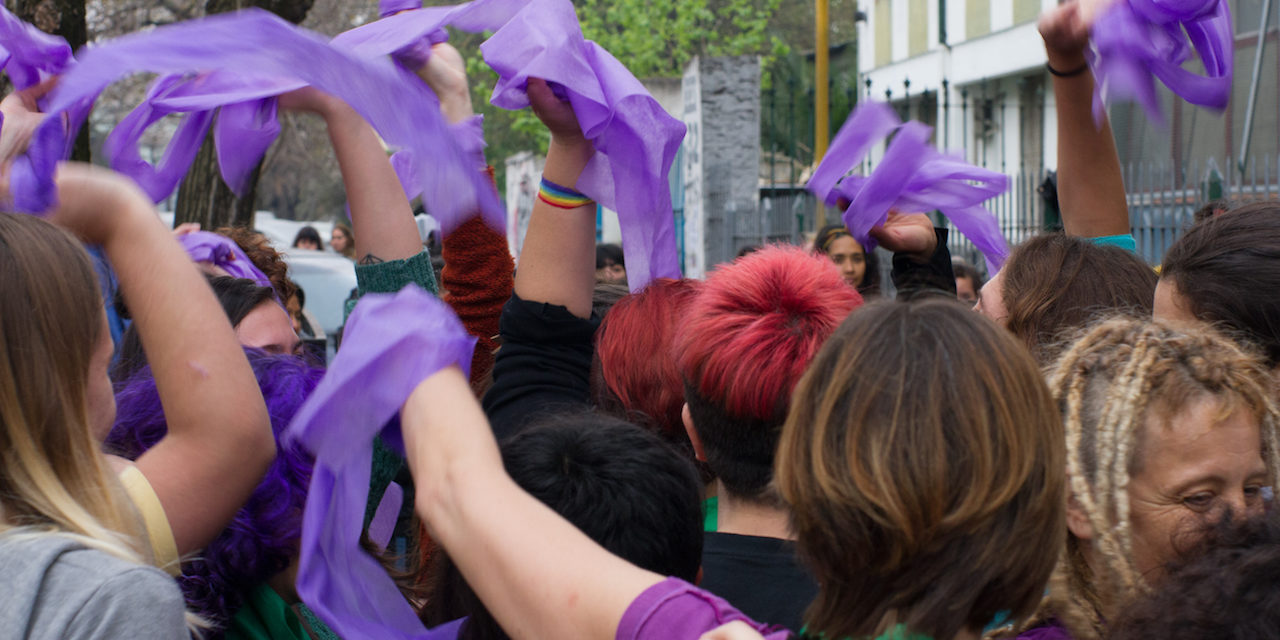
Photo: Luli Leira s
The XXXIV Plurinational Meeting of Women, Lesbians, Trans, Transvestites, Bisexuals and Non-Binary People, which will take place on October 12, 13 and 14, will feature more than 100 workshops and panels, cultural activities and two massive marches.
Workshops
The workshops will be held at the various faculties of the National University of La Plata and at pre-university schools. registration for the event will take place on Saturday from 8:30 a.m. to 12:00 p.m. Registration is optional and costs $200 to help with the organization and funding of the Encounter. To attend the workshops, you do not need to register separately; simply show up. The workshops will be held on Saturday, from 3:00 p.m. to 6:00 p.m., after the opening ceremony at 9:00 a.m. and lunch, and on Sunday from 9:00 a.m. to 12:00 p.m. and from 3:00 p.m. to 6:00 p.m. The workshops will run concurrently, so you must choose one from the available options, as the topic will be explored in each of the three sessions, culminating in a consensus-based discussion.
From the 87 official workshops workshops of the #SomosPlurinacional campaign, we made a selection of those that cover topics on sexual diversity, and the list with these workshops can be found at the end of the note.
The preview
On October 11, at the Olga Vázquez space (La Plata), the pre-event kicks off with various activities starting at 5 pm. There will be open interviews by Ana Cacopardo and Alba Rueda with LGBT+ activists from the region.

MORE ACTIVITIES
Saturday
At 8 a.m. there will be a plurinational gathering with dissidents in Alberti Park, between 25th and 38th streets to go together to the Opening Ceremony venue which will be at 9 a.m. in the Playón Estadio Único de La Plata, at the intersection of 25th and 32nd avenues.
In addition to the workshops, on Saturday there will be a Feminist Pedestrian Zone – Pluri-Dissident Fair from 9 a.m. to 8 p.m. in Plaza San Martín, on Avenida 7 from Calle 53 to Avenida 66. Furthermore, from 3 p.m. to 5:30 p.m., activities of the National Campaign against Violence against Women will be taking place, and from 6:30 p.m. to 9:30 p.m., a Festival of the National Campaign for the Right to Safe, Legal, and Free Abortion will be held at the intersection of Avenida 7 and Avenida 50.
A major event will take place at 7 p.m., following the workshops: the March Against Transvesticide and Transfemicide through the city streets. This year marks the second time a march on this theme has been included in the official agenda of the National Women's Meeting.
In turn, cultural activities will take place in more than 40 cultural centers in the city from 7 pm to midnight.
Sunday
On Sunday, the Feminist Pedestrian Zone – Pluri-Dissident Fair continues from 9 a.m. to 5 p.m. Meanwhile, from noon to 3 p.m., there will be a Feminist Assembly of Abya Yala, broadcast live by Feminist Radio Broadcasters, in Plaza San Martín. The cultural circuit in the city's various cultural spaces also continues, running from 2 p.m. to 4:30 p.m. Finally, the traditional and historic Closing March will conclude the day at 6:30 p.m.
Monday
Finally, on Monday at 9 a.m. the closing ceremony will take place, the conclusions of the meeting will be read and the location of the XXXV ENM will be voted on.
General information
For accommodation in the city's schools, registration closed on September 10th, but you can still inquire about availability by emailing alojamiento.enm2019@gmail.com . There is also a Facebook group created for participants of the Encuentro to find accommodation: Alojamiento solidario-34 encuentro nacional de mujeres la plata 2019 .
Regarding transportation, within the city there will be a free bus option that will take people from the Estadio Único de La Plata to Plaza San Martín on Saturday from 12 to 3 pm and on Sunday from 11 pm to 3 am.
On the other hand, to get to the Meeting, one paid option is the Roca Train: Constitución – La Plata branch. On the days of the meeting, additional trains will run, therefore there will be a higher frequency of trains from 7 to 11 from Constitución and from 19 to 21 from La Plata.
The organizing committee will provide meals for people with limited resources, as the quantity is less than the number of participants. To request a meal, please email organylogistica.enm2019@gmail.com .
Regarding safety, there will be Safe Points operating in 25 locations belonging to social organizations, political parties, unions, human rights organizations, and cultural centers. These locations will offer landline telephones and internet access, and participants can receive support and assistance in case of an emergency or need. To access the map with the meeting points, click here.
On the other hand, the Self-Care and Safety Commission has made available five on-call phone numbers for receiving complaints. These are:
Cell phones: 011-15-2798-3270 / 0221-15-353-5470 and 011-1518-4890
Landline telephone numbers: 0221-483-1737 and 0221-644-7015
List of workshops on sexual diversity
appear in bold , and the rest are workshops common to the plurinational campaign and the official event.
“Sexualities”:
Sexism, myths, and beliefs. Sexual stereotypes. Taboos, stereotypes. The right to sexuality. Pleasure, sexual diversity, sexual assistance, orgasms, masturbation, self-knowledge, autoeroticism, sexual/prosthetic technologies, allosexuality, asexuality, demisexuality, pansexuality, graysexuality, polysexuality, homosexuality, heterosexuality. Comprehensive Sexuality Education (CSE). Diversity of sexual practices. Sexual and affective responsibility. Sexuality beyond genitality. Social and political construction. Heteronormativity. Pro-sex, post-pornography. Care and prophylaxis. Stigmatization, pathologization. Influence and role of patriarchal institutions in the construction of sexuality.
“Lesbianism”:
Lesbian visibility. Stereotypes, lesbian imaginaries, objectification. Sexualities. Multiplicity of lesbian identities: trans lesbians, lesbians, lesbian women, masculine lesbians, non-binary lesbians, feminine lesbians. Relationship with the family of origin. Exchange of experiences and life stories. Stories of our dissident childhoods. Lesbian families, motherhood and parenthood, adoption, assisted fertility. Self-care and care in sexual relationships. Older lesbians. Lesbians in Indigenous communities and ancestral patriarchy. Afro-descendant lesbianism. Discrimination, oppression and repression, abuse and corrective violence. Activism and forms of organization. Violence in sexual and affective relationships between lesbians.
“Lesbian activism”:
Historical context and current state of lesbian activism in our territory, including key advances and obstacles. The relationship between lesbian activism and the LGBTQ+ movement, other social movements, women's movements, and the feminist movement. Strategies for recovering and transmitting the history of lesbian activism in the territory. Lesbophobia, lesbocide, abuse, and corrective violence. Violence among lesbians. Public shaming and isolation within the dissident community. Higui's acquittal. Strategies for raising awareness and understanding cases. Social media. Lesbian activism in Indigenous communities and ancestral patriarchy. Artistic, philosophical, and political productions. Debate on changing the name of the Gathering. Agenda.
“Bisexuality, Pansexuality and Polysexuality”:
Complexities and contradictions of the concept of bisexuality. Experiences and lived experiences. Gender oppression and bi, pan, and polysexuality. Bi, pan, and polyphobia. Stereotypes and prejudices. Collective identities as political strategies. Social invisibility and invisibility within the LGBTTTI community. Activism and visibility strategies. Heteronormativity: compulsory monogamy and compulsory motherhood. Critique of binary categories.
“Trans Women and Transvestites”:
Bodies, identities, and sexuality. Gender identity law: situation in each province. Health: accessibility, guarantees, and services. Situation and possible responses to STIs and HIV/AIDS. Access to hormone therapy and its effects. Operation of trans-friendly clinics. Transphobia: problems related to employment, education, and health. Employment quotas. Laws and treaties. Codes of conduct. Forms of organization and struggle, and class conditions. Trans children free from violence and discrimination. Sexual dissidence: Les chiques. Trans political activism. Situation in each province. Agenda.
“Women, Lesbians, Trans, Transvestites, Bisexuals, Non-Binary people and their relationship with their bodies”:
Sexual object. Politics of bodies. Body and the passage of time: menarche, pregnancy, menopause. Bodies with disabilities/functional diversity. Capitalism and its effects on the body. Imposed hegemonic beauty standards. Deconstruction and the concept of beauty, dissident beauty, and “improper” bodies. Discrimination and invisibility. Hypersexualization of Black bodies. Indigenous perceptions/views of bodies. Eternal youth: treatments and surgeries. The diet and beauty industry for women. Eating disorders, National Law 26.936. Pathologization of “fat” bodies. Size Law. Relationships between fatness, food, and poverty. Artificial body modification. Beauty pageants, strategies, and experiences of prohibition. Representation of female bodies in advertising and the media. The food and pharmaceutical industries.
“Intersex People”:
Life experiences. Silence and taboos. Healthcare systems and medicalization processes. Violence against intersex bodies from medicine and the market. Mutilations and corrective interventions on bodies. Respect for and knowledge of the rights of intersex people. Physical and psychological consequences. Hormone therapy and public health guarantees. Effects of synthetic hormone use. Consequences for fertility. Informed consent. Historicity. Visibility strategies. Identity. Violence against non-binary masculinities in society and within the feminist movement. Self-knowledge, renaming, historicity, and relationship with the body. Discrimination, pathologization, social and familial stigmatization, religions, work, unemployment, school, university. Institutional violence, medical violence, hormone therapy, sports, and physical activity. Alternatives to hormone therapy. Emotional support and accompaniment. And more.
“Trans Masculinities and Non-Binary Masculinities”:
Historicity. Visibility strategies, identity, violence against trans and non-binary masculinities in society and within the feminist movement. Self-knowledge, renaming, historicity, and relationship with the body. Discrimination, pathologization, social and familial stigmatization, religions, work, unemployment, school, university. Institutional violence, medical violence, hormone therapy, sports, and physical activity. Alternatives to hormone therapy. Emotionality and support. Adulthood, youth, and childhood. Inclusive language. Gender Identity Law No. 26.743, understanding and deepening of the law, its actual application, social, political, and independent organizations of trans and non-binary masculinities. Visibility and organizing strategies. Building a counter-hegemonic masculinity.
“Non-Binary”:
Historicity, binary thinking, sex-gender, beyond the feminine and the masculine, heteronormativity, the heteropatriarchal system, activism, visibility, non-binary identities. Self-knowledge, renaming, historicity, and the relationship with the body. Discrimination, pathologization, social and familial stigmatization, religions, work, unemployment, school, university. Institutional violence, medical violence, hormone therapy and non-hormonal therapy, sports and physical activity. Emotionality, support. Biological determinism. The heteropatriarchal system. Physical and aesthetic stereotypes associated with gender. Non-binary imaginaries. Laws, projects, and ideas that break with the binary (trans employment quota, gender identity law). Sexuality. Problematizing Comprehensive Sexuality Education (CSE). Visibility. Forms of organization and struggle. Inclusive language and pronouns. Self-perception. Intersectionality with class, racism/nationalism, ableism/disability. Invisibility within the feminist movement and social and political organizations. Strategies for visibility and organization.
“Women, pregnant bodies: contraception and abortion”:
Right to decide about one's own body. Comprehensive Sexuality Education, Law 26.150, with a gender perspective, non-sexist and non-heterosexist. National Program for Sexual Health and Responsible Procreation, Law 25.673. Safe and harmless contraception. Prophylaxis. Free and equal access to health services. Right to motherhood and humanized childbirth, Law 25.929. Right to voluntary termination of pregnancy. Programs, strategies, and budget for the effective implementation of current laws. Accessibility of sexual and reproductive rights for people with disabilities/functional diversity and racialized individuals.
“Women, dissidents and HIV and sexually transmitted infections”:
Sexually transmitted infections: modes of transmission. Gender differences in relation to prevention, treatment, and care for HIV/AIDS, HPV (precancerous lesions), syphilis, and other sexually transmitted diseases. Barriers to prevention: economic, religious, cultural, and social. State responsibility. The health system. Public policies on HIV/AIDS in relation to women, sexual minorities, the Afro-descendant and Indigenous communities, and people with disabilities/functional diversity. Care protocol with a gender perspective. National programs for AIDS and sexually transmitted diseases. Drug patent law. Pharmaceutical companies and the commodification of health. Access to specific medications. Discrimination. Legal aspects.
“Transvesticide and transfemicide”:
The concept of transvesticide. Landmark ruling: justice for Diana Sacayán and Azul Montoro. Strategies of struggle and visibility. Patriarchal and sexist judicial power.
“Violence among Lesbians, Translesbians, Transvestites, Trans Women and Non-binary people”:
Types of violence between lovers, friends, and colleagues. Diverse sexual, asexual, and affective relationships. Equality. Subordination. Autonomy. Companionship. Emotional and material dependence. Jealousy. Drama. Emotional responsibility. Consent. Role of the affective group. Social mandates and roles, mandates and roles within the LGBTQ+ community. Romantic love. Monogamy. Organic loyalty to the group or organization. Internalized lesbophobia and transphobia. Internalized heteronormativity. Strategies for addressing situations of violence between lovers, friends, and colleagues.
“Labor unemployment of LTTBNB identities”:
Difficulties in finding and accessing employment due to being LGBTQ+, age, social class, stereotypes, or parenthood. Effects of unemployment. Unemployment, poverty, and destitution. Public policies addressing unemployment. Unemployment and its effects. Universal Child Allowance. Transgender Employment Quota Law. Job security. Organizations of the unemployed. Criminalization of protest. Use of social programs as precarious employment by the State. Strategies for organization and struggle.
“Sex workers”:
Sex work. Different ways of practicing it. Discrimination, victimization, stigmatization, and abuse. Human rights, including how to confront and overcome institutional violence. Prevention of workplace violence. Autonomy, organization, and cooperation. Job insecurity. Access to medical, social, and legal information and advice. Body care. Psychophysical, holistic, and sexual health. Contraception and prevention of STIs/STDs. Partner(s), motherhood, and family. Older adults. Collaboration with social and feminist movements. International experiences. Political agenda.
“Work of LTTBNB identities - Transvestite-Trans labor quota Law 14.783”:
Labor and wage discrimination: inequality in access due to gender expression requirements, age, parenthood, and pregnancy. Concealment of gender identities at work. Double and triple shifts. Workplace violence in public and private employment: workplace harassment, sexual harassment, exposure to violence in its various forms. Current labor legislation: maternity leave, leave for victims of gender-based violence. Debate on working conditions. Informal and precarious work. Wages, the cost of living, and inflation. Partisan use of identities in employment. Labor flexibility. Layoffs, suspensions, and retirements. LGBTQ+ organizations in relation to work and workplace violence. Transgender Employment Quota Law 14783. Occupational Risk Law 19587. Occupational Safety and Health Law. The role of identities in the law. Binary uniforms and work clothes. Exhausting, unhealthy, and prematurely aging tasks.
“Inclusive language”:
Historicity. Problematizing everyday use and use within institutions. Use of @, xy, and e. Bibliography, notes, articles. Inclusive language in other languages and in sign language. Why and for what purpose do we use it? Language as a political tool. Heteronormativity. Non-binary and non-sexist language. Strategies for its application, questioning the Royal Spanish Academy (RAE).
“University, studies and LTTBNB identities”:
Discrimination and oppression of LGBTQ+ identities in the university setting. Homophobia, transphobia, and biphobia. Career stereotypes for LGBTQ+ identities. Access to leadership positions. Abuse of power, harassment, and sexual abuse. Protocols. Integration of a gender perspective into the curriculum. Comprehensive Sexuality Education (CSE) at the university. Social exclusion. Raising awareness among faculty, students, and staff. Training professionals with a gender perspective. Restrictions on admission, retention, graduation, and dropout rates. University struggles and coordination. The role of student organizations in addressing gender issues. LGBTQ+ students, faculty, and staff. Creation of diversity offices in student centers and federations. Research and outreach policies benefiting LGBTQ+ communities. Educational proposals for older LGBTQ+ adults.
“Territorial and dissident abolitionism”:
Prostitutes are part of the working class. Prostitution is not a job. Unemployment. Exclusion of gender non-conforming people from their homes. The situation of migrant women in prostitution. Current municipal codes. Experiences in day centers. Transvestite/transgender employment quota and its implementation. Exploitation of our bodies. Bills that protect pimps. Municipal codes, experiences with the repeal of Article 68 in the province of Buenos Aires, an achievement of the abolitionist movement. Effective public policies that transform the reality of people in prostitution. Psychological support for anyone who has experienced prostitution, taking into account the psychological damage it causes. Prostitution as another form of gender-based violence. A community-based, non-stigmatizing, and non-revictimizing approach. The right not to be prostituted. Differences between abolitionism and prohibitionism. Non-punitive abolitionism.
“Women and dissidents in relation to trafficking and exploitation”:
Economic and social causes. Trafficking of women, girls, and adolescents for sexual or labor exploitation. Johana Ramallo. Trafficking networks and education. Trafficking and prostitution in schools: when our students disappear. Slavery. Vulnerability factors. Laws 23.634 and 26.842 against trafficking: limitations, progress, and challenges. State responsibility. Media. Internet (grooming). Recruitment, sex tourism, trafficking networks. Impunity for pimps and clients. Complicity of security forces, the judiciary, and political power. Actions and campaigns to prevent trafficking. Experiences. Organization and achievements of women's organizations in the fight against trafficking. Support and follow-up. Social and labor reintegration. Transitional shelters and comprehensive assistance. Budgets.
“Abolitionist strategies against trafficking and prostitution”:
Sexual exploitation within a patriarchal and capitalist framework. Current economic context and the feminization of poverty. Neoliberal advance and the myth of free choice: the ideology of prostitution. International pimp lobby. Commodification and hypersexualization of women's and girls' bodies. Prostitution and human rights violations. The great silence: the psychophysical damage suffered by people in prostitution. Trafficking beyond kidnapping: the different methods of recruiting victims. Consent and sexual desire. Direct agents of the prostitution network: pimps, consumers, and the State. Indirect agents: pornography as propaganda and the media. Male privilege and domination. Strategies to dismantle the prostitution system. International, Latin American, and Argentine abolitionist activism. The role of the State, the justice system, the police, and other forces within an abolitionist model. Repeal of the articles that punish women in prostitution. Public policies aimed at people who were or may be victims of the prostitution system. Political agenda and organization of feminist collectives.
In turn, of the ten talks/panels, three address topics of sexual diversity:
“Menstruating bodies”:
Menarche, Menstruation, and Plenipause. Pre-ovulation, ovulation, premenstruation, menstruation, or bleeding. Advertising and biomedical discourse. Period vs. cycle. Managing menstrual products. Decolonizing our bodies. Menstruation as taboo, an icon of shame and concealment. Offering menstruation. The creative power of menstruation.
“Violence against lesbian identities. Acquittal for Higui”:
The Higui case and its relevance to the lesbian movement. Self-defense is not patriarchal violence. History of the case, political stance, political and historical importance. Lesbian visibility, violence against lesbian identities, self-defense, current laws regarding self-defense, impunity for aggressors. Strategies for supporting and raising awareness of these cases.
“Childhoods and Trans and Non-Binary Children without violence or discrimination”:
We believe it is important for children to participate, recognizing them as political actors and giving them the freedom to express themselves and play. We believe they are not the future, they are the present; it is their right to speak for themselves and for us. It is our responsibility as adults to listen to their voices and give them the space they deserve.
Share
We are present
We are committed to journalism that delves into the territories and conducts thorough investigations, combined with new technologies and narrative formats. We want the protagonists, their stories, and their struggles to be present.
SUPPORT US

FOLLOW US
We are present
This and other stories are not usually on the media agenda. Together we can bring them to light.