

Lesbians and trans people also have abortions in Peru's clandestine system.
In Peru, it is estimated that more than 400,000 abortions are performed annually.

Share

By Vero Ferrari
In Peru, it is estimated that more than 400,000 abortions are performed annually. Underreporting—that is, all abortions not recorded in a hospital or health center—doubles this figure. Laws criminalizing abortion allow doctors who treat women seeking abortions to report them to the police, potentially leading to prosecution.
Only therapeutic abortion has been legal since 1924, but it wasn't until 2014, 90 years later, that the protocol for these procedures was approved. This provides insight into how the issue of abortion is currently viewed in Peru: negligence, irresponsibility, and indifference.
So far this year, six girls under the age of 11 have become mothers as a result of rape, forced by the State, according to the Online Live Birth Certificate Registration System of the Ministry of Health.
Such a profound and cruel problem affecting girls and women often renders invisible other bodies capable of gestation. Abortion for lesbians and trans men, transmasculine individuals, or non-binary people remains shrouded in mystery. There is no protocol to ensure comprehensive care in these cases; what does exist is a complete absence of the State and its governing health agency toward anyone who is not a heterosexual woman, who already suffers greatly if she has an abortion and ends up in a public hospital.
Lesbians and abortion
The issue of abortion is seen as a problem solely for heterosexual women, so corrective rapes against lesbians become myths, and our abortions are performed in a triple clandestinity: that of criminalized abortion, that of sexual violence, and that of the lesbian closet. Few lesbians will talk about their experience of corrective rape, which is usually committed by a relative, and even fewer will talk about the subsequent abortion, or their forced motherhood.
In my ten years of activism, I have encountered numerous cases of sexual violence against lesbians that were never reported. These women were forced to live heterosexual lives for many years until various circumstances gave them the opportunity to break free from that oppression and begin to experience what they truly desired. Many have yet to find the opportunity to liberate themselves, and many more have died without ever being able to live out their deepest desires.
The situation is more critical in rural areas, on the outskirts of cities, or in Indigenous communities. To escape forced motherhood, many are compelled to flee, but most end up accepting a "fate" imposed upon them through bloodshed and suffering; others die in their attempts at freedom. These lives and these crimes remain hidden and unpunished.
Trans men and abortion
Abortion for trans men also implies a closet and secrecy. They don't necessarily adhere to the performance of heterosexuality (trans man/cis woman), but rather have a sexuality as fluid as anyone else's, yet lack information about it, which prevents them from fully exercising their civic rights.
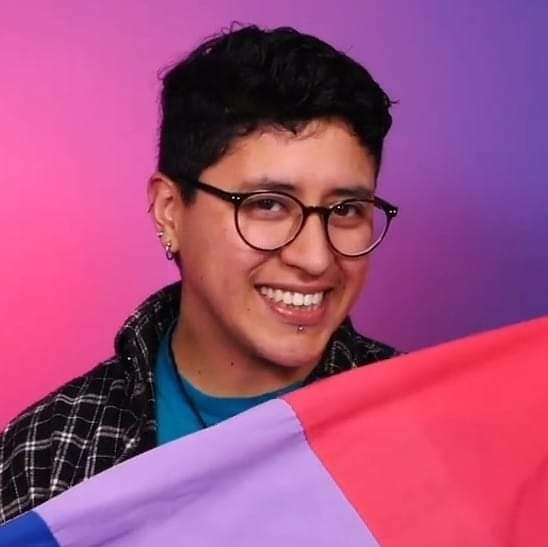
As Sebastián Marallano, a member of Diversidades Trans Masculinas (Trans Men's Diversities), points out: “In the case of trans men, there's a whole issue due to body image issues and dysphoria. Many don't seek information about their sexual and reproductive rights because it also implies affirming having a vagina or uterus. Very few know how to protect themselves in the event of having sex that could lead to conception, that is, penis-vagina sex, and there are cases of men who end up using the morning-after pill three or four times a year due to a lack of knowledge.”
Added to this is the lack of information among healthcare providers regarding sexual diversity, the absence of protocols or care guidelines for trans men, and the limited openness to the topic of trans masculinities: “I’ve had to go to gynecologists who don’t know how to treat a body on hormones; these situations alienate you from the healthcare system. That’s why we need to be recognized and have protocols that understand our bodies. Lesbians have already made progress with a protocol, albeit belatedly; we are further behind them.”
Resorting to clandestine abortions, as a trans person, opens the door to even more vulnerabilities, as Sebastián recounts: “I am a person who has had an abortion. I had one before my transition process, but even then there were many shortcomings: clandestine clinics with all that this implies, plywood walls, revictimization, my abortion was due to rape, a doctor who demanded I tell him in minute detail what had happened to me, among other things that are violent and inhumane when you are in such a vulnerable situation as going through an abortion.”
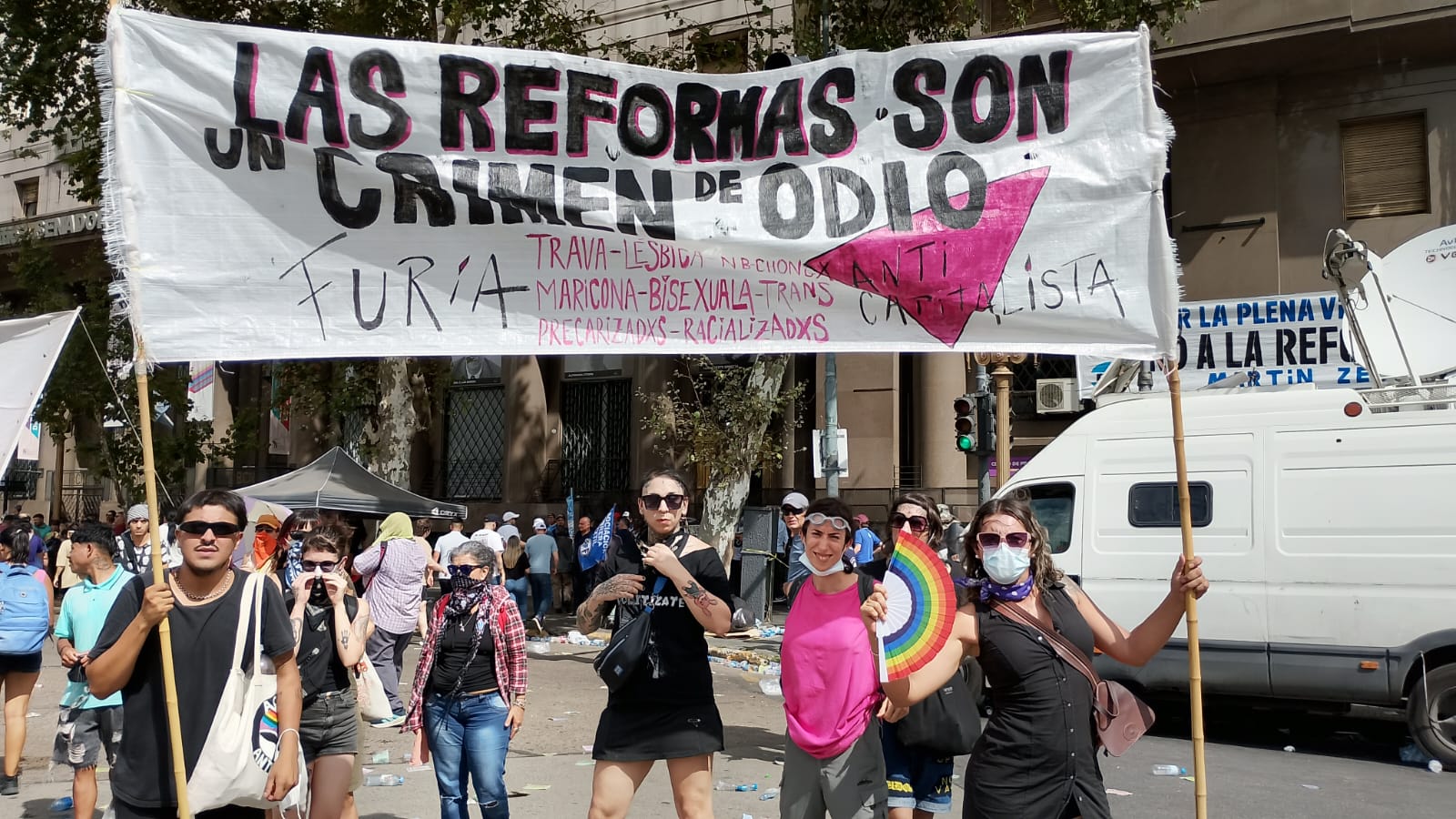
Lesbians and trans people also have abortions, and that's why we are aware of the women's struggle for the decriminalization of abortion, so that everyone can access a legal, safe, and free abortion. This struggle unites us.
We are present
We are committed to journalism that delves into the territories and conducts thorough investigations, combined with new technologies and narrative formats. We want the protagonists, their stories, and their struggles to be present.
SUPPORT US

FOLLOW US
Related notes
We are present
This and other stories are not usually on the media agenda. Together we can bring them to light.