

The story of Ayelén Beker, the Gilda of trans women
One of the great revelations of Argentine cumbia is a young trans woman nicknamed "The Gilda of the Trans Women" by her peers. Ayelén Beker's voice and grace have already crossed borders and resonate with us, both through her music and her personal story.


Share

By Soledad Mizerniuk and Victoria Rodríguez
She doesn't just step onto the stage, she bursts onto it. Ayelén Beker, the new star of Argentine cumbia, is living the dream of many, and not just because she's recording her own album or being invited to major cultural events. The "Gilda of the Trans Women," as the artist Susy Shock called her, stands out because she has a job, and she knows that makes all the difference for a trans person. Until two years ago, opportunities were closed to her because of her identity, and she only had one way to make ends meet: prostitution. One day, someone offered her a job at a community soup kitchen, and her life took a dramatic turn.
In an interview with Presentes , Ayelén recalls the moment her nickname was born: “Susy is amazing, we love her. I met her at the Dissident Party in El Bolsón in December. Later, we organized a #FestiTrava in Rosario, I sang with her, and that's how she introduced me.” “ I reclaim the word 'trava' (trans woman ). I identify as 'trava' by reclaiming the insult. What they feel hurts us, I take it and redefine it.”
“Our trans party is Ayelén. It embodies all that we are, joyful and radiant, but expressed in a popular artistic event for everyone. The sensuality and the commitment, which we can even dance to, that's what we love about Ayelén,” Susy Shock explains.
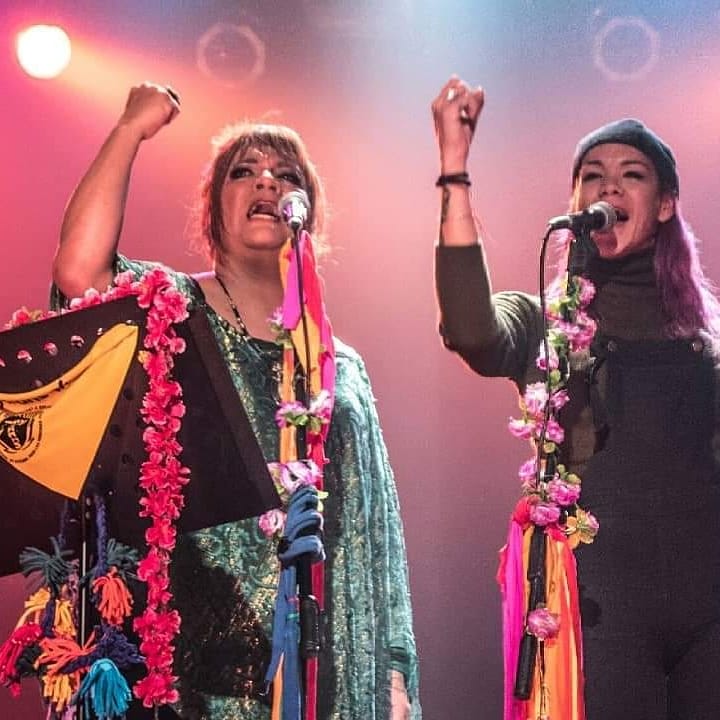
Alongside the South American trans artist Susy Shock
"I thought I was abnormal."
Ayelén lived a childhood full of contradictions for herself. While on the streets of the 25 de Mayo neighborhood, in the southwest area of Rosario, she was just one of a group of kids playing ball and hide-and-seek; at home, she would hide on the terrace and, in front of an imaginary audience, pretend to be Thalía. “I never imagined that what’s happening to me now would be real, that I would go on stage and receive people’s love,” she says.
She was born in Barrancas—80 km from the city of Santa Fe—but spent almost her entire life in Rosario. She is the youngest of four siblings. “I had a very happy childhood, I was very free,” she recalls with a smile, referring to her early years. The ordeal began in the last years of primary school and the beginning of secondary school. “I thought I was abnormal, that it only happened to me, I didn’t even know that trans people existed. And one day, when I was about 13, I went to a club and there I saw a trans girl for the first time. I was fascinated ,” she remembers.
With the arrival of adolescence and the beginning of her transition, with extensions and hormones, some things changed. She didn't have as many friends anymore, school ceased to be part of her routine, and family conflicts deepened. “I don't blame my mom. Back then there wasn't as much information; things are different now,” she reflects.
Also committed to transgender children, the artist is one of the staunchest advocates for Comprehensive Sexuality Education (CSE). “I think there has always been a lack of information, in addition to religious beliefs. I want equality, but I know it's very idealistic. It's a very sick society, but today there is more information about what a trans body is, understanding that we are love. CSE should be in all schools ,” she says.
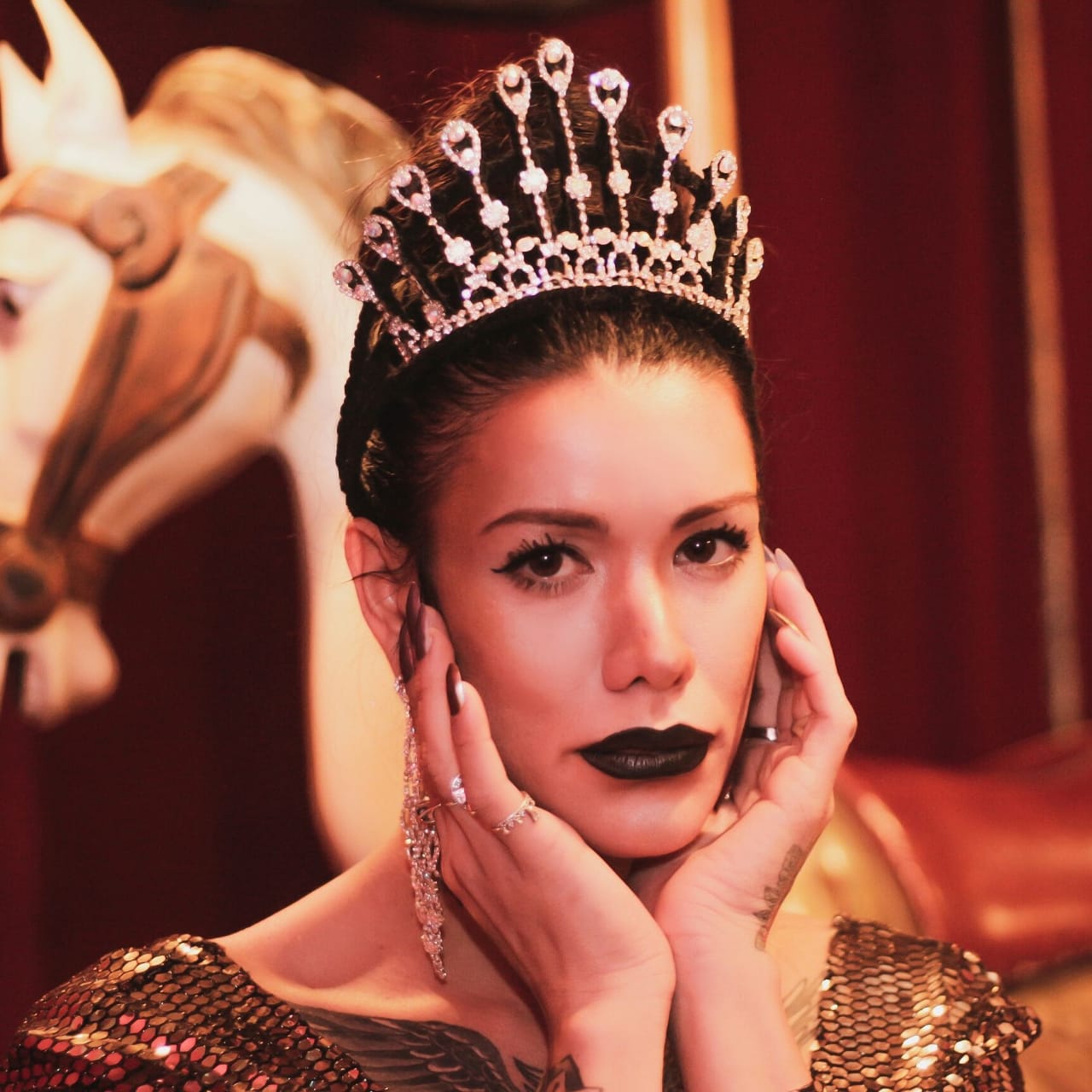
The Great Leap
Today, the life expectancy of trans people is between 35 and 40 years, and this is related to the fact that only 18% of transvestite and trans people have access to a formal job – according to a 2014 report by ATTTA and Fundación Huésped (the latest available).
Since deciding to live openly as a trans woman, Ayelén turned to sex work to survive whenever she had to leave home or lost her job. She worked as a waitress in bars, a hairdresser, and even had her own business. But when those doors closed, she returned to the streets. “ I suffered a lot with sex work . I'm neither for nor against it. I think that if someone does it by choice, it's fine, but it hurt me and it was quite awful,” she explained. In Argentina, according to the same report, 90% of trans people engage in sex work due to a lack of job opportunities.
Two years ago, Ayelén started working at a day center for trans and travesti people. That decision was key because the same person who hired her for that job told her there was an audition. The young woman from Santa Fe, who was already studying musical theater and perfecting her singing, sent a file with a cover of a Seminare song (Argentine rock was the first genre she embraced). They called her back, but told her they wanted to form a cumbia band. It was an opportunity for her to become a voice for the trans community in demanding employment quotas. “I thought it was great to take advantage of that widespread reach,” she says.
Thus began her journey to the big stages. Last year, she not only performed at the Santa Fe Provincial Cumbia Festival but also dazzled on the TV show "Pasión de Sábado." But her greatest success came at the LGBTIQ Pride March, where the audience gave her a standing ovation.
The first time she sang in front of thousands of people, she felt like she was “going to die.” “I had always played for family and friends, and that was the most beautiful thing that ever happened to me. That’s where my career as an artist began,” she recalls. From that moment on, she never stopped.
Cumbia is love
Head held high, long black hair tied in a high ponytail, she exudes a floral scent as she walks by. Her skin speaks through several tattoos. None is her favorite; they all have a meaning. "Maybe it was about feeling pain to cover up pain, but I don't know," she muses aloud, and concludes: "I think they're super sexy."
Just as difficult as choosing a tattoo, naming a favorite artist or song is challenging, although her dream is to share the stage with Los Palmeras. She's clear that cumbia is her life today, and she expresses it beautifully: " Cumbia is love, and it reaches every home . We all listen to cumbia at some point. It embraced me, and I embraced it."
The young woman from Santa Fe has many plans and, above all, peace of mind. “The times I’ve left home were under different circumstances, because of fights or to work as a sex worker. I’d never moved out like this before . Working at a day center and with music is a wonderful peace. It’s more than I expected,” she acknowledges.
She studies music and is learning to play the keyboard. She writes song lyrics and is preparing for the release of her album. Her drive and strength are pushing her further and further, and she understands it this way: “Today I want to keep growing. I look back a year and say, ‘Wow, so many wonderful things have happened.’ And I still have so much more to do.”
We are present
We are committed to journalism that delves into the territories and conducts thorough investigations, combined with new technologies and narrative formats. We want the protagonists, their stories, and their struggles to be present.
SUPPORT US

FOLLOW US
Related notes

We are present
This and other stories are not usually on the media agenda. Together we can bring them to light.