

HIV+ patients in Argentina cannot get tested due to a lack of reagents
Civil society organizations join the demand for the lack of delivery of reagents to measure the viral load of patients.

Share

By Lucas Gutiérrez
In addition to complaints about shortages, fragmentation, and delays in the delivery of antiretroviral medication, people living with HIV and various civil society organizations are now demanding the delivery of reagents to measure patients' viral load. They are also reporting shortages of breast milk.
“We’ve been warning for weeks that there would be a shortage between the tender that was finally opened and the existing stock,” Leandro Cahn, executive director of Fundación Huésped, told Presentes. “The Ministry notified the jurisdictions that they won’t have viral load reagents until the tender is finalized, which is estimated to be by the end of the year,” he said.
“Now many people on combination antiretroviral therapy will not be able to access the necessary monitoring of their infection. Our patients will thus lose, for an as-yet-undetermined period, knowledge of the progression of their infection and, fundamentally, the ability to know whether or not there is a possibility of transmission,” explained the statement issued on September 3 by the Argentine Interdisciplinary AIDS Society/AMBA (Saisida).
“With the current stock, we are prioritizing testing for pregnant women, children, and patients with very serious conditions. The rest remains uncertain, and we are trying to resolve this locally with each infectious disease specialist, who will determine if there is an urgent need for follow-up,” María Celeste Gómez, head of the communicable diseases department at the Río Negro Ministry of Health, told this publication.
[I'm on HIV+ treatment, I took a headache pill and almost didn't make it.
Gómez also said: “Our province doesn't have the equipment to perform either CD4 or viral load tests. The established procedure dictates that samples from Río Negro are sent to the Castro Rendón Hospital in Neuquén and the Malbrán Institute in Buenos Aires. Now, Neuquén is informing us that they don't have reagents for viral load testing.”
The head of the Río Negro program adds to the shortages the lack of breast milk for pregnant women who have given birth and need to replace breast milk to prevent transmission. This same shortage was denounced on Tuesday by José María Di Bello, president of Grupo Efecto Positivo, at the national level.
The website of the former Ministry of Health suggests that people living with HIV undergo viral load testing at least two or three times a year. This new shortage jeopardizes the Ministry's own recommendations. "The lack of reagents also undermines HIV prevention. For several years, we have been urging the government to promote the U=U campaign—which states that a person with HIV and an undetectable viral load cannot transmit the virus sexually—however, we have received no response. In this context, the Positive Cycle Association not only denounces the censorship of the campaign, but also the unavailability of reagents to measure viral load. This makes it impossible to monitor people with undetectable viral loads, thus hindering this strategy for preventing new infections and promoting the health of people living with HIV," says Franco Bova of the Positive Cycle Association.
Regular testing also ensures that the medication is working correctly in the bodies of those who test positive. Due to recent shortages—which are still being addressed—it is important that these individuals undergo these checkups to determine if the new medication is taking effect.
Reports of shortages and rationing of antiretroviral medication continue
Since August, activists and civil society organizations have been demanding the proper delivery of antiretroviral (ARV) medication to HIV-positive patients. Leandro Cahn explained: “We understand that while Darunavir and Ritonavir began distribution last Monday, it's possible that doses may be being split today.” Federico Abib, from the Mesa Positiva association, confirms that split doses persist in the city of Rosario, Santa Fe: “At the Centenario Hospital, they aren't distributing Atripla. They're offering it in smaller doses today. It's your decision whether to take something else.”
Was this shortage situation avoidable? “Absolutely,” replied Leandro Cahn. “This is something that should have been foreseen. That’s what we’ve been saying about every shortage we’ve had,” he said. “None of these measures contribute to improving the health of people with HIV. Medication changes should never happen suddenly, much less due to an administrative decision; it has to be planned,” he added.
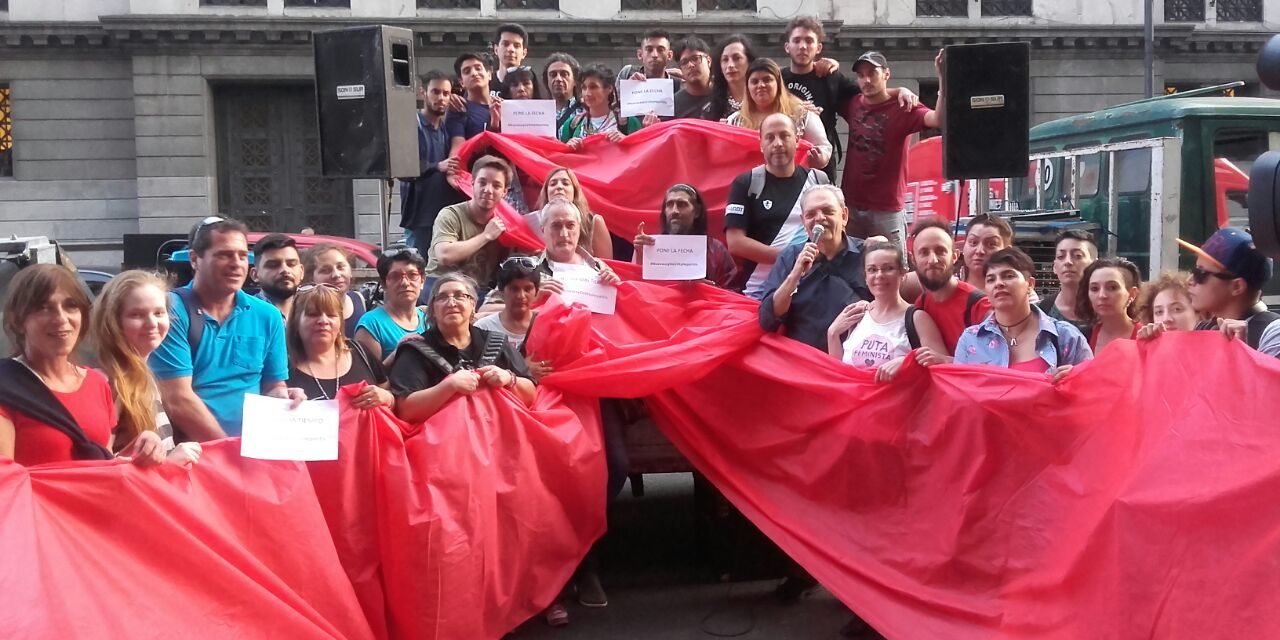
All this is happening in a context where on Tuesday, 3 workers from the former Ministry of Health, activists and civil society organizations held a demonstration around the building of the now Health Secretariat demanding the return of ministerial powers.
Members of the Technical Advisory Committee of the Directorate of AIDS and STIs submitted a letter expressing their concern about the lack of supplies for viral load testing in the public health system. Among the signatories are Dr. Pedro Cahn of Fundación Huésped and the president of the Argentine Society of Infectious Diseases (SADI), Omar Sued.
We are present
We are committed to journalism that delves into the territories and conducts thorough investigations, combined with new technologies and narrative formats. We want the protagonists, their stories, and their struggles to be present.
SUPPORT US

FOLLOW US
Related notes


We are present
This and other stories are not usually on the media agenda. Together we can bring them to light.