

Why we don't talk about HPV: myths and prevention
HPV is one of the most common sexually transmitted infections (STIs) worldwide. It affects people with both penises and vulvas, and if left untreated, it can lead to cervical cancer.


Share

By Alejandra Zani
Illustrations: Kinky Vibe*
Eighty percent of the sexually active population has been exposed to the Human Papillomavirus (HPV) at some point in their lives, according to figures from the National Cancer Institute (Argentina). It is one of the most common sexually transmitted infections (STIs) worldwide. It affects both people with penises and vulvas, and if left untreated, it can lead to cervical cancer.
HPV is among us; we live with it, and yet it remains a silent presence. Information about it is scarce, and it's often normalized as an STI that only affects cisgender heterosexual women. In Argentina, the National Cervical Cancer Prevention Program (PNPCC) reports that approximately 4,500 new cases are diagnosed each year, and 2,000 women die from the disease. So why isn't HPV discussed in the context of LGBT+ people?
According to Alejandra Gaiano, an infectious disease specialist at the San Isidro Children's Hospital, the doctors themselves are misinformed, and this is one of the main problems for the LGBTQ+ population seeking consultations about possible STIs. “The medical profession is often heteronormative and stigmatizing, which makes patients feel unfree. As a result, the medical consultation is not used as an opportunity.”
[READ ALSO: Letter from a bisexual woman to her former gynecologist]
“I had warts on my anus. I realized I had them by feeling myself and I got scared because I felt a lump,” Mauro (27 years old) tells Presentes. “My friends who had the virus had more visible symptoms, like warts on their penis, and it took me much longer to realize. I wish I had known that it can also be transmitted internally through sexual contact.”
“That’s why my proctologist recommended I get the vaccine, even after having had the virus, to prevent certain specific types,” Mauro explains. In his case, the warts had spread internally, requiring outpatient surgery.
Lesbians and HPV
“The biggest problem for the LGBTIQ+ population is misinformation. The group of women who have sex with women is the least studied in relation to HPV and about which there is the greatest lack of knowledge on the part of health personnel as well as the women themselves who may be at risk,” Laura Svidler, a colorectal surgeon at the Fernández Hospital, explains to Presentes.
That's why, when Cari (32 years old) was diagnosed with HPV, she didn't really know what it meant. “I understood, in general terms, what herpes is. I had gone for a check-up and didn't have any symptoms, nothing, so when I was diagnosed with HPV, my first reaction was a complete shock,” she tells Presentes. “What scared me the most was not knowing to what extent I had put my sexual and romantic partners at risk.”
It was only when she changed gynecologists and found a professional who had already worked with gender non-conforming individuals that she found a safe space to ask all her questions. “She explained that I could have acquired the virus through the birth canal, or by sharing bathroom accessories at home, since my mother had had surgery for HPV.”
Cari was also reassured to learn that if the virus is not detected in a Pap test, it is not transmissible. In her case, the test had come back negative (indicating the absence of the virus), but the gynecologist insisted on performing a biopsy since she had recently undergone surgery for extensive superficial melanoma (a type of skin cancer).
Disinformation
“When I found out I had HPV, I breathed a sigh of relief, although I didn’t understand how the Pap smear could have come back normal. I was afraid it was cancer. Then they explained to me that, like other herpes viruses, HPV is something that can reappear in your body, and I was scared to learn that it’s a virus I have to live with. The good thing is that, in this case, it’s not transmissible,” says Cari.
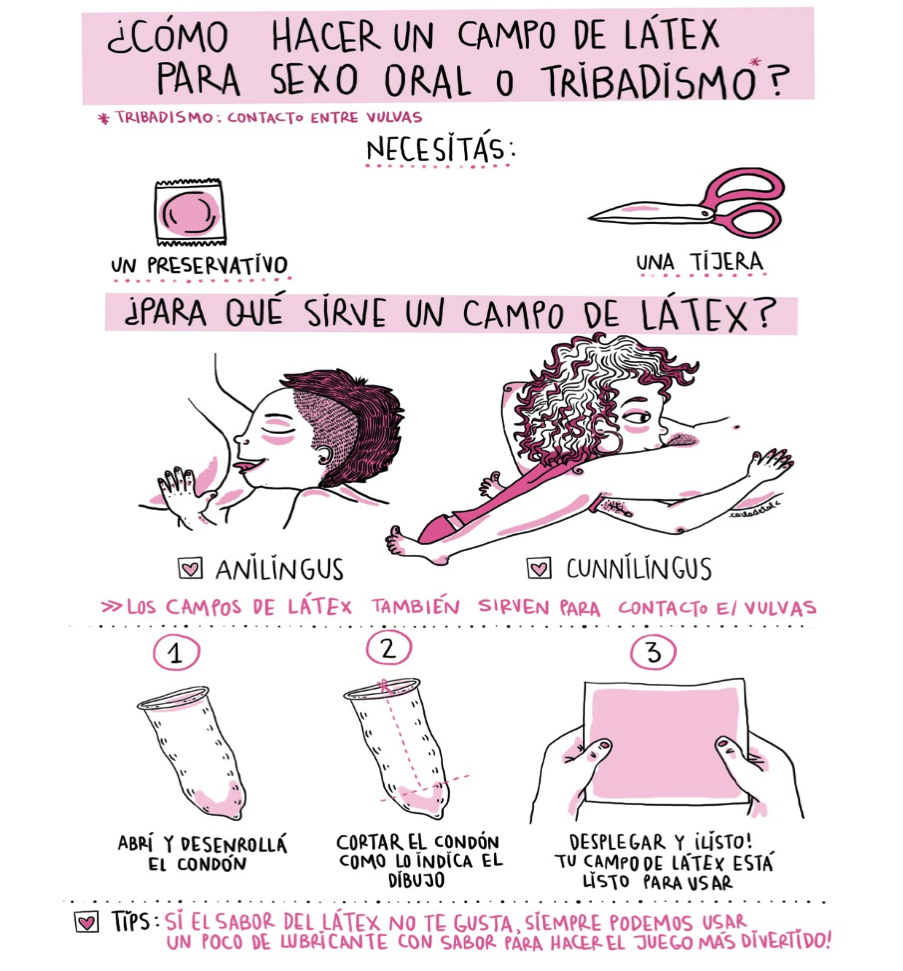
Regarding prevention methods, Cari admits she would have liked to know much more about HPV. “I’m a lesbian, and if I’m being completely honest, I don’t always use proper protection when I have sex with other women. While the basics are widely known, most people don’t seem to fully grasp the importance of prevention, and they don’t get many answers when consulting with professionals,” she says. “I would have liked to know about home prevention methods (for those living together) and also about prevention for sex between people with vulvas.”
Some myths
“The myth that oral sex doesn’t transmit the virus is false,” explains Alejandra Gaiano . “ All types of sex can transmit HPV: anal, vaginal, and oral sex. The only way to prevent HPV transmission is through vaccination and the correct use of condoms , but even this isn’t 100% effective. HPV is the only sexually transmitted infection that can be transmitted even with the correct use of condoms because it’s a very small virus and is transmitted through direct skin-to-skin contact and even through sex toys.”
“It’s also not true that all types lead to cancer,” the infectious disease specialist continues. “There are almost 100 subtypes of the HPV virus. It’s like saying they’re 100 cousins. Some of these cousins have the potential to cause cancer; we call them oncogenic. When they cause infection, they can lead to cervical cancer, which is the most common, or cancer of the glans penis, anal cancer, or oropharyngeal cancer (of the mouth and pharynx). That’s why vaccination is so important.”
“80% of sexually active people have had contact with HPV at some point in their lives, but we clear it up with our own immune system. People with immunodeficiency are prone to chronic HPV, and after chronicity, cases of penile, anal, and cervical cancer can occur.”
* Organization dedicated to the dissemination and education of human sexuality for queer people that sells erotic toys and provides advice and counseling.
We are present
We are committed to journalism that delves into the territories and conducts thorough investigations, combined with new technologies and narrative formats. We want the protagonists, their stories, and their struggles to be present.
SUPPORT US

FOLLOW US
Related notes


We are present
This and other stories are not usually on the media agenda. Together we can bring them to light.