

A gay couple was chased and attacked in Almagro: “They beat us out of hatred.”
“This is the first time we have been attacked in this way. The intention was hateful. They chased us, shouted at us, and intended to corner us.”

Share

By Alejandra Zani
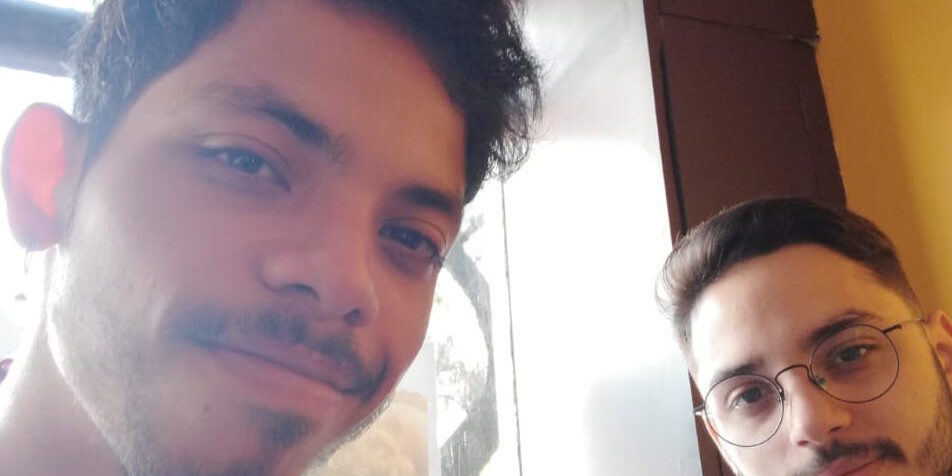
On Saturday, August 31, at four in the morning, Reyvis Henríquez (25 years old) was kicked in the face. He was walking hand in hand with his partner, Luis, in Almagro, Buenos Aires, when he realized they were being followed by a group of seven men. They were followed to the corner of Córdoba Avenue and Bulnes Street, where they were insulted and beaten. “After kicking me in the face, they laughed at us and we started running. If they had wanted to rob us, they could have. They didn't because they only wanted to hurt us,” Rey told Presentes.
That night they had gone out to a party. “It’s the first time we’ve been attacked like this. The intention was hateful. They chased us, yelled at us, and tried to corner us,” recalls Rey, a Venezuelan migrant, as is his partner. “When we realized they were following us, we tried to cross the street at the corner of Bulnes, but the light was red, so we stopped to wait. That’s when I turned my head and got kicked in the eye. I was in shock, and Luis grabbed my arm so we could run.”
[READ ALSO: Young gay man beaten and insulted in the street: "This is what happens to you for being a faggot"]
From Luis Martín's perspective, the scene was just as violent. “The guy who physically attacked Rey jumped into the air. It was a clear attempt to kill, because the kick was aimed directly at Rey's head. By chance, he turned his face and got hit in the eye, which was left swollen,” he recounts. “They insulted us, called us fucking faggots, among other things, and stopped following us when we started running.”
That same afternoon, Rey and Luis went to Police Station No. 5 in the City of Buenos Aires to file a report, which was classified as a complaint for "minor injuries." There, they were told that only through the prosecutor's office could they access a request for the city's security camera footage to try to identify their attackers, but that they would have to wait until Monday to do so. The complaint was registered with the police, and they are still waiting for the prosecutor's office to approve it before they can proceed with the LGBT Advocacy Office.
What to do in a case of homophobic, lesbophobic, or transphobic violence?
“When there is a case of violence, the first thing to do is go to the local police station where a report is filed. That report is then sent to the prosecutor's office, which has the obligation to act ex officio to carry out the corresponding investigations to identify the aggressors and gather the necessary evidence,” Ezequiel Rabines, the lawyer in charge of the Diversity and Dissidence Front of La Cámpora in the City of Buenos Aires and a candidate for city legislator within the Frente de Todos, Todas y Todes coalition, explained to Presentes.
“Once the prosecution has completed what is called the investigation stage, the case is transferred to the court so that due process can begin, which involves identifying and notifying the aggressors, and guaranteeing them due process of defense, which is an obligation imposed by the State,” he continues.
For Rabines, it is also always important that, in the face of attacks of violence and hatred against diverse and dissenting groups, people can approach the LGBT Ombudsman's Office. “This is a public service offered by the city, and it is important that we can make use of it. They cannot file a complaint, but they are useful in terms of providing advice, support, and registration.”
Without aggravating circumstances
Regarding hate crimes, the lawyer explains that there are no aggravating circumstances because they are not specifically defined in the penal code. “Heteronormativity is at work here. All legal frameworks have always been written by heterosexual, binary white men, and I think we lack legislation that protects our identities. No heterosexual person gets attacked for walking down the street, but it happens to us. That should be considered an aggravating circumstance.”
According to Rabines, it is because hate crimes are not specifically defined in this legal framework that Rey's complaint will be classified as a "complaint for minor injuries." "We also don't have an anti-discrimination law. This is comparable to two people arguing over a traffic dispute and getting into a fight, with one of them getting hurt. But that doesn't happen to us. We're walking along and we're attacked because of the way we walk, the way we dress, or the way we speak. That's hate, and we need to start defining that hate legally."
“These are not isolated incidents: they are hate attacks.”
Manuel Mireles, a Community Development teacher at the Mocha Celis Transgender Popular High School and a friend of the victims, was with Rey and Luis the entire time. “I was still at the party at Shamrock when they were attacked, but as soon as I found out, I offered to go with them everywhere. The next day we called the LGBT Ombudsman's Office to follow up on the case, but they needed the police report and information from the prosecutor's office,” he explains. “Rey was very agitated, filled with rage, anger, and the discomfort of having a swollen eye.”
Manuel, who identifies as a non-binary queer person, had been attacked before. He also hadn't had good experiences with the police. “In Rey's case, Luis and I are all gay and migrants from Venezuela. This is the third time this year that a friend has told me something similar has happened to them; coincidentally, or not always, they're Venezuelan, but on previous occasions they didn't want to report it to avoid the logic of the police.”
For Manuel, it's not just a scare. "It's more than the discomfort, or the humiliation, but also being left with a black eye, a large bruise, and other injuries. Rey and Luis were crying, terrified, and this isn't an isolated incident. It's another hate crime."
We are present
We are committed to journalism that delves into the territories and conducts thorough investigations, combined with new technologies and narrative formats. We want the protagonists, their stories, and their struggles to be present.
SUPPORT US

FOLLOW US
Related notes

We are present
This and other stories are not usually on the media agenda. Together we can bring them to light.