

Detainees: Trans Stories in Confinement
In this multimedia report, Yhajaira, Bruno, and Emilce recount their experience in a binary and cisnormative penal system.

Share

This report was produced during the #EnResistencia Mediathon by Chicas Poderosas Argentina , where 100 women working in media came together to create collaborative multimedia projects, with support from the Google News Initiative. To see the other 12 projects created during the Mediathon, visit this link . Team: Florencia Ramirez, Paula Hernández, Emilia Erbetta, María Eugenia Plaza, Alana Rodríguez. Mentor: Luna Neuman
In Argentine prisons, if you are trans, the violation of your rights is twofold. Despite the existence of the Gender Identity Law, the penal system continues to operate according to a binary and cisnormative order, which becomes another link in the chain of exclusions and violence that threaten the LGBT+ community.
In this multimedia report, Yhajaira, Bruno, and Emilce raise their voices to break the silence: they tell what it's like to be trans in prison.
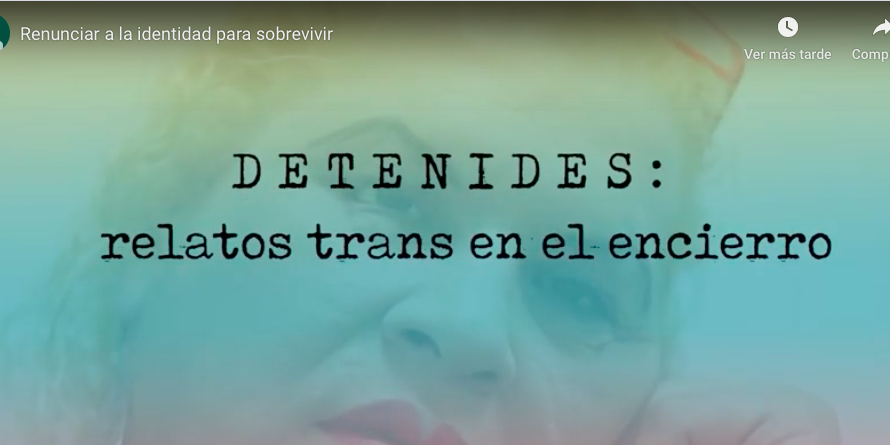
[embed]https://www.youtube.com/watch?v=txEQAxcGAGw[/embed]Giving up identity to survive
Yhajaira, Bruno, and Emilce have many things in common. They are trans people who have lived or still live in prison, and each of them, in their experience and their time in prison, fought and continues to fight in defense of their identity, their own bodies, and their rights. In that struggle to survive and be heard, they raised their voices and exposed the shortcomings of a prison and judicial system that neither respects nor recognizes them.
Behind the glasses appear Bruno's large, serene, and deep eyes; he has the gaze of someone who has lived a full life at only 27 years old. Bruno is a trans man and has been under house arrest for 10 months. He was detained for 76 days in the Ezeiza Federal Women's Penitentiary Complex IV. Yes, him, a trans man, in a women's prison. In an unprecedented ruling, in November 2018, the Federal Criminal Economic Court – Chamber A – granted him house arrest based on the fact that "the conditions of detention do not respect his gender identity."
The management of prison establishments - which, like most institutions, does not escape the binary and cisnormative model - is one of the main topics of discussion regarding LGBT+ people in the penal system.
Bruno lives in a townhouse in William Morris, Hurlingham, with his mother, Mabel, and his cat, Xena. He now shares his days with them, and although he can sleep alone, dress as he pleases, study, cook for himself, listen to his own music, and simply be himself, he remains confined. His entire life unfolds there, within those walls. “In here, I’m safe, I’m at peace, and I don’t have to worry about anything but myself,” Bruno says. “Being in prison means you’re constantly on edge, worried about everyone else and what might happen to you.”
When he was arrested, he told his lawyer he was transgender and asked to be sent to a women's prison. “At that moment, I felt like I was taking a step backward. I felt like I was giving up all the rights I had won, all the struggle I had waged for years. I had to give up that right to be safe. I knew that if I went to a men's prison, they would beat me to a pulp.”
The court ruling that granted Bruno house arrest set a very important precedent in the recognition of the rights of trans people in prison settings: it not only highlighted the current limitations of the penal system in addressing the treatment of non-normative identities, but also raised alternatives to prison that respect human rights.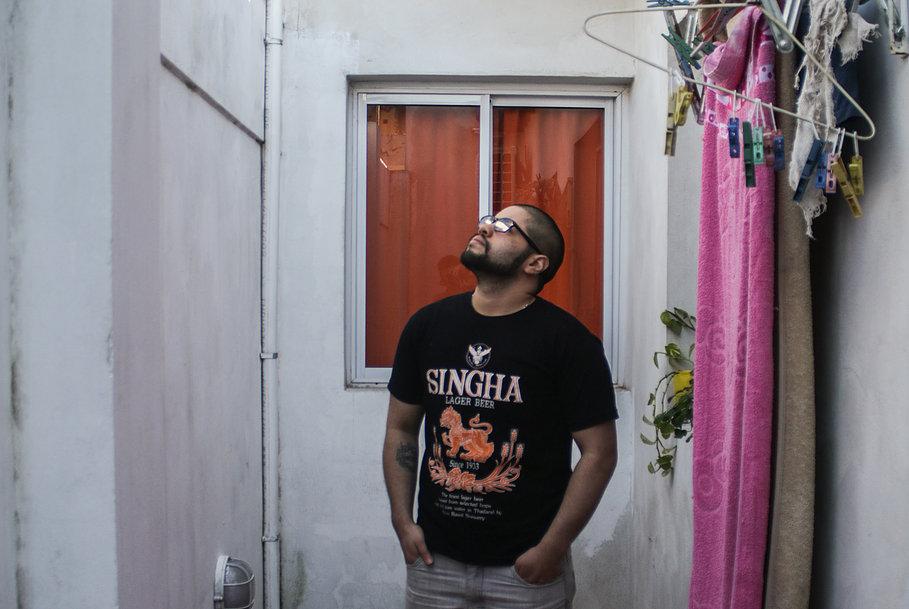
Although Law 26.743 on Gender Identity has been in effect in our country since 2012, this does not mean that its application is effective in practice. The law stipulates, among other important points, the recognition of the internal and individual experience of gender. This means that gender is considered a social construct and, therefore, depends on each individual's experiences. The law ensures that every person “has the right: (a) to the recognition of their gender identity; (b) to the free development of their personality in accordance with their gender identity; and (c) to be treated in accordance with their gender identity and, in particular, to be identified as such in the documents that certify their identity with respect to the first name(s), image, and sex with which they are registered.”
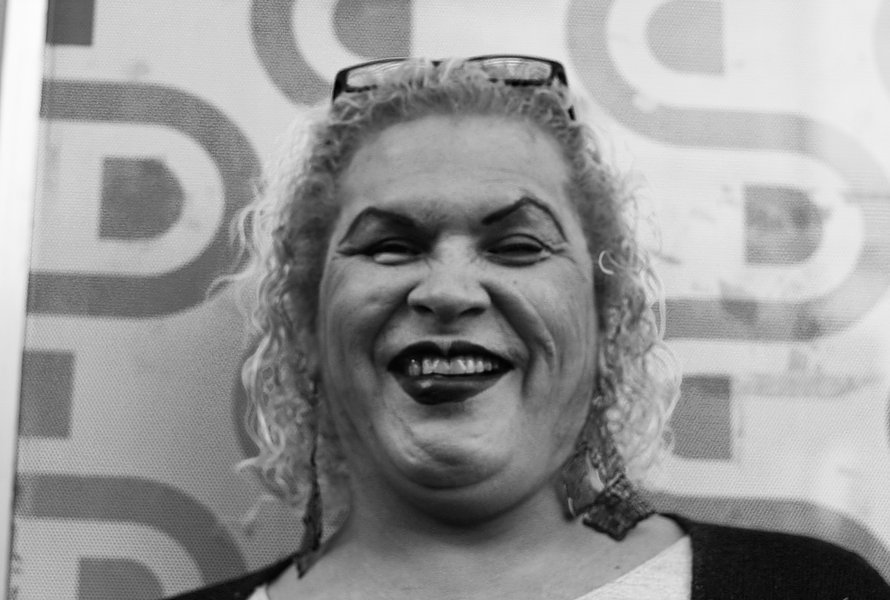
The life expectancy of a trans woman in Argentina is 35 years. Emilce has already defied the statistics: she is 39. Although she has spent almost half of that time in prison. She has been in several prisons in the province of Buenos Aires, which left indelible marks on her to this day. She is from Tucumán, born in Burruyacú, and like most trans people, she was expelled from her home, from her town, at a very young age. At 16, she had to migrate to Buenos Aires in search of work, and since then she has had to deal with the police. In the beginning, before the Gender Identity Law, she shared confinement with men. “At that time, we didn't have rights, because the law hadn't been passed yet; we were registered as male, and you had to go to a men's prison,” she recalls.
Until 2009, transgender and transvestite people were housed in Module I, Pavilion 4, of the Federal Penitentiary Complex II in Marcos Paz. A place that had become very dangerous: “I had a terrible time, I contracted HIV, I was raped. I had to prostitute myself to survive,” Emilce says, wishing she didn't have to talk about those days anymore.
In March 2010, the Federal Penitentiary System ordered the transfer of the gay and transgender group to another men's wing, but within the Ezeiza Federal Penitentiary Complex I. That's where Emilce and Yhajaira met: “They had never seen a Venezuelan trans woman here before. When I arrived, the only one who shook my hand, who welcomed me, was Emilce. We didn't know each other; she had been imprisoned for many years. I arrived and we became friends. I told her, 'We have to denounce what's happening here.'”
Yhajaira, in addition to being Venezuelan and Afro-descendant, is an activist for the rights of trans and travesti people. Today she is free and continues her fight, working with the Program Against Institutional Violence at the Public Defender's Office of the City of Buenos Aires. During her detention, she dared to denounce police harassment. She spent her first days in Ezeiza prison in solitary confinement for demanding to be called by her name and treated as a trans woman. This was one of the first battles she fought alone; later, she organized with other trans and travesti people, and through habeas corpus petitions, denounced the inhumane conditions to which they were subjected.
That struggle, accompanied by the intervention of human rights organizations, including the National Penitentiary Ombudsman, forced the Federal Penitentiary Service (SPF) to resolve the housing of the transgender and gay population in a module exclusively for this group, Module 6: “It was a pavilion for diversity where trans girls, gay boys, queer people, and all sorts of people lived. It was like a madhouse. We lived comfortably all things considered, and they gave us work,” Emilce describes.
Following the enactment of the Gender Identity Law, and continuing to this day, trans women, transvestites, and trans men have been housed in Federal Penitentiary Complex IV, a facility historically designated for cisgender women; while gay men are located in a special wing of Federal Penitentiary Complex I in Ezeiza. According to Josefina Alfonsín, a member of the Gender and Sexual Diversity Team of the National Penitentiary Prosecutor's Office (PPN), "this might seem like a good measure because it would align with certain gender policies, but," she warns, "the problem we observe is that people are not consulted about their preferred and desired accommodation."
Often, it is the justice system or the prison system itself that, based on an individual's gender expression, decides on their identity and assigns them to a prison. Experience shows that there are no universal solutions to this problem, given the specific characteristics of each prison system and the individual needs of each person. Therefore, according to international human rights treaties, the appropriate course of action is to consult the detainee.
In prison you're not a person
She couldn't answer the phone earlier because she was at the health center. She had gone there to get painkillers. She still suffers the consequences of that search in which they almost smashed her prosthesis with a stick. It wasn't the only time. In Marcos Paz, she was raped and contracted HIV. In that and other prisons, she was tortured several times. She spent two months without a destination, locked in a cell without light, in Unit 9 of the Alejandro Korn Psychiatric Hospital in La Plata, also known as "Melchor Romero." And even in that LGBTQ+ ward where she was supposed to be safe, a shift supervisor locked her in a cell with a burning mattress. "Faggot, you're not going to talk anymore," she told her. It took a year to heal her wounds; the marks on her body remind her of it every day. She is certain: "That happened to me for fighting for my rights, for fighting for a job, for decent food, for hygienic conditions. I never settled."
Facing discrimination and inequality is not a foreign experience for trans people, but within the prison system, violence is disguised as institutionalized, and the system's mechanisms are used for discipline. Violence is commonplace in all its forms: insults, physical, verbal, and psychological abuse, degrading searches, the administration of injections, the use of covert sanctions and punishments, isolation, and the propagation of hate speech and transphobia are some of the most frequent forms. Bruno only needed 76 days of confinement to understand this: “They dehumanize you. In there, you're not a person, you're something.”
The fact that detention centers fail to meet minimum standards for a dignified life and the exposure to various forms of institutional violence impact all those incarcerated. However, LGBT+ people are particularly vulnerable to specific forms of violence due to their gender identity and/or sexual orientation, such as constant discrimination, humiliation, denial of their gender identity, and obstruction of their right to self-development. Trans women, for example, are forced to wear clothing socially associated with masculinity or are not called by the names they have chosen to express their self-perceived identity. In many cases, trans women have their hair arbitrarily cut under the pretext of “hygiene” and are forced to adopt behaviors consistent with the gender socially imposed upon them. As Josefina Alfonsin explains, “trans people are often in a situation of extreme vulnerability within prisons because the prison model is governed by cisnormative patterns, which leads to the reproduction of more violent practices against identities that deviate from binary norms. Furthermore, prejudices, stigmas, and discrimination that also exist in society are amplified within the prison.”
While symbolic and psychological violence is the most prevalent form of abuse against this group in prison, trans and travesti people are exposed to more extreme forms such as physical and sexual assault perpetrated by prison staff or other inmates. “The violence is not only covered up, but it’s practically permitted,” says Bruno, pointing to the normalization of violence that is imposed almost as the only means of survival within prison walls, where one sleeps with one eye open.
During 2018, a total of 12 incidents of physical violence against transgender women and gay men were reported to the National Penitentiary Ombudsman's Office (PPN). The reported incidents included physical assaults, beatings, and threats accompanied by verbal abuse. It is important to note that there is a high level of underreporting of acts of violence committed by prison guards. “The hostility of the judicial system toward these communities constitutes one of the main obstacles to accessing justice. This also translates into the difficulty they face in filing reports of violence and abuse, as well as in proving their status as victims,” states a report prepared by the National Penitentiary Ombudsman's Office on the human rights situation of LGBT+ people in the prisons of the Federal Penitentiary Service.
While the Federal Penitentiary System has taken some measures based on the Gender Identity Law, such as the specific program for trans women in prison, these measures do not include trans men, are far from being integrated across the entire penal system, and are not accompanied by adequate budgets. “This has not translated into training policies. Some training sessions have been held, but not enough to change prison practices. Raising awareness about gender and diversity is an outstanding debt not only for the penal system but also for the justice system,” warns Josefina Alfonsín.
[embed]https://www.youtube.com/watch?v=NuqsAEjHb8E[/embed]For freedom
“Everything bad you can imagine happens in there, from physical violence to drug use, everything. You're imprisoned; it should be an institution that helps you get out of all that, that helps you reintegrate into society, but it's the complete opposite.” For Bruno, the system is designed to make you come out worse: in addition to the dehumanization, the normalization of violence, and the structural deficiencies, there's the limited educational and employment opportunities within the prison walls.
Emilse expects to be released on parole in February, six months before the end of her 12-year sentence. When she gets out, she wants to finish her studies, work, and start a family. While incarcerated with men at the Ezeiza Federal Penitentiary Complex I, she was able to study law up to her third year. It was a long and difficult process; she was one of the first trans women in the prison to enroll in a university program. At Unit 31, the women's prison where she is now, only the Common Basic Cycle (CBC) and a few low-skilled workshops are offered, such as papier-mâché, doll making, laundry, and sewing. "Learning to sew on a machine is at least one way out, but the rest isn't vocational training; they're useless. These aren't workshops that will lead to anything positive on the outside," she says.
Most of the job training workshops offered by the Federal Penitentiary Service (SPF) to women, trans people, and transvestites reinforce the role of feminized identities in the domestic sphere and caregiving. This perpetuates the gender gap in the labor market and the unequal reintegration into the workforce after incarceration.
According to the National Penitentiary Ombudsman, when designing socio-labor programs, in addition to taking into account gender and diversity criteria, it is necessary to consider the life trajectories of incarcerated people: a population characterized by a low level of education, high percentages of unemployment or precarious employment prior to their detention, which in the case of women, transvestites and trans people is even greater.
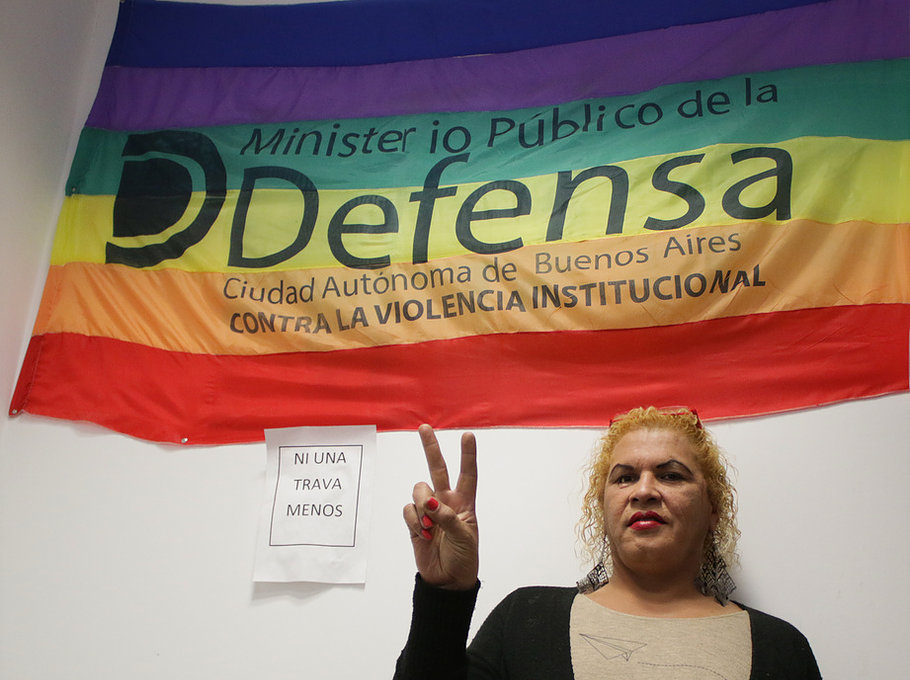
“If getting in is difficult, getting out is worse,” says Yhajaira. From her office at the Public Defender’s Office in the City of Buenos Aires, she helps trans women who are victims of police violence. “It’s much worse, because we have to go out and prostitute ourselves and run into that same police officer, who sometimes isn’t even a police officer anymore, but an inspector.”
Yhajaira Law 14.783, the “Amancay Diana Sacayán” Law , which mandates that the State employ transvestite, transsexual, and transgender people in a proportion of no less than 1% of its staff in order to promote real equality of opportunity in public employment. It is the only province with a trans employment quota law. It was never implemented. It is not enforced.
According to a survey conducted by the Presentes Agency and Ecofemini(s)ta , by April 2018, local ordinances establishing trans employment quotas had been approved in 25 districts and municipalities across Argentina. Several initiatives promoting trans employment inclusion are awaiting consideration in provincial legislatures throughout the country and in the National Congress. Meanwhile, prostitution remains the primary source of income for at least 7 out of 10 trans and travesti women, driven by discrimination, violence, and early exclusion from their homes and schools. This data comes from the report "The Butterfly Revolution ," which examines the living conditions of the trans/travesti population in the Autonomous City of Buenos Aires over the past ten years.
“The daily difficulties faced by trans women and transvestites in accessing education, employment, decent housing, and healthcare are exacerbated upon their release from prison because they experience a double stigma, and also because there are no public policies designed to support their process of regaining freedom,” says Josefina Alfonsín, a member of the Gender and Sexual Diversity Team at the National Penitentiary Ombudsman's Office (PPN) and the Argentine representative of Córpora en Libertad, a Latin American network of organizations working to raise awareness and transform the living conditions of incarcerated trans people. This gap left by the State is being filled by social organizations. LGBT+ and human rights groups are the ones supporting formerly incarcerated individuals and helping them find places to live, study, and work.
Being called by her name in a hospital waiting room. Walking down the street without being stopped by a police car. That's what freedom means to Emilce. She knows things have changed since the Gender Identity Law was passed and she has an ID card that recognizes her as a woman. But she also knows that the outside world won't be easy, that society is too harsh, and that she will have to keep fighting for her freedom, beyond those walls.
[embed]https://www.youtube.com/watch?time_continue=3&v=xHaYhjigGtg[/embed]Share
We are present
We are committed to journalism that delves into the territories and conducts thorough investigations, combined with new technologies and narrative formats. We want the protagonists, their stories, and their struggles to be present.
SUPPORT US

FOLLOW US
Related notes
We are present
This and other stories are not usually on the media agenda. Together we can bring them to light.