

Oaxaca approved same-sex marriage: this is how the map of same-sex unions in Mexico looks
Oaxaca is the 19th state in Mexico where same-sex couples can marry.

Share

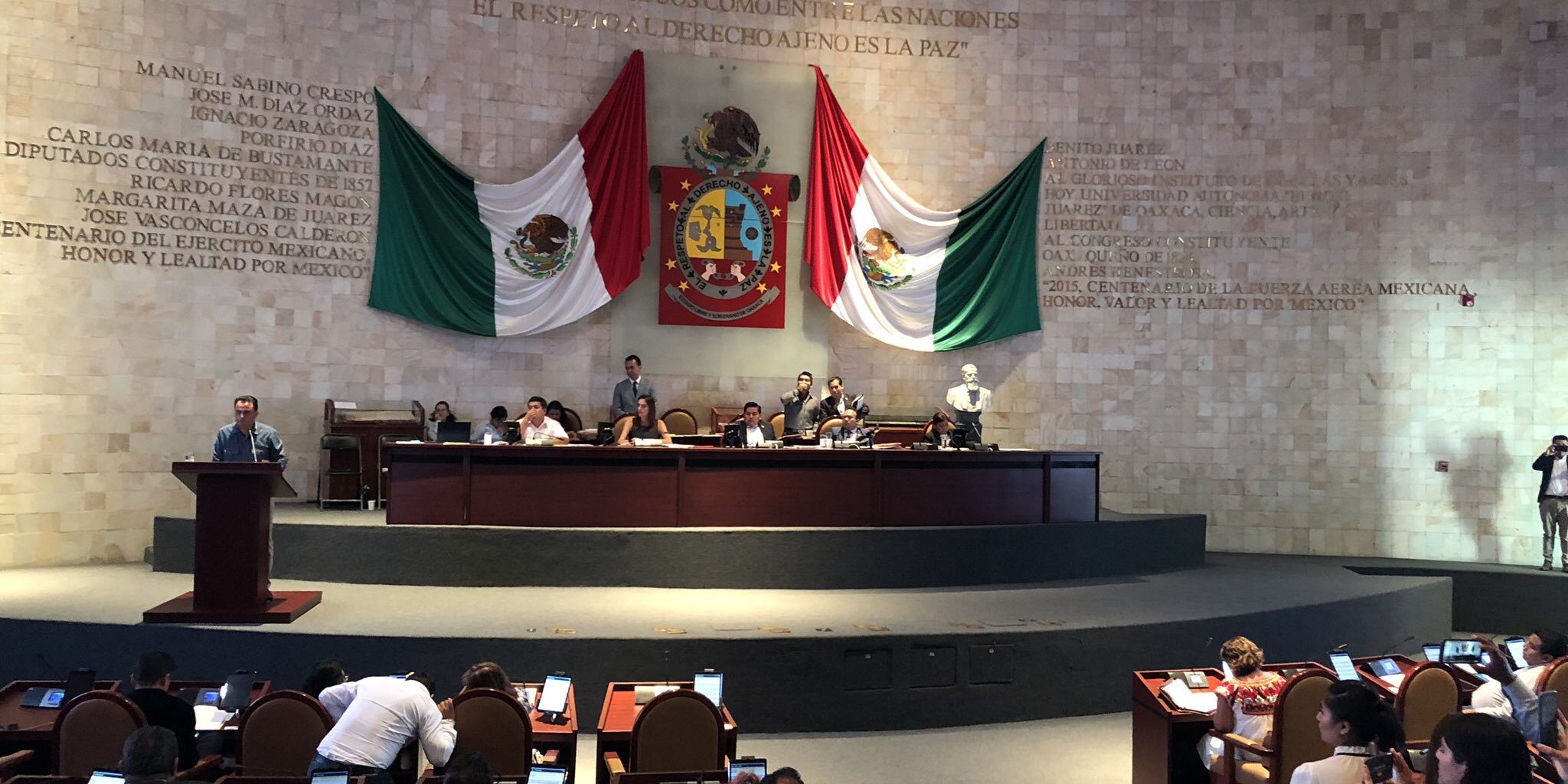
By Daniela Mendoza Luna Map: Milena Pafundi Photos: Twitter @CongresoOaxLXIV and courtesy of activists Oaxaca, the pioneer of the legal fight for marriage equality in Mexico, became the 19th state today where same-sex couples can marry. Despite protests from evangelical groups who gathered early this morning at the Legislative Palace, the plenary session of the State Congress approved the reform with 25 votes in favor and 10 against, thus ending a seven-year legal battle to achieve this right.
#PressRelease Oaxaca Congress approves same-sex marriage 🔗 https://t.co/wysyVL55o0 pic.twitter.com/zCKMMfQoGh
— Legislative Branch Oaxaca (@CongresoOaxLXIV) August 28, 2019
Rights Puzzle
 Although in 2016, former Mexican President Enrique Peña Nieto brought a reform initiative to the Congress of the Union for "marriage without discrimination," which would have allowed same-sex marriage in all of the country's federal entities, it was rejected on the grounds that "it is up to each state to legislate on civil matters." This proposal was the only one rejected by the legislature during the previous six-year term, and the reasons for this rejection are precisely the root of the problem. Each of the 32 states that make up the Mexican Republic can independently legislate its civil laws, leaving the possibility of same-sex couples having access to a legal union to the discretion of each local Congress in power..
The historical lack of political will shown by the Legislative Branch towards sexual diversity has left a range of inequalities in the country. Toward which various lines of action have been established; from citizen initiatives to reform the law, to strategic litigation to obtain access to marriage through the legal mechanism of amparo (a type of injunction). A hundred collectives, human rights defenders, and allied litigators are about to complete a decade of battles. The result: legal reforms in Mexico City, Coahuila, Nayarit, Campeche, Colima, Michoacán, Hidalgo, Baja California Sur, San Luis Potosí, and Morelos. Meanwhile, in states like Baja California, Jalisco, Chiapas, Puebla, Nuevo León, and Aguascalientes, the Supreme Court of Justice of the Nation had to issue a ruling permitting it, and in Chihuahua, the State Government made an administrative decision based on this ruling, allowing it without the need for legal reform.
Although in 2016, former Mexican President Enrique Peña Nieto brought a reform initiative to the Congress of the Union for "marriage without discrimination," which would have allowed same-sex marriage in all of the country's federal entities, it was rejected on the grounds that "it is up to each state to legislate on civil matters." This proposal was the only one rejected by the legislature during the previous six-year term, and the reasons for this rejection are precisely the root of the problem. Each of the 32 states that make up the Mexican Republic can independently legislate its civil laws, leaving the possibility of same-sex couples having access to a legal union to the discretion of each local Congress in power..
The historical lack of political will shown by the Legislative Branch towards sexual diversity has left a range of inequalities in the country. Toward which various lines of action have been established; from citizen initiatives to reform the law, to strategic litigation to obtain access to marriage through the legal mechanism of amparo (a type of injunction). A hundred collectives, human rights defenders, and allied litigators are about to complete a decade of battles. The result: legal reforms in Mexico City, Coahuila, Nayarit, Campeche, Colima, Michoacán, Hidalgo, Baja California Sur, San Luis Potosí, and Morelos. Meanwhile, in states like Baja California, Jalisco, Chiapas, Puebla, Nuevo León, and Aguascalientes, the Supreme Court of Justice of the Nation had to issue a ruling permitting it, and in Chihuahua, the State Government made an administrative decision based on this ruling, allowing it without the need for legal reform.
Progress and map of marriage equality 2019
During 2019, the proposed legal reform was presented and rejected in the states of Yucatán and Zacatecas. Meanwhile, in Quintana Roo, the wording of the article in the Civil Code that refers to marriage was never limited to "one man and one woman." Half the country already has options. However, in many entities where the debate has not been possible, civil unions have been carried out through legal protection thanks to strategic litigation. The organization Matrimonio Igualitario México alone has secured around 200 lawsuits in the states of Chihuahua, Querétaro, Oaxaca, and Yucatán, and indirectly advised another 500 in Hidalgo, Puebla, Tamaulipas, and Nuevo León..Through the amparo process
On December 21, 2009, the then Legislative Assembly of Mexico City approved the reform that defined marriage as “the union of two people to establish a life together, where both provide each other with respect, equality, and mutual support.” This had two consequences: the beginning of mobilization in other states of the country and the seed of strategic litigation. The Attorney General's Office filed a constitutional challenge to invalidate the new article, a move that was rejected by the Supreme Court of Justice of the Nation, which, in issuing its ruling, made it clear that there is not just one type of family. This, along with the non-discrimination clause, led to the core of the strategic litigation and injunctions. It all began in Oaxaca, with lawyer Alex Alí Méndez, who filed the first three injunctions in August 2011. Two were unsuccessful, but one was successful, so it was decided to take the cases to the nation's highest court, where they won.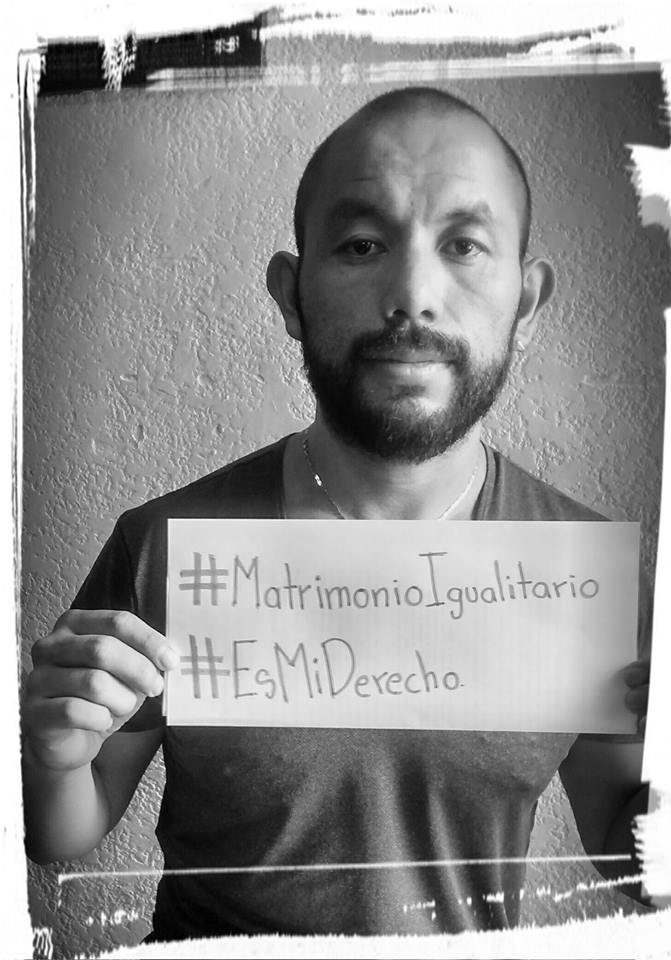 Alex Ali Mendez
“From there, the litigation was built that culminated in the first Supreme Court rulings on this issue on December 5, 2012. The information was primarily disseminated through social media, and various groups and couples from across the country contacted us. We replicated these litigation strategies throughout the country, basically from 2012 to the present,” the lawyer explained. Groups from all over the country approached Méndez, and he began providing remote advice and training. “Most of them don't have lawyers, so the trials were monitored remotely. They would send me their documents; I would send them the application, the injunctions, the appeals. The organizations or the couples were in charge of filing them, because basically the arguments were the same, or are the same for any injunction anywhere in the country; it was practically just a matter of adapting the format, changing the Code, which is different in each state, and that's it.”
Alex Ali Mendez
“From there, the litigation was built that culminated in the first Supreme Court rulings on this issue on December 5, 2012. The information was primarily disseminated through social media, and various groups and couples from across the country contacted us. We replicated these litigation strategies throughout the country, basically from 2012 to the present,” the lawyer explained. Groups from all over the country approached Méndez, and he began providing remote advice and training. “Most of them don't have lawyers, so the trials were monitored remotely. They would send me their documents; I would send them the application, the injunctions, the appeals. The organizations or the couples were in charge of filing them, because basically the arguments were the same, or are the same for any injunction anywhere in the country; it was practically just a matter of adapting the format, changing the Code, which is different in each state, and that's it.”
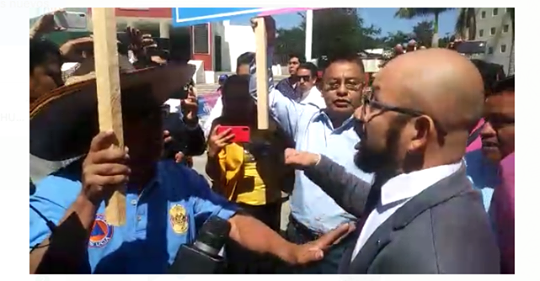 The success of these lawsuits extended throughout the country, also leaving important precedents that led to the approval of legal reforms in other states.
The resistance of the Local Congresses
In northern Mexico, specifically in Nuevo León, marriage is not clearly defined. The Civil Code includes a footnote stating: “*See Resolution issued in Unconstitutionality Action 29/2018, issued by the Full Court of the Supreme Court of Justice of the Nation on February 19, 2019, and published in the Official Gazette No. 30-III on March 11, 2019.” The Supreme Court invalidated the article stating that marriage is “between one man and one woman,” and the one stating that it is “to perpetuate the species.” However, legislators have refused to amend the law, so these marriages have been permitted ever since. In this regard, Mariaurora Mota Bravo, from Gender, Ethics and Sexual Health, and members of the Mexican LGBTTTIQ+ Coalition told Presentes that, at first, legislators have had difficulty understanding that they should comply with the resolution, due to the issue of separation of powers.

Mariaurora Mota Bravo
He explains that this is precisely why the law hasn't been changed in several states; they only remove the restriction but don't make the legal modification because they aren't obligated to. "A little pressure had to be applied there to make it happen, and also, above all, because they didn't know how to proceed. Now people can get married at any Civil Registry office. Even if you go inside, it's interesting to see how the words 'man,' 'woman,' and 'to procreate the species' are crossed out."The pressure from anti-rights groups
For Mota Bravo, one of the most serious problems now is the performance of the “Anti-rights groups” pressuring local congresses. “I see that anti-rights groups are acting on local congresses and pressuring everyone. And The deputies are letting themselves be convinced by them, disregarding the Federal Constitution. I think it's very worrying, and I believe we should already be thinking about new legislation to curb these speeches by anti-rights groups.But the situation is very delicate, very delicate, because it's also a matter of their human rights,” he says.Yucatán, the conservative example
The pressure exerted by conservative groups in state legislatures is clearly visible in Yucatán. In 2009, members of the National Front for the Family, through the National Action Party (PAN) caucus in the Yucatán State Legislature, promoted an explicit ban on same-sex marriage in both the Civil Code and the Family Code. Activist Ricardo Castro explains that for years, no proposal for same-sex marriage was discussed. It wasn't until 2019 that the Collective for the Protection of All Families, along with UNASSE (Unit for Psychological, Sexological, and Educational Care for Personal Growth), began to influence and pressure the State Legislature. This year alone, the proposal has been rejected twice by a majority vote. Legislators have held secret ballots, arguing that their personal safety was at risk, which criminalizes the groups supporting the proposal. Following the defeat in Yucatán, other significant losses have occurred in Sinaloa and Zacatecas, making the road ahead to achieve equal civil rights for LGBTTTIQ+ citizens in Mexico an uphill battle fraught with obstacles.We are present
We are committed to journalism that delves into the territories and conducts thorough investigations, combined with new technologies and narrative formats. We want the protagonists, their stories, and their struggles to be present.
SUPPORT US

FOLLOW US
Related notes


We are present
This and other stories are not usually on the media agenda. Together we can bring them to light.