

I'm on HIV+ treatment, I took a headache pill and almost didn't make it
A few days ago I took a pill for a headache. I didn't know that the drug ergotamine mixed with my antiretroviral medication for HIV creates a severely toxic mixture.

Share

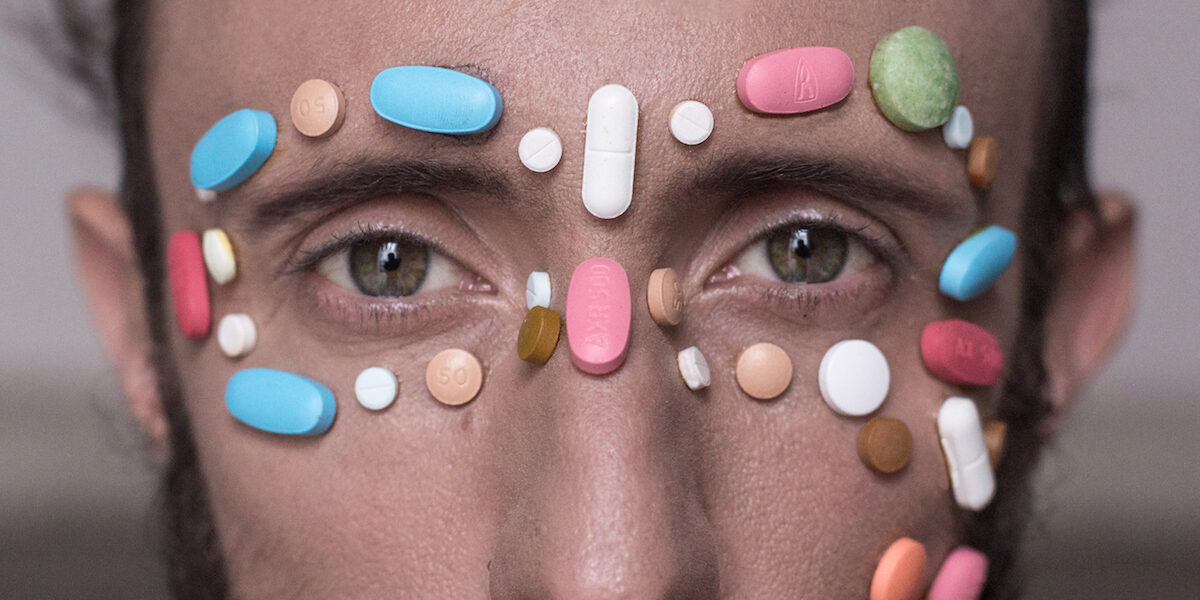
By Lucas Gutiérrez. Photography: Pablo Gómez Samela. A few days ago, I took a headache pill. I didn't know that the drug ergotamine mixed with my antiretroviral medication for HIV creates a severely toxic mixture. Saved by an Argentine public health system in a coma, I now reflect on what happened. For three weeks, I have to stop taking my antiretroviral medication, and I'm worried about what might happen to the virus during these days without that pill to control it. Although my immune system is very strong, I'm terrified of losing my trump card when it comes to romantic and sexual relationships. Which pill saves me, and which one kills me? Chronicle of a Death Averted. * I always imagined an epic death. Something like a movie ending. Kind of like a musical, with drama, a heartbreaking fight scene, LGBT+ flags, a Néstor in heaven like Mufasa. You know… that kind of thing. I never imagined that taking a Migral for a headache could cost me my life. It would have been ridiculous to die like that after so much turmoil, after so much, with so little left to do. No. Ergotamine is a drug found in some medications, many of them for treating migraines. Mixed with some of the antiretrovirals I take daily, it becomes toxic. "But didn't your doctor tell you that?" And yes, most likely he did. But since I don't usually take these things, I forgot. We don't tend to check the interactions of what we take. My bad. Our bad.
[READ ALSO: “HIV won’t kill me, your indifference will”]
And I'm not just talking about medications. Every time I do drugs (legally and not so legally), I have no idea what I'm mixing in my toilet bowl. I should look it up. on interaction websitesBut I don't. To what extent do we consider our health on a daily basis? How do we eat? Do we exercise, get enough rest? Spoiler alert: No. When the tingling in my legs, the vomiting, and the fainting spell on Friday finally overcame my stubborn refusal to go to the doctor, I ended up in the public healthcare system. This system that, even without a Ministry, still manages to survive. And although at first they treated me for a headache, when my friend and fellow HIV-positive activist, Matías Muñoz, found out about my combination of ergotamine and ARV, he rushed me to the infectious diseases ward. What would have happened if things hadn't gone that way? If I hadn't gone to the ER? I don't know, and I don't want to find out. “One pill will get you through the process.” The risks of this combination can range from heart problems to limb amputation. I found out by Googling and talking to doctors“For them to want to admit you to a public hospital where there’s always a shortage of beds, you must have been in really bad shape,” a friend told me. And she was right. I wasn’t admitted in the end, but after seven hours of observation, I went home to return on weekends for checkups. “One pill will do the trick”: that’s the shitty phrase we HIV-positive people have to hear all the time. Well, no. First of all, that pill isn’t always available. Since 2016, there have been shortages, cutbacks, and medication rationing, so the pill isn’t always there. Then, what am I taking? What side effects do I have with this medication? I always tell people who downplay my health to a pill to take an aspirin every day of their lives and tell me how they are in a couple of years. Every time I watch one of the many movies about HIV that revel in showing the deaths of their protagonists, I’m grateful to have these pills so I’m still alive and can continue working toward a cure. But the pill isn't my limit, it's what I need to get to the cure alive. The first medication I took for being HIV-positive worsened my depression. But if I committed suicide, everyone would say, "Well, you know how Lucas was. It was bound to happen that he killed himself." Of course. Nobody was going to investigate what I was putting into my body every night. This second antiretroviral medication regimen affected me less emotionally, but well, now you see that I almost didn't make it because I took a pill for a headache. It's undoubtedly my responsibility for not being more careful. Now, what about the medications we take chronically? What about preventative and everyday communication when we talk about situations like HIV? Almost a year after the Argentine government downgraded the Ministry of Health to a secretariat, I cannot ignore the State's responsibility.
An absent state?
When they say "an absent state," I correct them: it's never truly absent; it's present by omission, by political decision. And we always pay the price. Putting a price on our health always reeks of privatization. But like a weed that never dies, here I am, typing away. And besides proverbs, what kept me alive were the doctors who treated me in the infectious diseases ward at Fernández Hospital in Buenos Aires. The next day, Saturday, I went to the ER for a checkup, and a nurse who heals you with kindness and the few resources available in the healthcare system showed me how to inject myself with anticoagulants. My movie fantasy now transformed me into a Sarah Connor from "Terminator 2"... Exercises we do when we're terrified of needles. Now for three weeks I have to suspend my antiretroviral medication and I'm worried about what might happen to the virus during these days without that pill to control it. A person living with HIV who takes their medication on time can achieve viral suppression. This means that after six months of maintaining undetectability, they cannot transmit the virus during sexual intercourse. I'm likely to lose my undetectability status in the next few days. While my immune system is currently strong, the idea of losing my advantage when it comes to sexual relationships (the polite way of talking about sex) terrifies me. We, the positive bodies, are so stigmatized and punished that we are generally more concerned about what others may think of us than about what the virus may do to our health. Now, with this risk that the virus could resurface, that it could lose the humble form it has when I control it, it makes me think about coming out again. A déjà vu of my days of "I'm HIV+ but if we practice safe sex I won't transmit it to you." Is this so terrible? We've gotten used to hooking up without much preamble. I put on my hookup profile that I'm undetectable and there's no need for much discussion. The two of us (or three or four) who don't even know each other's names, are certainly not going to be interested in a conversation about our serological status. Does being HIV+ but detectable mean becoming a second-class positive identity? Once again, I feel the weight of responsibility for everything that happens during our encounters falling on only one person. Why, if we're going to have sex, won't you use safe practices? Does being HIV+ but detectable mean becoming a second-class positive? No. In any consensual sexual relationship, responsibilities are shared. And once again, I find myself facing the exercise of coming out as a viral being. I don't even know if my undetectable status will be affected these days without medication, but it will be a long time before blood tests confirm it. And here I am again, in a past inhabited with a more hardened skin, facing old ghosts. Not even on the eve of cardiac risk and even finger amputation did things get this negative. It's a good time to play with words, suggesting that maybe now I will become positive, but no. "Seriously, it's not necessary," I tell myself. Just over a week ago, I almost became fodder for memorial events and social media obituaries, and I lost the shield I use to protect myself from the stigma. In a week, I started wondering what would happen if that was my last Friday. In just a few days, everything I am changed. Everything I knew and everything I didn't know was revealed. Everything I am is shaken, forcing me to read myself through different paradigms.Which pill will save me and which one will kill me?
Is my health or what others think of me the urgency? Which pill will save me and which one will kill me? Am I alive if I cease to be desired? For whom do I maintain undetectability? As the pills fall like Tetris pieces in my head, I wonder if I truly survived that Migral. Because clearly, what comes next won't be the same as before that headache. At the end of the day, everything will always be like a movie. This time I'm in The Matrix—the first one, the one we all liked—and Morpheus is holding two pills. And I, a South American Neo, retort and say: “Whichever one I take, I'm always going to lose. I don't want any more pills, I demand the cure.” I ruin the movie, the credits roll, and I stay in the theater waiting for the post-credits scene.We are present
We are committed to journalism that delves into the territories and conducts thorough investigations, combined with new technologies and narrative formats. We want the protagonists, their stories, and their struggles to be present.
SUPPORT US

FOLLOW US
Related notes

We are present
This and other stories are not usually on the media agenda. Together we can bring them to light.