

For the first time, the Inter-American Court of Human Rights addresses police torture of LGBT+ people.
Eleven years later, the institutional violence suffered by a transgender woman is presented before the Inter-American Court of Human Rights.

Share

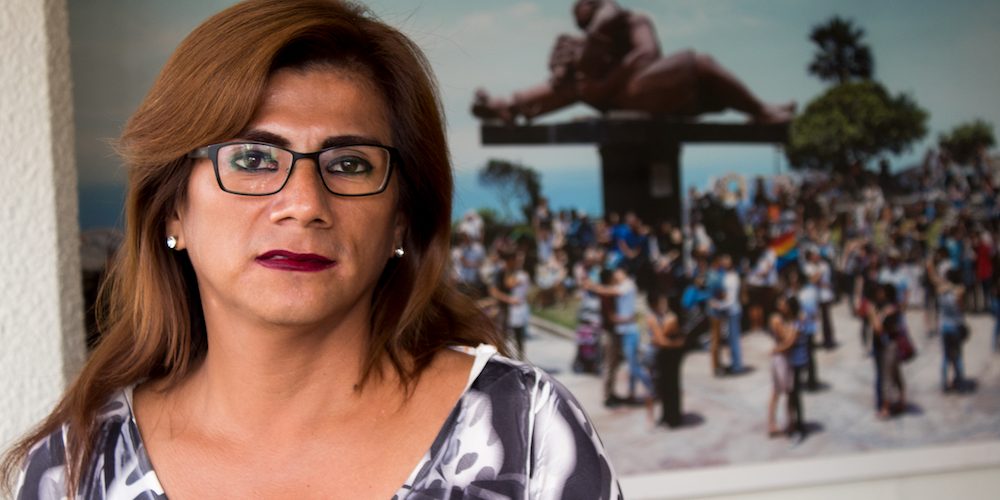
By Vero Ferrari, from Lima. Photo: Promsex. Azul Rojas Marín was beaten, raped, and illegally detained at a police station on February 25, 2008, in the province of Ascope, in the department of La Libertad, northern Peru. Today, August 27, 2019, during the Extraordinary Session of the Inter-American Court of Human Rights being held in Colombia, 11 years after the events, the case of Rojas Marín and another woman v. Peru was presented in a hearing. For the first time, the institutional violence suffered by a transgender woman is being presented before this Court to bear witness to how a State can be complicit in torture that continues to this day.
Facts that are reported
On February 25, 2008, under the pretext of needing her identification, police officer Luis Quispe Cáceres and two of his colleagues forced the victim—who at that time was still gay and had not yet transitioned—into a patrol car and drove to the Casa Grande police station. There, Juan Isaac León Pardo and Dino Horacio Ponce Pardo beat her. Despite the severity of the events and the physical and psychological injuries Azul suffered, her case was dismissed by the Peruvian judiciary in 2009. The treatment Azul received from the police and the judicial system was brutal. With the support of LGBTI rights organizations, her case was admitted by the Inter-American Commission on Human Rights in 2016, with the first hearing taking place on December 1 of that year.READ MORE: #Peru: Police beat and abused him for being gay: he went to the IACHR
In its findings, the IACHR determined that Azul was a victim of physical, psychological, and sexual violence. It also found that she was subjected to particularly vicious attacks due to her sexual orientation, and that the Peruvian State failed to conduct a thorough investigation. Therefore, it recommended full reparations for the victim and that her case be reviewed by the Inter-American Court of Human Rights.READ MORE: [For the first time, violence against LGBT people reaches the Inter-American Court of Human Rights]
The representative of the IACHR, Luis Ernesto Vargas, stated today before the Court that “This is the first case submitted to the jurisdiction of this court concerning the responsibility of a State as a result of physical and psychological violence, including sexual assault, against an LGBT person”.What is the purpose of the Inter-American Court of Human Rights ruling?
- The Court's ruling will serve to establish legal standards for reparations to victims of hate crimes, in order to ensure that they can rebuild their lives, recognizing their identity in a country that still refuses to pass a Gender Identity Law.
- It also serves to ensure that the State acknowledges that it failed to fulfill its duty.
- Fulfilling its function means that the State must provide reparations to Azul Marín by recognizing her identity, punishing her aggressors, ensuring her material survival, and preventing situations of violence against LGBTI people as a whole from happening again.
We are present
We are committed to journalism that delves into the territories and conducts thorough investigations, combined with new technologies and narrative formats. We want the protagonists, their stories, and their struggles to be present.
SUPPORT US

FOLLOW US
Related notes


We are present
This and other stories are not usually on the media agenda. Together we can bring them to light.