

Interview with the lawyer fighting for marriage equality in court
The Supreme Court of Justice of El Salvador has agreed to review a lawsuit challenging the constitutionality of the ban on same-sex marriage. We spoke with Gabriel Gasteazoro, the young activist and lawyer who drafted and filed the document that has everyone talking and that could revolutionize the concept of family…

Share

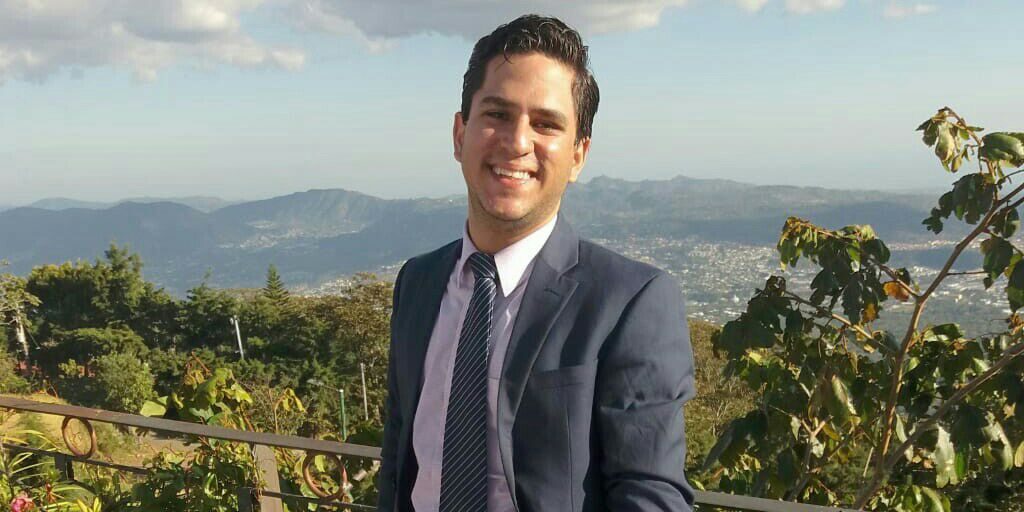
The Supreme Court of Justice of El Salvador has agreed to review a lawsuit challenging the constitutionality of the ban on same-sex marriage. We spoke with Gabriel Gasteazoro, the young activist and lawyer who drafted and filed the document that has everyone talking and that could revolutionize the concept of family in that country. By Franchesca Mata for Marcha * He began the lawsuit very young, in his third year of law school, and it took him two years to complete. Writing it slowly and during his university years helped him incorporate ideas that arose from observing that family law regulations only included heterosexual couples, as did administrative and corporate law, and the government ethics law designed to prevent corruption. In other words, he demonstrated how heteronormativity excludes those whose sexual orientation falls outside of it and who choose to live it, which, in El Salvador, not only implies discrimination and social stigma but also leads to legal insecurity . Gabriel is a Salvadoran lawyer and activist. Her experience has focused on constitutional law with a gender perspective, and from that standpoint she explains: “The Salvadoran Constitution does not define family; it establishes that EVERY person has the right to form their own family. Therefore, it maintains the idea that family is not synonymous with love, nor with the union of two people who procreate. To think that the concept is limited to mother, father, and children leaves out countless families that , in practice, are constituted as such. A family pursues a common goal: love, yes; but also socio-economic goals, and emotional and economic responsibility.”
[Press Release] Court accepts lawsuits challenging the constitutionality of the Family Code regarding same-sex marriage pic.twitter.com/U0wF4bbjtt
—Cnal Room. (@SalaCnalSV) August 9, 2019
"This ruling could revolutionize the concept of family in El Salvador."
That's why she believes that "this ruling could revolutionize the concept of family in El Salvador. Until now, when the term is discussed, it's only in relation to adoption. But now the discussion is about allowing social recognition of other types of families, such as single-parent families, same-sex parent families, and grandparents with grandchildren, and giving them the legal protection they deserve." – Gabriel, explain in more detail the legal protection you're talking about… Imagine if I wanted to take out a loan to start a business. I can't because I need to have a certain income level with my family, but since my partner and I aren't legally a couple, we don't qualify for credit. If I separate from my partner and we acquire assets, how do we divide them? – What happens to the right, the freedom of choice, within the framework of the current prohibition on same-sex marriage? Everyone should have the right to choose; neither the State nor any other person can decide what kind of relationship you want to have. *** In El Salvador, the Family Code states: Art. 11.- Marriage is the legal union of a man and a woman, with the purpose of establishing a full and permanent community of life. Art. 33.- The law shall regulate the personal and property relations of spouses with each other and with their children, establishing reciprocal rights and duties on an equitable basis; and shall create the necessary institutions to guarantee its applicability. It shall also regulate family relations resulting from the stable union of a man and a woman. Art. 90.- The following are causes of absolute nullity of marriage: (…) 3a) When the contracting parties are of the same sex (…). For Gabriel, the Salvadoran family code presents an archaic concept of marriage, a lifelong union, when for him, “marriage is a union by mutual agreement, for a certain time, which can be a lifetime, yes, but that is not the only option; it can be 10 or 15 years, but ultimately it goes as far as they mutually agree,” and he concludes, “Freedom of choice is precisely that: when to begin, when to end, and with whom.”. *** – In 2016 you were already an activist for LGBTQ+ rights; making this demand was a way of using your knowledge to advocate for the community. But back then you weren't a lawyer, you were a student. Now, can "the profession" or holding professional positions coexist with activism in the streets? Yes. I believe that every struggle must begin collectively, not individually; everyone The major changes have come about through the struggles of popular and critical grassroots organizations. – What do you think about the comments on social media, which point out that in El Salvador (one of the most violent countries on the continent) there are much more important things than resolving the issue of prohibiting same-sex marriage? Of course, there are countless more urgent problems: violence against children, refugees, internal displacement, transphobic murders, violence against women; of course, there are more urgent, more sensitive issues; but The struggles are intersectionalAre we going to stop fighting? No. HWe must fight from every trenchI did this because I felt that from this place I could contribute. – So, do you want to get married? ((She takes a breath and, laughing, but with a firm voice, answers)Yes, I do want to get married. I want to have children, I want to adopt. I don't believe in surrogacy because I consider it another form of exploitation of women. I don't know when I want to do it, but ultimately it's about protection, and at some point I'm going to feel the need for that legal protection. But I also have a romanticized idea that I know I need to deconstruct, but I still have it –laughs–. I want to adopt twins, I want them to tease me and call one by the other's name, things like that; I want the possibility of being a family with my partner, just the two of us, but then expanding it, having children, raising them, multiplying our love, becoming more of us. This article was originally published in Marcha , a popular and feminist look at Argentina and the world.]]>Share
We are present
We are committed to journalism that delves into the territories and conducts thorough investigations, combined with new technologies and narrative formats. We want the protagonists, their stories, and their struggles to be present.
SUPPORT US

FOLLOW US
Related notes



We are present
This and other stories are not usually on the media agenda. Together we can bring them to light.