

Trans Dad and Mom: The Story of the Argentine Family That Became a Comic Book
The life of Karen Bruselario and Alexis Taborda, the first Argentine trans man to gestate his daughter, is part of the Revealed Stories Collection of Aguará Editorial Collective.


Share

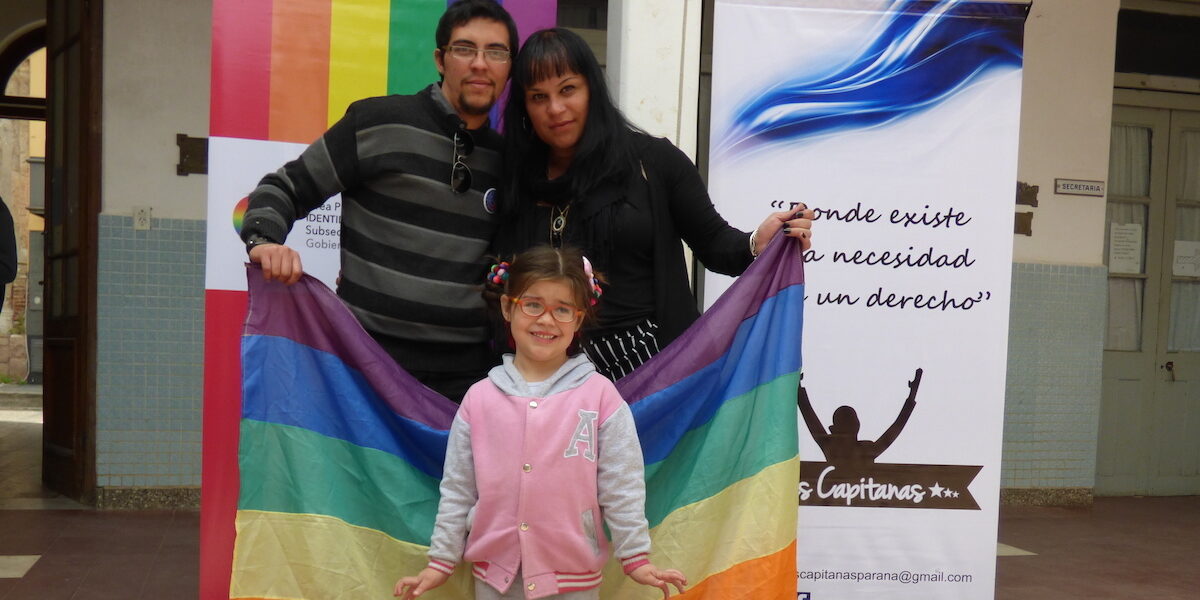
The story of Karen Bruselario and Alexis Taborda, the first trans man in Argentina to carry his daughter to term, is part of the Revealed Histories Collection by Aguará Colectivo Editorial, which was presented at the National Library in Buenos Aires. “Genesis: The Story of Karen and Alexis” is the title of the graphic novel that tells how this couple, a trans woman and a trans man, met, fell in love, and decided to start a family.
Alexis's pregnancy transcended the limits of Victoria, the city in Entre Ríos where they live, and reached international media under the title of the "first pregnant man", as well as their activism in the LGBTIQ+ collective.
“This is the first time a comic book has told the story of a trans family, and of a trans man carrying a pregnancy to term,” Alexis emphasized in an interview with Presentes. Karen added, “We thought it was fantastic that it has an educational aspect and that it teaches through comics. It’s the first time we’ve received this kind of proposal, and this visibility isn’t for us, but for our struggle. Addressing young people with different themes of struggle is fantastic.”
The books are designed to be used in primary and secondary schools, and therefore include teaching strategies for classroom use. “How important it would be for schools to work with this information. The struggle is about educating, supporting, and respecting the perspectives of others, and for those others to respect our perspectives as well,” said Alexis. “It’s very good that our love, our struggle and activism, the social exclusion we face, and our inability to access employment are shared, because it offers a different perspective on us as human beings who have suffered and lived through the experience of lack,” added Karen.
Alexis and Karen
Karen was born and raised in the city of Victoria. As a child, she played with dolls and spent hours in her grandmother's room, which had an antique wardrobe with a large mirror where she felt like a princess. She wore her mother's dresses and shoes. "My childhood was lonely because the games I liked to play weren't considered acceptable by others," she recalled.
From the age of seven, things began to change. By the time she turned 14, she identified as a woman. “I chose the name Karen because my nephews, when they were younger, called me Kar, and my previous name was very similar. So I wanted to make it easier for them to call me,” she revealed to Presentes.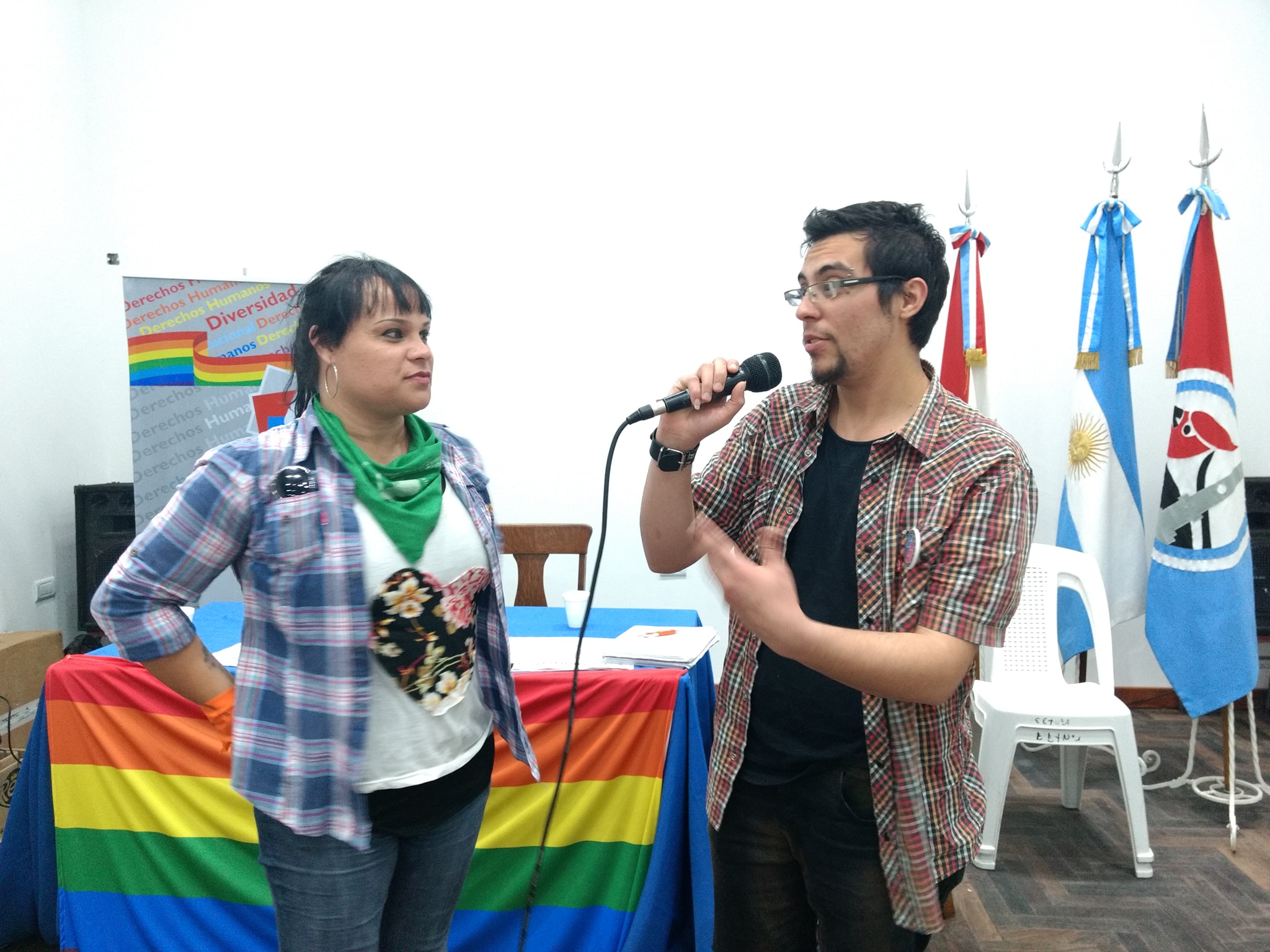 Alexis was born and raised in Rosario, Santa Fe province. She always felt like a boy. “Unfortunately, I was always dressed as a girl, even though I wanted to wake up one day and have a penis,” she told this publication. Her childhood, she says, was good. She spent hours playing ball with the neighborhood kids, going to the arcade, or competing in foosball.
“My family was very Christian. So the bad thing was that they made me wear dresses on Sundays to go to church or that my mom forced me to wear shoes. That was what hurt me the most,” she recalled.
As the years went by, Alexis decided to follow his feelings. “I chose my name because it seemed unisex to me, that I wouldn't be entirely male or entirely female. I always wanted to preserve my biological part, which is female. And when I went to change my ID, I said my name was Alexis.” Karen and Alexis met on May 9, 2012. That day, the National Congress approved the Gender Identity Law, and they had both traveled to participate in the vigil.
Six months passed before their paths crossed again at the Pride March in Rosario, where they had their first encounter. At that time, Alexis was active in the trans group of the Evita Movement, and Karen was involved in the trans community of Rosario. “I arrived wearing a dress representing diversity and carrying a banner that said: Victoria Entre Ríos. He gestured for me to greet him and gave me a quick kiss. But I left. I didn't know what a trans man was, and it scared me. I thought things wouldn't work out between us, but fate intervened, and today we are family,” Karen recounted.
The arrival of Genesis
“One night I was watching a soap opera and Karen told me: the day I have a daughter I'm going to name her Genesis. A month passed and I suggested we have a child. We started trying and on March 24, 2013 we took the first pregnancy test and it came back positive,” Alexis revealed.
“We were beyond happy, though also afraid of how society would receive the news. But it was pure love, and this family was formed with the love the three of us have for each other,” she celebrated. Today, Alexis and Karen, along with their little girl, Genesis, share their life in Entre Ríos, determined to overcome their life of pain and setbacks.
They also share activism within the LGBTQ+ community, serving on the Entre Ríos LGBTQ+ and Diverse Families Commission and as members of the Diversidad Victoria group. Karen is also the secretary of the LGBTIQ+ League of the Provinces. Alexis was a candidate for deputy general secretary on the Violeta y Verde-Ate Entre Ríos list, headed by Nely Fabre, which ran in the union elections on August 7.
Diversity of experiences
“The aguará is the maned wolf that, like our notebooks, roams the Argentine coast. As the legend says, once you have heard its howl, you can never forget it. The decision to call this publishing project Aguará—which in the Guaraní language means great red wolf—stems from the need to define a territorial and cultural identity for our publications.”
This paragraph begins the Aguará Manifesto, which gives meaning to the publishing collective formed by Sabrina Gullino, Beatriz Schiffino, Jimena Esborraz, Alfredo Hoffman, and Matías Gómez. “We met because we were fellow activists in HIJOS Rosario and Paraná, and because of our work in teaching, communication, and illustration,” explained Sabrina Gullino. Sabrina is the writer and illustrator of Génesis, speaking at the comics' presentation at the Mariano Moreno National Library.
Aguará is a publishing collective that produces comics aimed at highlighting the struggle for human rights, identity, LGBTQ+ culture, and diversity. Since its inception on June 3, 2018, and up to the time of writing, the Revealed Stories Collection consists of five titles: My Name is Ana; Underlying Fight; Isabel, Always Standing; We All Knew; and Genesis.
“These comics were conceived as a response. And also as a challenge to find an artistic and pedagogical way to address the debate surrounding meaning,” Sabrina explained.
“Together, we see comics as a pedagogical tool to transcend the issue of popular activism and activism. To go a little further and engage in the debate over meaning within the classroom. In their structure, the Aguará comics are designed to help teachers work with issues of human rights violations,” he added.
Beatriz Schiffino, a teacher and screenwriter for "My Name is Ana," mentioned: "The stories are marginalized, and this is something that characterizes the project. Marginalized in the sense of being on the fringes of citizenship." "Our production includes themes of Comprehensive Sexuality Education and gender, but also human rights violations in general, which is why it's so important to tell stories that reflect these struggles," Schiffino elaborated.
The presentation in Buenos Aires, organized by Judith Gociol, advisor to the publishing group, brought together social communicators, comic artists, political scientists, teachers, researchers, documentary filmmakers, humor collectives, filmmakers, screenwriters, and members of digital platforms that address issues from a gender perspective. Also present were representatives from feminist education websites, independent publishers, a producer of popular content, and the Correpi organization. The need to "build connections" and to "think of art as a political tool" were among the ideas raised by those in attendance.
We are present
We are committed to journalism that delves into the territories and conducts thorough investigations, combined with new technologies and narrative formats. We want the protagonists, their stories, and their struggles to be present.
SUPPORT US

FOLLOW US
Related notes

We are present
This and other stories are not usually on the media agenda. Together we can bring them to light.