

HIV: In addition to medication shortages, there was police and media violence
After 1 p.m., a police cordon violently pushed us with their shields. Later, the media spread misinformation. The violence against people living with HIV continues, #NoMoreTime

Share

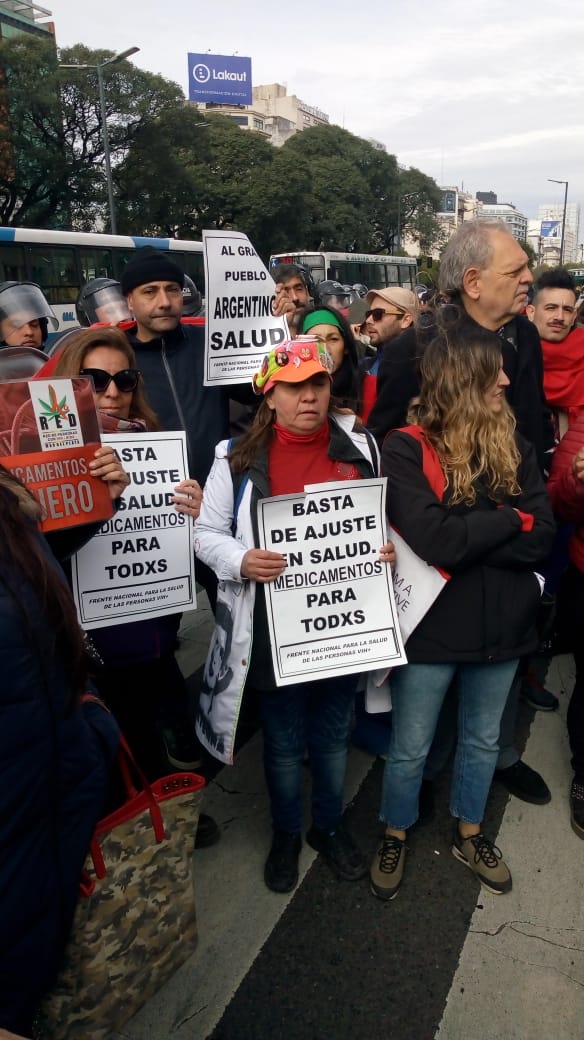
By Lucas Gutiérrez. Yesterday, in front of the former Ministry of Health, people living with HIV and civil society organizations mobilized to denounce shortages of medication and public policies. After 1 p.m., a police cordon violently pushed us back with their shields. Later, the media spread misinformation. The violence against people living with HIV continues, #NoMoreTime. The signs told the story of what we are experiencing: there is no medication. While reports of shortages and rationing of antiretroviral medication for treatment are being repeated in several hospitals across the country, people living with HIV blocked 9 de Julio Avenue demanding that the Secretary of Health, Alfredo Rubinstein, grant a meeting.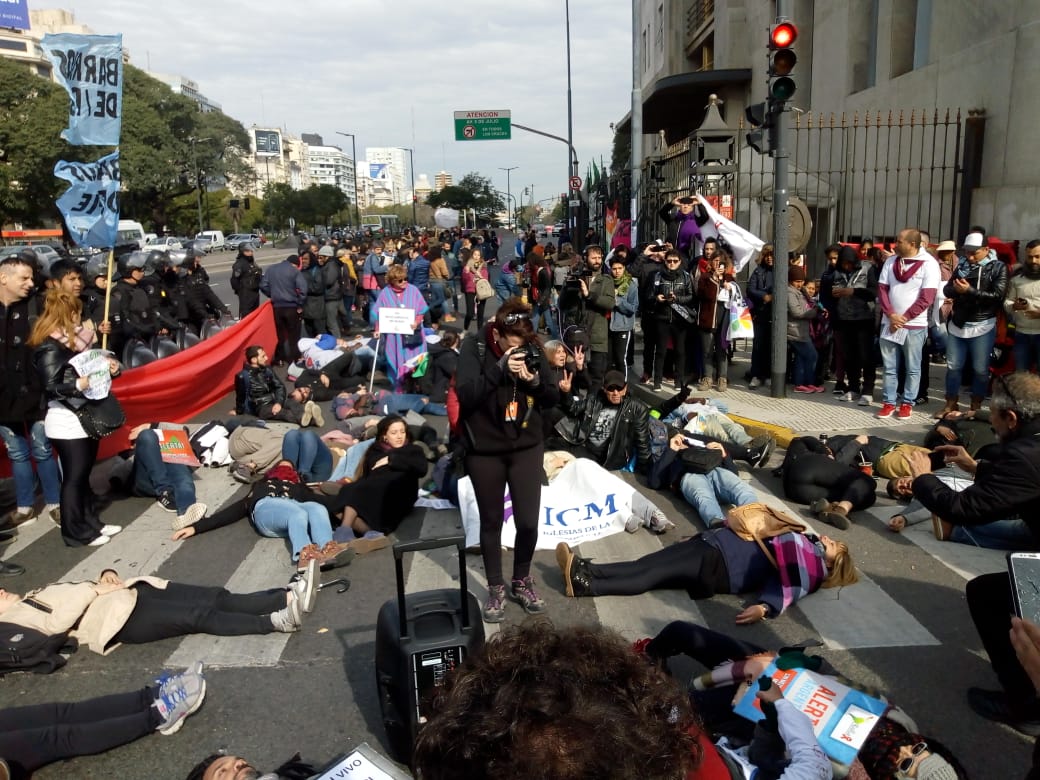
[READ ALSO: HIV medication shortages reported: “It’s a critical situation”]
According to the police, their intention was to force us to clear a lane of this avenue. Separated by a giant red ribbon—an enduring symbol of the fight against HIV/AIDS—we were divided: on one side, those of us demanding our right to healthcare, and on the other, the police. They began to push us violently with their enormous shields. More than 50 police officers—equal to the number of protesters—began to strike their shields to force their way through.We're fed up. Austerity is state policy. And the response is more police on the streets... #AusterityInHealthcareKills #NoMoreTime #MedicineShortages pic.twitter.com/B7ZvgOO3SP
— GEP Foundation (@fundacion_gep) August 8, 2019
With its focus solely on traffic and the innocuous and delegitimizing category of "tension" (a poetic figure at the service of the services), for the first time since 2015 a "major" media outlet mentions the lack of HIV medication. https://t.co/PaHqvpoN5t
While the microphone was open, an unidentified police officer—his name covered—told activist María Sánchez, “If you’re sick, go home.” As she wept with helplessness, holding her expired medication, the officer laughed along with another officer, whose vest didn’t even have his name on it. “The woman seems upset,” they said.This is how unidentified police officers pushed us and covered their faces. They also verbally harassed us with shouts: pic.twitter.com/dneDJ8vR4A
— Lucas Gutiérrez (@LucasFauno) August 9, 2019
[READ ALSO: “HIV won’t kill me, your indifference will”]
“Luckily, it didn’t escalate,” we thought. What does “escalate” even mean? That they’ll spray us with tear gas? That they’ll beat us? The fact that they hit us with shields and verbally harassed us is already too much. It’s not a minor incident at all. Six police trucks were waiting half a block from the Secretariat. Why? I don’t want to know. This is the fourth time that people living with HIV have protested since 2016 due to a lack of medication. And the police presence has increased each time. Considering what Fundación Grupo Efecto Positivo has reported regarding not only the current shortages but also the lack of planning in purchasing, what will happen the next time we march?The media perpetuating violence towards people living with HIV
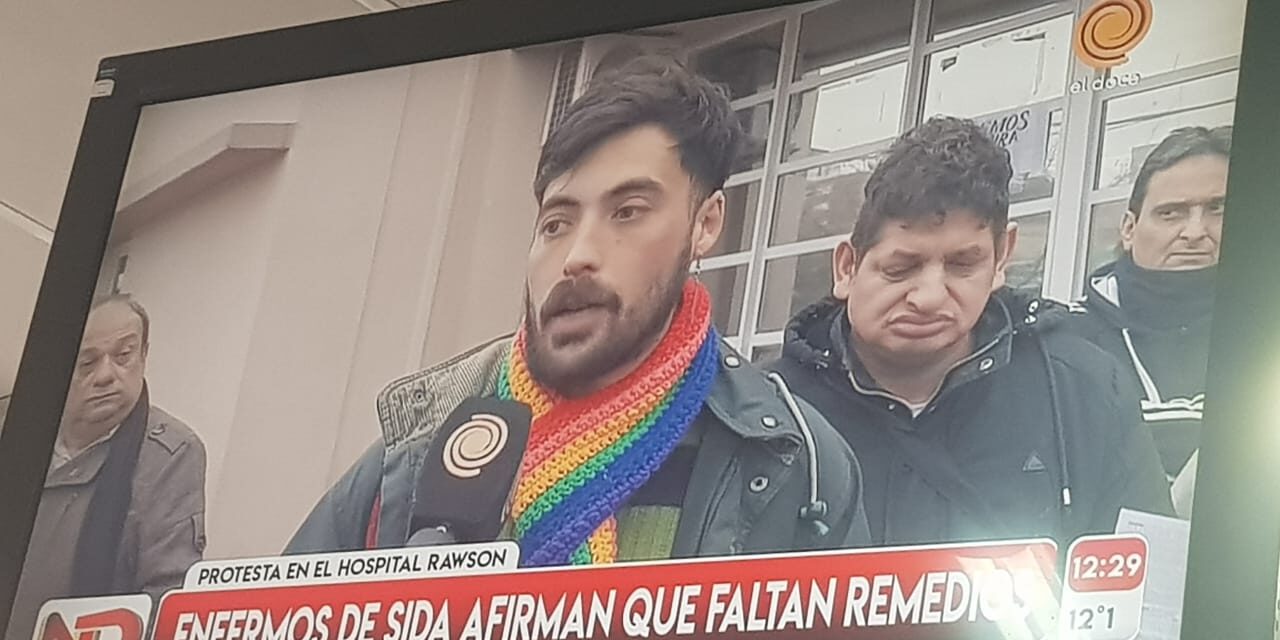
“AIDS patients claim there is a shortage of medication,” reads the headline on Channel 12 in Córdoba. NO, CHANNEL 12. NO. We are not sick, we are people living with a virus, in this case, HIV. HIV and AIDS are not the same thing. And even if we were living with AIDS, this is not the way to headline it. This is stigma and prejudice. This is violence. TN reported that the protesters were “face to face” with the police. No, TN, after pushing and hitting us, the police covered their faces with their shields. We were “face to shield” and “face to helmet.” The yellow, very yellow, headlines on TN didn't dare mention us. With the same violence that Channel 12 in Córdoba used to talk about AIDS, TN silenced our HIV, our demands. We didn't march to the Ministry of Social Development, we marched to the former Ministry of Health, now a downsized Secretariat. They talk about “pushing” when what was happening was violence. And of course, the priority: “They’re opening one lane of 9 de Julio southbound.” Police and mainstream media violence is compounded by the violence the healthcare system inflicts on people living with HIV. The National Directorate of AIDS and STIs issued a statement speaking of “alleged shortages,” denying the complaints from hospitals and people living with HIV. Secretary Rubinstein called this a “campaign issue.” Well, Mr. Rubinstein, of course it is, because our health is a political issue. The shortages are real. The deterioration of our health and our deaths are real too.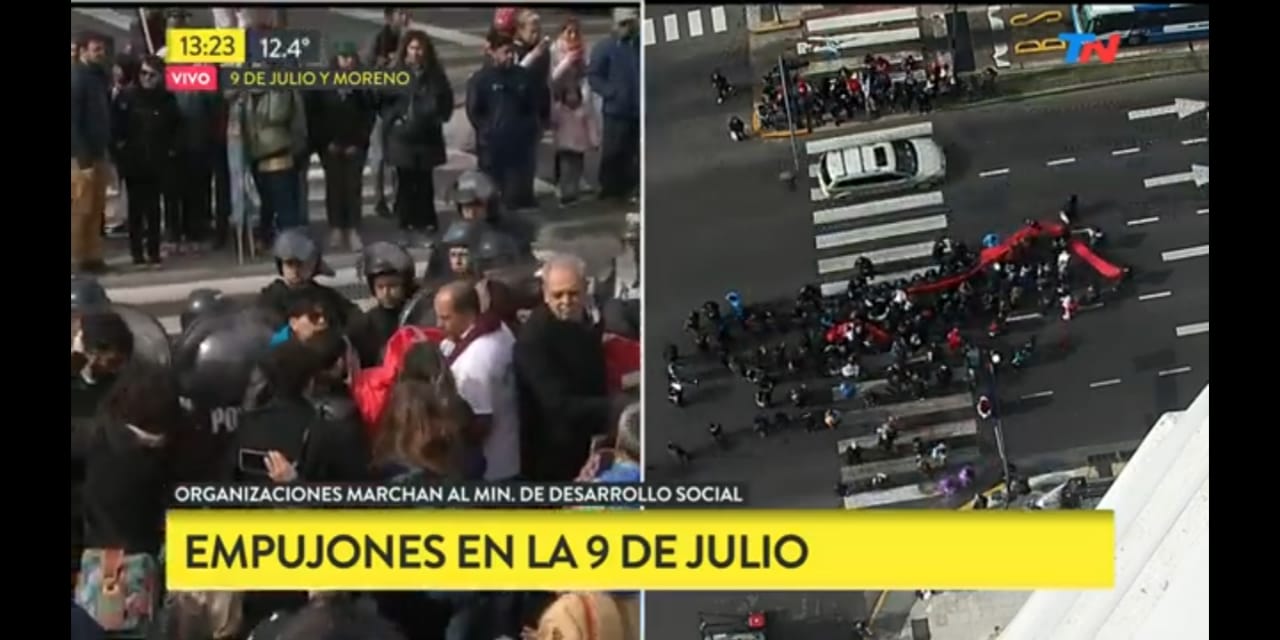 Yesterday, protests took place across the country. In Buenos Aires, the National Front for Health for People Living with HIV+—a coalition of over 60 organizations—demonstrated. In Rosario, the Mesa Positiva and Vox groups, among others, protested in front of the Municipal AIDS Program (Promusida). There were also demonstrations in San Luis, Córdoba, and Mendoza. These protests consistently highlighted the ongoing shortages of medication and the lack of comprehensive health policies that extend beyond the current situation.
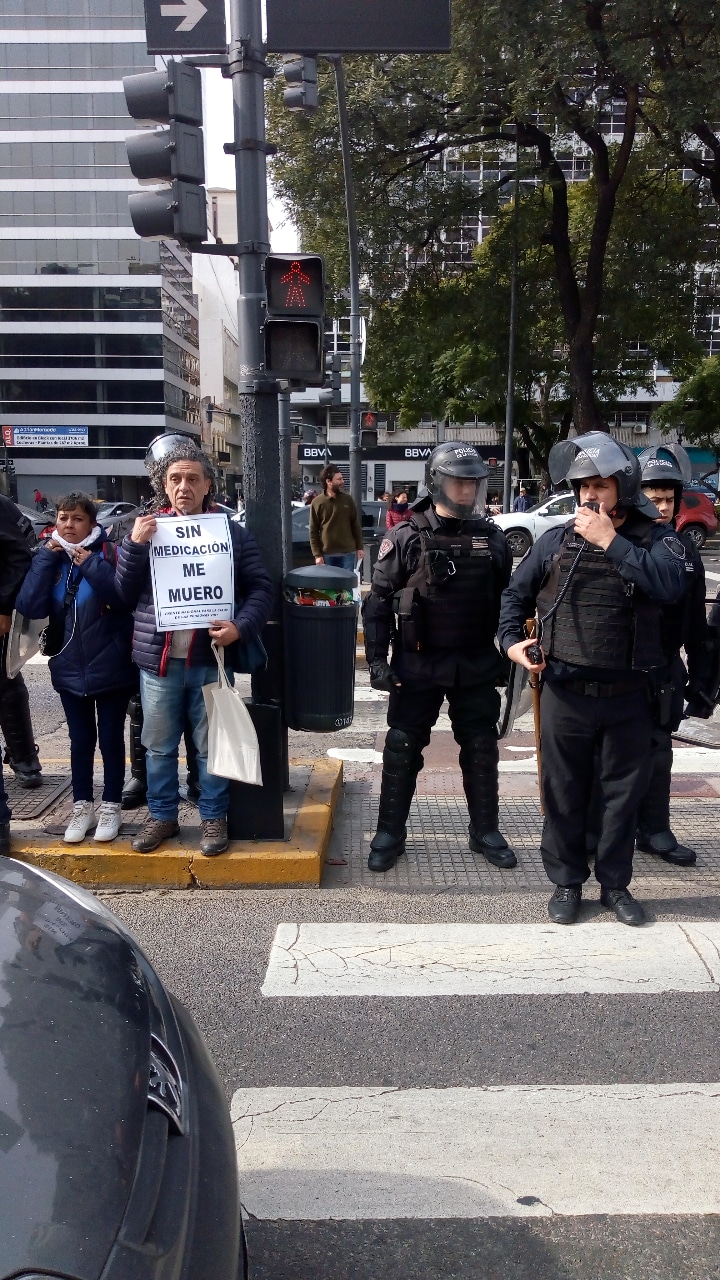 In a context where we denounce not only the lack of medication but also the lack of reagents to measure our viral load. While telegrams continue to arrive threatening to suspend non-contributory pensions. In a landscape where signs in hospital pharmacies list the shortages that the government later denies. While the mainstream media renders our existence and survival invisible and violates them. In the midst of all this, the police hit us with their shields. With their defenses against our defenses, weakened by the virus, and in this case, I'm not just talking about HIV. And I think about all this standing next to one of those new police booths that rises above our heads, and I can only think of Foucault and his panopticon. It sees everything. It makes everything invisible.
We are present
We are committed to journalism that delves into the territories and conducts thorough investigations, combined with new technologies and narrative formats. We want the protagonists, their stories, and their struggles to be present.
SUPPORT US

FOLLOW US
Related notes

We are present
This and other stories are not usually on the media agenda. Together we can bring them to light.