

Mexico: A transgender teenager obtained a new birth certificate
On July 23, Luis became the first teenager in Mexico City to obtain a new birth certificate through an administrative procedure at the Civil Registry.

Share

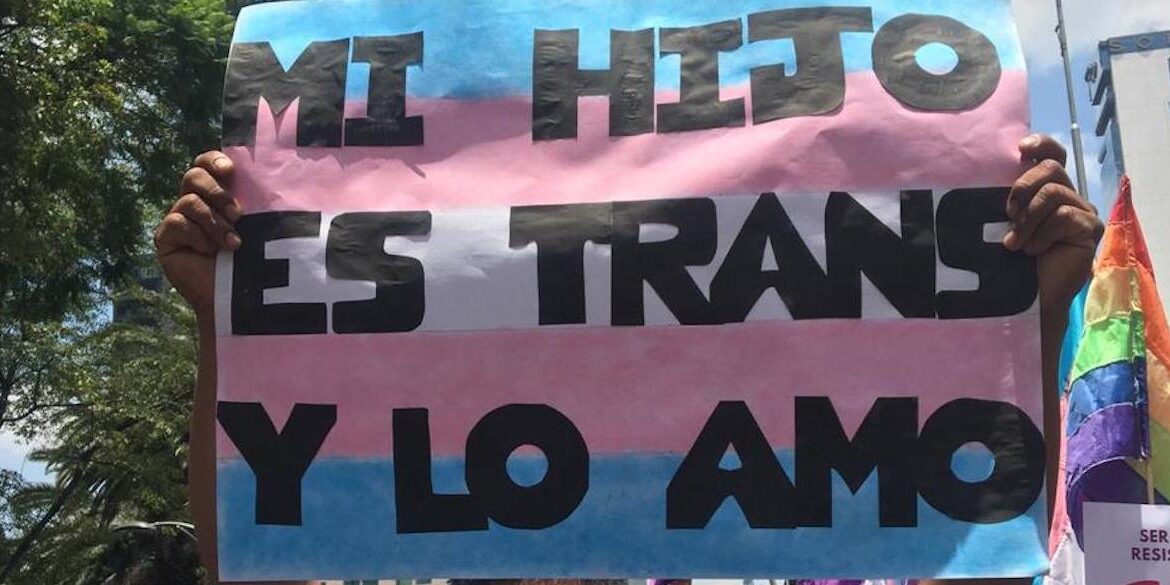
By Milena Pafundi. Luis is a 15-year-old Mexican trans boy. He likes math, he likes to write, and he's also the singer in his school band. On July 23, he became the first teenager in Mexico City to obtain a new birth certificate through an administrative process at the Civil Registry. He fought the legal battle alongside his mother, Tania Morales, a lawyer, activist, and president of the Association for Transgender Children and co-founder of Trans Families. They filed an injunction, which granted the protection of the Federal Court so that a teenager could have this original document reflecting his self-perceived gender and chosen name.
[READ ALSO: An interview podcast made by and for trans people from Mexico]
Luis knew he was trans when he read about his feelings in a book Tania gave him after he told her he liked girls. He was 13 years old. “I discovered that it already had a name, a way to describe it. I could finally tell him how I felt. And that made it easier,” he tells Presentes in an interview alongside his mother. “He came home with the book and said, ‘This is it.’ I knew absolutely nothing about the letter T. So I couldn’t realize that his whole life he had expressed his gender identity as male and that in many ways he explained to me that he was a man; it’s just that I didn’t understand because I didn’t even know the difference between gender, sex, those things. After he made it clear, I started to study, and the truth is, the transition was quite quick. Luis was very adamant that he wanted everyone to call him that, right away,” Tania adds. It was from that point on that Tania decided to create the civil association and specialize in defending the rights of trans children and adolescents in Mexico. She is currently a member of the Women’s Parliament of Mexico City.-How was the reception at the school?
L– I stayed at the same school because it was where I wanted to continue studying. The process was easy, compared to other experiences. We went to the principals, explained our situation, said, “This is what’s happening, we need these things, we need to be called by my name, to be allowed to use the boys’ restroom, etc.” Even though there were no laws to support that. The school was supportive. T– From that point we decided to found the Civil Association with the intention of creating ua protocol that could be implemented more than just in schoolsIn the Mexican education system. For those who don't know, this is a right. We haven't achieved it yet, but we do work with several schools because we personally assist families and visit the schools, although it hasn't been institutionalized.– What are the obstacles for children and adolescents when changing their documents?
TThere's a huge difference in how people over 18 and those under 18 are treated when it comes to gender identity. In Mexico City, and in six other states, there's an administrative process for adults to correct a birth certificate through the civil registry. The current constitution of Mexico City is the first state constitution in the country to recognize gender identity. But for minors in Mexico City, it's through a family court case. It's as if, instead of being self-identification or self-determination, it has to go through a process so someone else can choose. So it's before a family court judge. There's a probationary period where a psychiatric evaluation is required, along with a clinical file from a gender therapist who has conducted a lengthy treatment process. Witnesses are called, and there are even cases where the entire family has been ordered to undergo psychiatric evaluations. This is a pathologizing treatment, isn't it? Then the person is taken before the Public Prosecutor's Office, and there's yet another interrogation, until the judge makes a decision. L– The easiest thing would be to go to court. But going to court means accepting that someone else can tell you who you are. And that wasn't something either of us was going to accept. Only I could say who I am, and the idea of being treated like a patient, just to be given papers, as if it were a cure for what I have, was unacceptable.– What was your legal strategy?
T– We pursued a two-pronged strategy. The first was filing an injunction against the Civil Registry (which rejected the request) with the intention of reaching the Supreme Court of Justice so that it would serve as a precedent for other cases. The injunction was filed in December of last year, and by April, we had a positive response from the District Court, which was very satisfying. The second strategy was legislative. This was in January of this year. I applied to the Women's Parliament of Mexico City with the intention of introducing this very specific reform initiative to the Civil Code. I joined the Parliament for the citizen participation process, so that this would arise from a social need and not from contact with a political party. The very positive outcome was that the collegiate court ruling now specifies that the Civil Registry must obtain informed consent directly from Luis and not through his parents. This was a major step forward. Since we didn't reach the Supreme Court, our option is to make the injunction public. We are exploring strategies to apply this same approach in two other states: Nayarit and Michoacán. L– I asked for it. I filled out all the forms. And that's new because it's always the adults who do it. It's a way of asserting that someone else has to speak for you and someone else has to say who you are. I think it was very good because it's leaving something for others.[READ ALSO: A home for LGBT+ seniors: “We no longer want to be invisible”]
“I haven’t ruled out the option of being treated any other way.”
Luis and his mother, Tania, explain that in addition to laws, it is essential to have more information and education about gender in schools and public spaces. “How can we ask children to explain themselves if they never have a real-life example? You go to school and there are no visible lesbian or gay teachers. There are no trans teachers. And if a child doesn't have a role model to say, 'I am,' or 'I perceive myself as this person,' it's difficult,” says Tania. LI haven't ruled out the possibility of being treated any other way. I am Luis, and my friends are still my friends. But there are debts to be paid, and giving a little more, leaving something that can help others, I think that's important. Because if you feel different and you see that there are no other options, where are you? It's like you're not seen. Like we don't have a voice. That's why it's so important not only to advocate for the rights of trans people but also for LGBT people to be active in other causes, like environmental ones. If you can and have the opportunity to do so, it's like a moral obligation. https://issuu.com/infancias.transgenero/docs/demanda_amparo_versi_n_p_blicaWe are present
We are committed to journalism that delves into the territories and conducts thorough investigations, combined with new technologies and narrative formats. We want the protagonists, their stories, and their struggles to be present.
SUPPORT US

FOLLOW US
Related notes
We are present
This and other stories are not usually on the media agenda. Together we can bring them to light.