

For the first time, a transfemicide case goes to trial in Paraguay.
The oral and public trial of Blas Enrique Amarilla for the murder of Romina Vargas Florentín, a 28-year-old trans woman, will take place on Friday, August 9, at the Palace of Justice in the city of Luque at 8:30 a.m.

Share

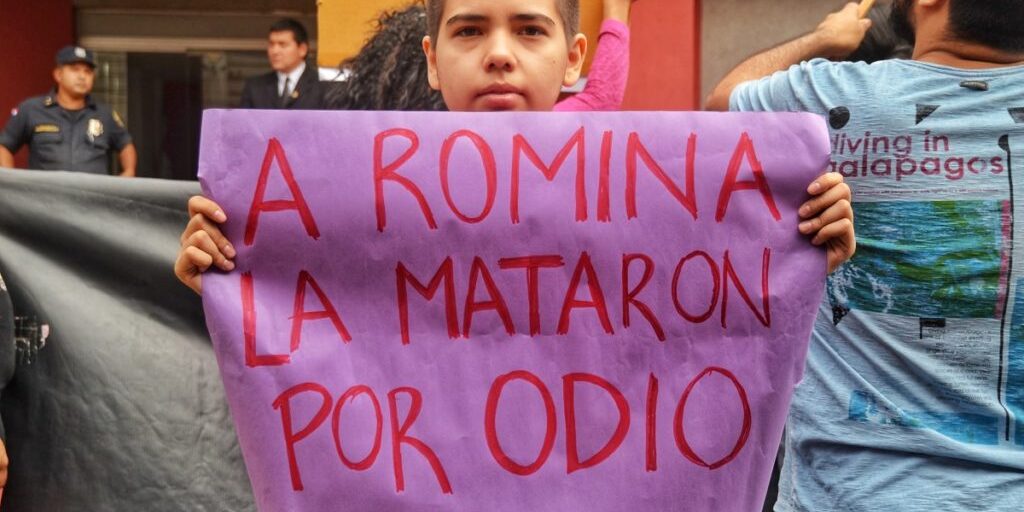
By Juliana Quintana Photo: Jess Insfrán The public trial of Blas Enrique Amarilla for the murder of Romina Vargas Florentín, a 28-year-old trans woman, will take place on Friday, August 9, at the Palace of Justice in the city of Luque at 8:30 a.m. It will be the first time the Sentencing Court has tried a case of transfemicide. If Amarilla is convicted, the case will represent a historic milestone for the trans community. This trial was already postponed once in February of this year. Romina Vargas was murdered on October 16, 2017, in the city of San Lorenzo, Greater Asunción. Expelled from the job market because of her gender identity, Romina turned to sex work. On Sunday, around 2:00 p.m., she went out to buy lunch at the corner store in the neighborhood where she lived with her partner, Maida Bordón. Romina stopped for a moment to read a message on her cell phone when a man approached her and began stabbing her in the chest. When he arrived at the Calle'i Maternal and Child Hospital, the doctors confirmed that he had died.
[READ ALSO: March for the transfemicide of Romina Vargas: “We are not all here, 59 are missing”]
The man was Blas Enrique Amarilla, 21, known as "the transvestite knife-wielder." He was the one who, on September 26, stabbed Maida in the shoulder and chest. He was also the one who tried to stab Yren Rotela on the night of September 16 as she left a hair salon, and who slashed Sheila Aguayo's neck, face, and arms on September 29 of the same year.[READ ALSO: Violence against trans people has increased in Paraguay: the police are the main threat]
When the police arrived, Amarilla still had the bloody knife in his hand and Romina was lying wounded on the ground. The perpetrator confessed to the local press, laughingHe confessed to the murder and said he would do it again because of his “hatred of transvestites.” He tried to justify himself by saying that trans people in the area rob the residents. “In the morning they disguise themselves and act like thieves, robbing everyone.” According to psychological reports, Amarilla was aware of what he was doing when he attacked Romina. He clearly stated that his goal was “to eliminate all the faggots.” “The killer’s defense claims he suffers from mental disorders. We want the maximum sentence and increased security measures because he is a danger. He hates us and murders us because of it. It’s very clear that he doesn’t attack other people; he only attacks and declares his hatred for trans people. Even while in prison, he attacked other trans women who were also incarcerated. There are many of us who are victims of this killer,” wrote Yren Rotela, a trans rights activist, on her Facebook page. The police report only includes the victim's name as it appears on their identification; it does not mention the circumstances of the incident. Ana Girala, the prosecutor in the case, charged Amarilla with intentional homicide. According to the investigation, there is sufficient evidence against Amarilla. The hearing will take place in the oral trial courtroom of the Judicial Branch in the city of Luque. The presiding judge is Julio César López, who, along with two other magistrates, will analyze all the evidence contained in the court file and the prosecutor's case file. The case of Romina Vargas became the first murder of a trans woman to go to trial in Paraguayan history. Until then, the prosecutor's office did not keep records of such cases. Trans women themselves must investigate their community and tell their stories firsthand.Transfemicide Registry
Eighteen years ago, Yren began writing down the names of murdered trans people. But the absence of a gender identity law prevents these cases from being investigated because the chosen names of the trans community are not recognized by the state. In the following ten years, remembering names became a task for trans organizations across the country. According to TransgressorsThe report, part of a series of publications by the media outlet El Surtidor, revealed that the inevitable fate of 98% of trans women in the country was sex work. The list of names that Yren began became a report in 2013 and was titled Forgotten even in deathThe work contains all the cases that the trans community, together with a team of researchers, were able to confirm from interviews and media reports since 1989. Although it was approved in 2016 Comprehensive Protection Law for Women against all types of violence (5.777)The law excludes transgender people from accessing this protection after legislators removed the word "gender" from the entire text. This is why killing them does not count as transfemicide in Paraguay. The Prosecutor's Office accuses Blas Amarilla of killing Romina Vargas. They are seeking the maximum sentence, but the attempted murders of Maida, Sheila, and Yren are not included in the case.[READ ALSO: Paraguay: They tried to murder a trans woman with metal rods]
With Romina's death, the number of murders of trans people in Paraguay since the end of Alfredo Stroessner's dictatorship in 1989 has reached 61. Although most of these cases have not been solved, trans activists believe that Romina's murder could become the first transfeminicide in Paraguay in which a conviction is handed down and enforced. “This sets a major precedent and marks a turning point. It is the first case to reach this stage among the more than 60 hate crime cases in Paraguay. We want justice, justice for Romina Vargas, justice for all,” Yren stated.]]>We are present
We are committed to journalism that delves into the territories and conducts thorough investigations, combined with new technologies and narrative formats. We want the protagonists, their stories, and their struggles to be present.
SUPPORT US

FOLLOW US
Related notes
We are present
This and other stories are not usually on the media agenda. Together we can bring them to light.