

"There will only be justice when the State guarantees living conditions for transvestites and trans people."
Following the murder of La Loba, trans activist Keili González writes about the responsibilities of the State. "When militancy and activism are selective"

Share

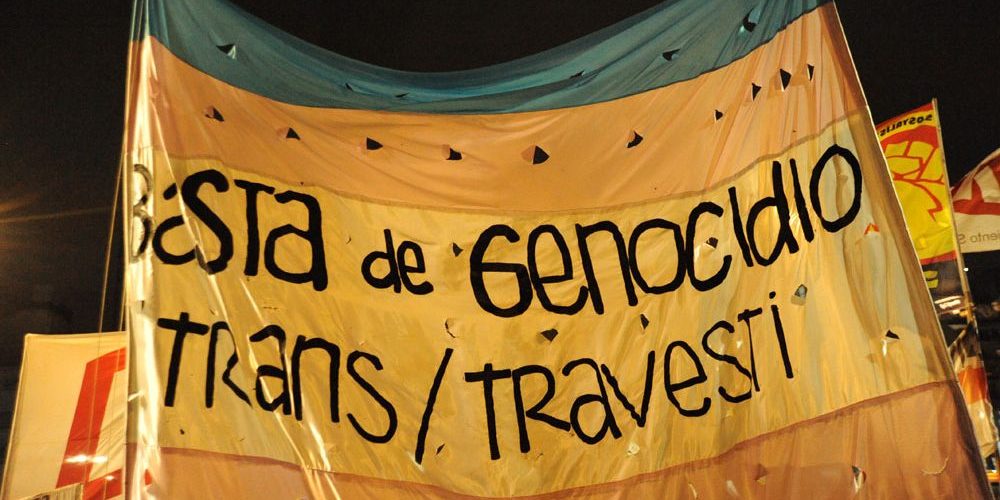
By Keili González*, from Nogoyá, Entre Ríos. The recent transphobic murder of Lucía Torres Mansilla “La Loba,” along with the death of Jésica Benavidez “La Nicki” in early 2019 in Paraná, Entre Ríos, has once again deeply wounded the trans and travesti community of the province. It reminded us of the historical neglect of our rights. Many of our lives have been stolen, disciplined, raped, and beaten by a world designed for only a few.

La Loba, murdered in July 2019 in Paraná.
"When militancy and activism are selective"
The deaths of our comrades made explicit, once again, the living conditions of the trans community and the absence of the State. Extreme poverty, vulnerability, loneliness, the marks of abuse and systematic violence demonstrate the situation of abandonment and blatant neglect, as we wait for death to claim us.What did this absence leave us with?
The organizations that fight for human rights, militants and activists did not have the capacity to unify criteria in the cause to mobilize collectively in relation to the responsibility that the Provincial Area of Gender Identity and Sexual Diversity Policies has, as well as the Undersecretariat of Human Rights of the government of Entre Ríos regarding the lack of implementation of public policies that make life easier for transvestites and trans people.Can we march with those who have non-delegable responsibilities?
Following the murder of La Loba, a trans woman, two demonstrations took place in the capital of Entre Ríos province. The first was on Monday, July 15th, and included protests at government offices and the courthouse. The second march was on Wednesday, July 17th, when officials from Gustavo Bordet's administration joined the demonstration, focusing their protest solely on the courthouse. After the murders, we frequently heard officials say they were "working on the case." Personally, I believe the government must reverse its priorities: its primary objective cannot be ensuring the proper handling of violent situations, but rather developing policies to prevent them. Justice will only be served when the State guarantees our living conditions and not by accompanying our deaths to redeem guilt.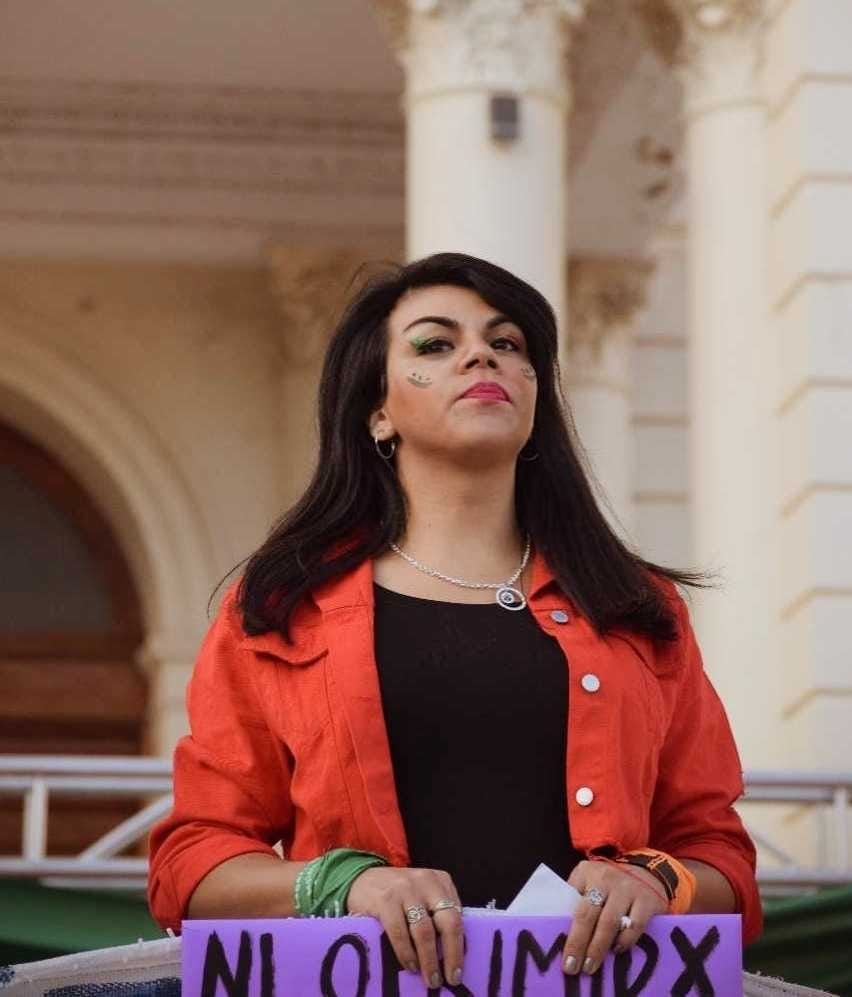
Why are those of us who refuse to hide complicity under the rug labeled as enemies?
At Wednesday's demonstration, along with other comrades, we embraced mobilization as a policy of resistance, convinced that our demands must be directed at all state agencies that exploit and value our identities only after death, and that co-opt our struggles in order to appropriate them, systematically applying welfare policies to the trans and travesti community without any real will to address our problems in depth. Those of us who point out and criticize these actions are excluded from any process of developing comprehensive policies that would allow us to propose a different vision with real possibilities for our community. I don't intend to lecture on how and in what way to be a militant because I don't have a top-down view, but I do want to take the risk of thinking about what other ways we can do it, knowing that when we activate with others we want to feel things so powerful that they teach us new possibilities of living.
Transfeminism is a political stance that brings us closer to different realities, to consensus, and to making all struggles visible. Adopting silence and inaction, prioritizing individualistic perspectives that shift the focus away from the cause, denies transvestites and trans people the possibility of living freely in a system that oppresses, categorizes, controls, and defines them; and reinforces the conditions of abandonment and the web of everyday violence that the State allows through its inaction, evading responsibility. We have taken to the streets, and we will continue to do so, to shout out our fear, to break down borders, to parade our rage, our pain, and our powerlessness. We came out and will continue to come out so that trans women and trans people can have livable lives, free from violence, and build ourselves according to our own standards.Because we want to change this way of doing politics and write a different story, I I don't believe in inclusive speeches that silence us.Those of us who are part of this struggle—and those who embrace it as their own—will have the enormous task of placing our problems on the emotional agenda of this society in order to make visible the structural violence that impacts our bodies. Because it is not only the lack of access to and stability in employment, education, healthcare, and housing that places us in subhuman conditions, in neglect and secrecy, but also the cultural precepts for which the State is responsible.
I don't intend to lecture on how and in what way to be a militant because I don't have a top-down view, but I do want to take the risk of thinking about what other ways we can do it, knowing that when we activate with others we want to feel things so powerful that they teach us new possibilities of living.
Transfeminism is a political stance that brings us closer to different realities, to consensus, and to making all struggles visible. Adopting silence and inaction, prioritizing individualistic perspectives that shift the focus away from the cause, denies transvestites and trans people the possibility of living freely in a system that oppresses, categorizes, controls, and defines them; and reinforces the conditions of abandonment and the web of everyday violence that the State allows through its inaction, evading responsibility. We have taken to the streets, and we will continue to do so, to shout out our fear, to break down borders, to parade our rage, our pain, and our powerlessness. We came out and will continue to come out so that trans women and trans people can have livable lives, free from violence, and build ourselves according to our own standards.Because we want to change this way of doing politics and write a different story, I I don't believe in inclusive speeches that silence us.Those of us who are part of this struggle—and those who embrace it as their own—will have the enormous task of placing our problems on the emotional agenda of this society in order to make visible the structural violence that impacts our bodies. Because it is not only the lack of access to and stability in employment, education, healthcare, and housing that places us in subhuman conditions, in neglect and secrecy, but also the cultural precepts for which the State is responsible.
What does it mean to empathize and be sensitive?
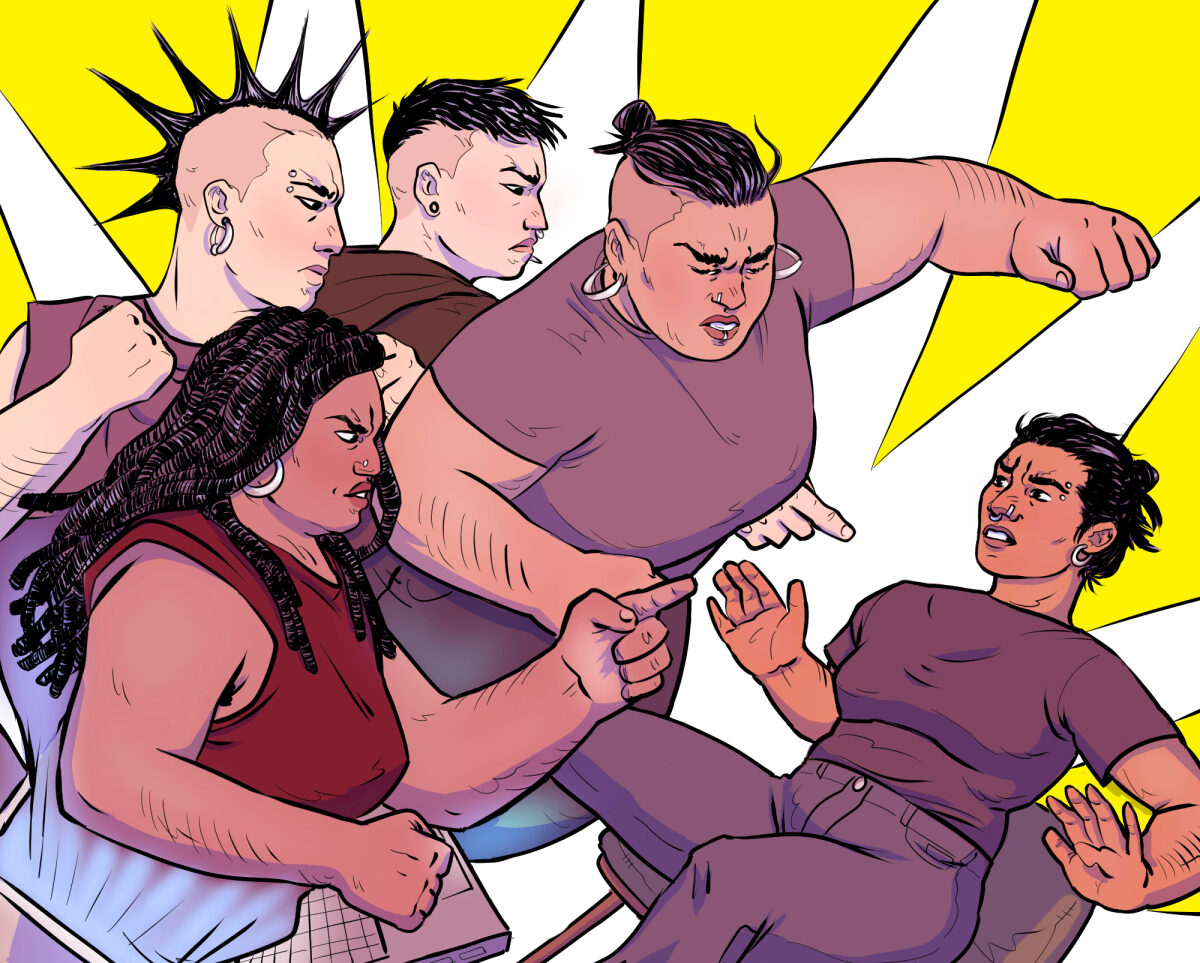
Facts are not only explained by what they represent or signify, but also by how they function. If we only focus on the beautiful words proclaimed and We don't discuss why speeches and policies don't materialize, what happens to us because of that, and what risks we run.It is difficult in collective organization to develop critical knowledge that, regardless of subjective construction, enables the circulation of affect, experiencing the inhabitation of political spaces in a counter-hegemonic way, without empowering those who oppress us. *Keili González is a communicator and transvestite activist. Illustration: @Franco_Lebeau]]>
We are present
We are committed to journalism that delves into the territories and conducts thorough investigations, combined with new technologies and narrative formats. We want the protagonists, their stories, and their struggles to be present.
SUPPORT US

FOLLOW US
Related notes
We are present
This and other stories are not usually on the media agenda. Together we can bring them to light.